


13,000 Deaths Nobody Told You About: What the Nursing Home Staffing Repeal Means Right Now

On February 2, a rule disappeared. Nobody had heard of this regulation at Thanksgiving dinner. It never made the evening news. The Centers for Medicare and Medicaid Services quietly repealed the minimum staffing standards for nursing homes, a rule that had required 3.48 hours of direct nursing care per resident per day and a registered nurse on-site around the clock.
Researchers at the University of Pennsylvania and Yale estimated that rule, had it stayed in place, would have prevented roughly 13,000 deaths per year.
Thirteen thousand. That number deserves a pause.
What the Rule Required (and Why It Existed)
The staffing mandate came out of the COVID-19 catastrophe. During the pandemic, nursing homes became the deadliest environments in the country. Residents died not only from the virus but from dehydration and untreated pressure ulcers because there weren't enough staff to turn them, feed them, or answer their call buttons.
The rule, finalized in 2024, set a floor: 3.48 total nursing hours per resident per day, broken into specific requirements for registered nurses, licensed practical nurses, and certified nursing assistants. It also required 24/7 RN coverage, meaning a facility could never be without a registered nurse. Not at 3 a.m. Not on Christmas.
CMS's own studies had shown that at least 4.1 hours per resident day were needed to prevent poor outcomes like pressure ulcers and infections. The 3.48-hour mandate was already a compromise. It was the minimum, not the standard.
The nursing home industry argued compliance was impossible. They'd need to hire 100,000 additional workers. Labor shortages in rural areas made the requirement unrealistic. CMS, under the current administration, agreed and pulled the rule.
What 3.48 Hours Looks Like on the Ground
Numbers like "3.48 hours per resident day" vanish into abstraction. So what does that actually look like?
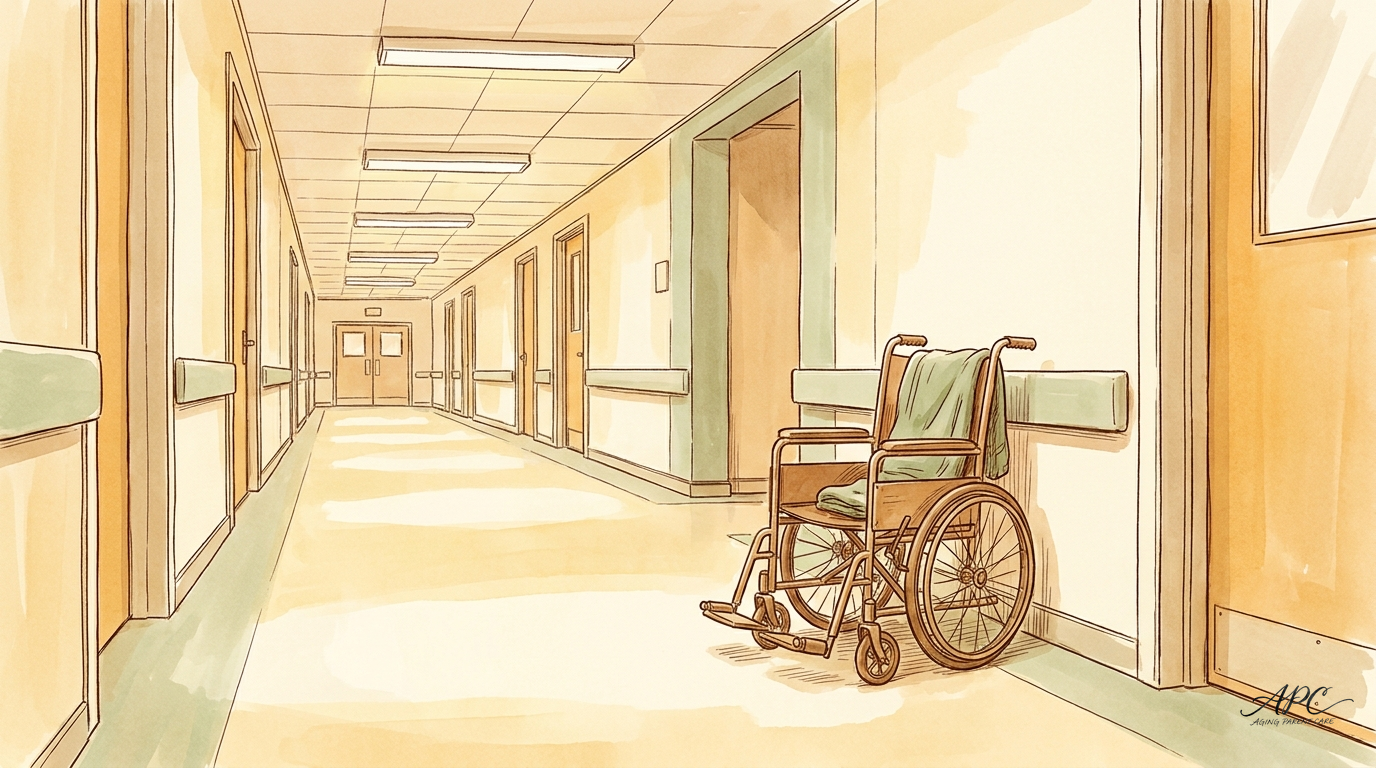
A nursing home with 100 residents would need about 348 hours of direct nursing care across a 24-hour period. Spread over three shifts, that's roughly 15 to 18 staff members on the floor at any given time. Enough to answer a call button within minutes. Enough to turn a bedridden resident every two hours to prevent pressure sores.
Without the mandate, staffing decisions revert to facility discretion. The national average before the rule was 3.85 hours per resident day, but that average masked enormous variation. The bottom quartile of facilities operated well below 3 hours. Some ran closer to 2.
At 2 hours per resident per day in a 100-bed facility, that's 200 hours across 24 hours. Roughly 8 to 10 staff members covering the entire building. One aide responsible for 15 or 20 residents. Getting dressed, getting to the bathroom, eating breakfast: these become triage decisions.
Pressure ulcers develop when someone isn't moved. Urinary tract infections develop when a catheter isn't monitored. Falls happen when someone tries to get to the bathroom alone because no one came when they pressed the button.
These aren't rare events. They're the predictable consequences of arithmetic.
What You Can Do Right Now
If your parent is in a nursing home, or you're considering one, the staffing repeal changes your calculus. Not because every facility will immediately cut staff (many won't). But the floor is gone, and without a floor, the question of "how much care does my parent actually receive" becomes one you have to answer yourself.
Here's how.
Check Medicare's Care Compare tool. Go to Medicare.gov/care-compare and look up any nursing home by name. Under the staffing tab, you'll find the facility's reported nursing hours per resident day, broken down by RNs and CNAs. Compare it to the 3.48-hour benchmark that just evaporated. If the facility is below that number, ask why. Ask three specific questions on your next visit. How many RN hours per resident day does this facility provide? Has that number changed since February 2026? What's the facility's staff turnover rate? Turnover matters because JAMA research shows that staffing instability, not just staffing levels, is independently associated with worse outcomes. Look at the inspection reports. Every nursing home undergoes annual state inspections. Those reports are public and available on Care Compare. Look for citations related to staffing shortfalls and medication errors. A pattern of these citations tells you more than any brochure. Know the difference between "direct care" and "total" staffing. Facilities may report total staffing numbers that include administrators and dietary staff. The number that matters for your parent's daily experience is direct care: the hours RNs, LPNs, and CNAs spend with residents. That's the number to watch.The Bigger Picture
The staffing repeal didn't happen in isolation. In the same policy period, the Labor Department reversed protections for home care workers, removing them from federal minimum wage and overtime requirements. The WISeR pilot is testing AI-driven prior authorization in Medicare. Each policy, individually, is a technical adjustment. Together? They represent a systematic reduction in the infrastructure of care for older Americans.
For you, the practical takeaway is uncomfortable but clear: the safety net has holes, and you need to inspect the net yourself.
The 13,000-death estimate from Penn and Yale is a projection. It may not come to pass in exactly that form. But the research underneath it isn't speculative. Decades of studies confirm the same relationship: fewer nursing hours per resident day means more hospitalizations and more deaths. The 3.48-hour standard was derived from that research. Its removal doesn't change the research. It just removes the requirement to act on it.
Your parent's facility may be excellent. It may be staffed above the old mandate. Many are. But you can't know that without looking. And looking is now your responsibility in a way it wasn't six months ago.
Sources
- Centers for Medicare and Medicaid Services. "Minimum Staffing Standards for Long-Term Care Facilities." Final Rule, Federal Register, April 2024.
- University of Pennsylvania and Yale University. "New Nursing Home Staffing Rule Could Prevent 13,000 Deaths Per Year." Penn Medicine News, April 2024.
- Centers for Medicare and Medicaid Services. "Nursing Home Staffing Study: Relationship Between Nurse Staffing and Quality of Care."
- Braun, R.T., et al. "Association of Nursing Home Staff Turnover With Infection Control Deficiencies." JAMA Internal Medicine, 2022.
- Centers for Medicare and Medicaid Services. "Care Compare: Nursing Homes." Medicare.gov.
- U.S. Department of Labor, Wage and Hour Division. "Home Care Workers Under the Fair Labor Standards Act."
- Harrington, C., et al. "Nurse Staffing and Deficiencies in the Largest For-Profit Nursing Home Chains." Health Services Research, 2012.
© 2026 Aging Parent Care. All rights reserved. No portion of this article may be reproduced, distributed, or used in any form without the explicit written permission of Aging Parent Care.
Make Your Business Online By The Best No—Code & No—Plugin Solution In The Market.
30 Day Money-Back Guarantee
Say goodbye to your low online sales rate!