Emotional Whiplash: Why the Good Days in Caregiving Hurt Almost as Much as the Bad Ones
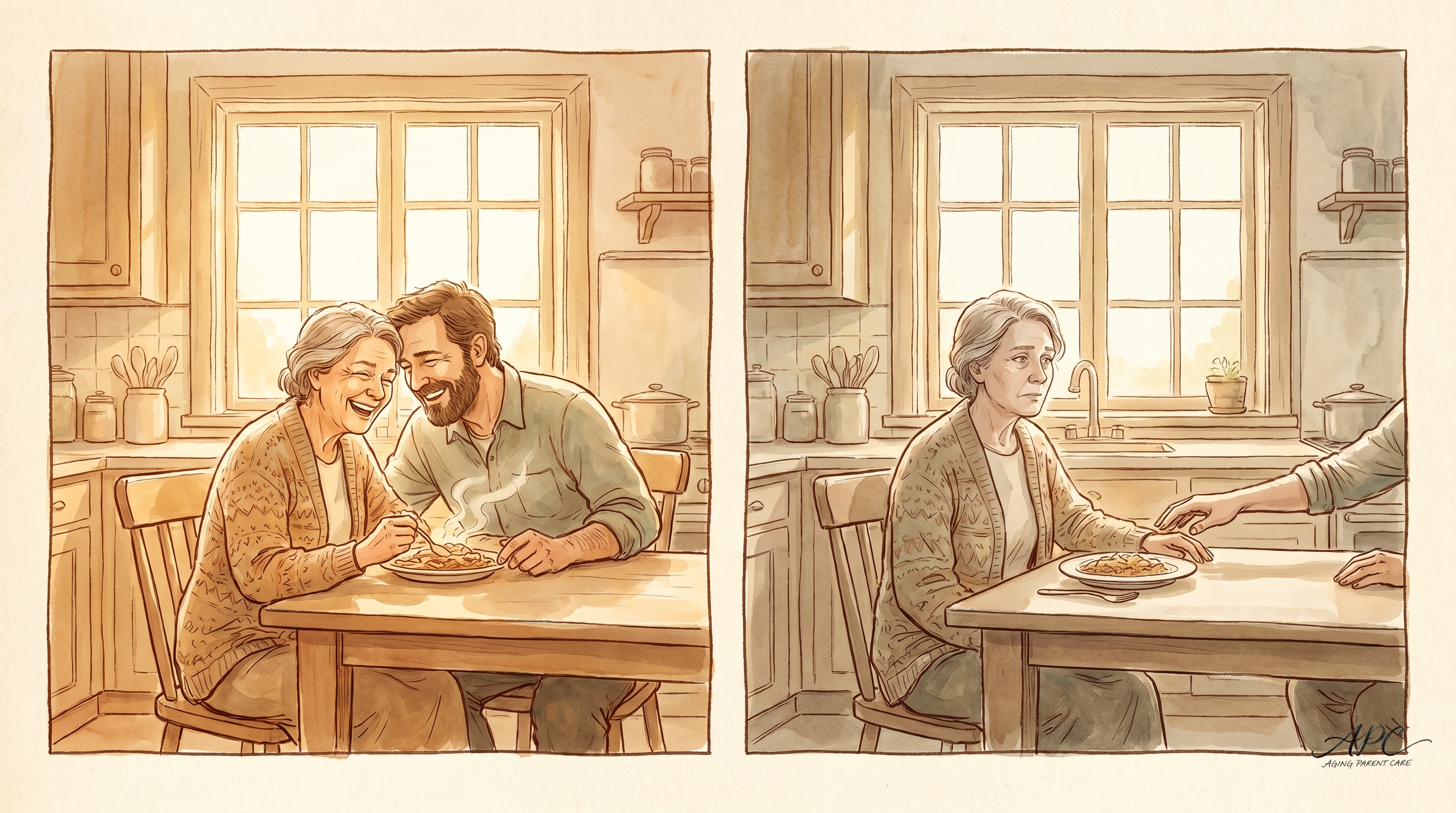
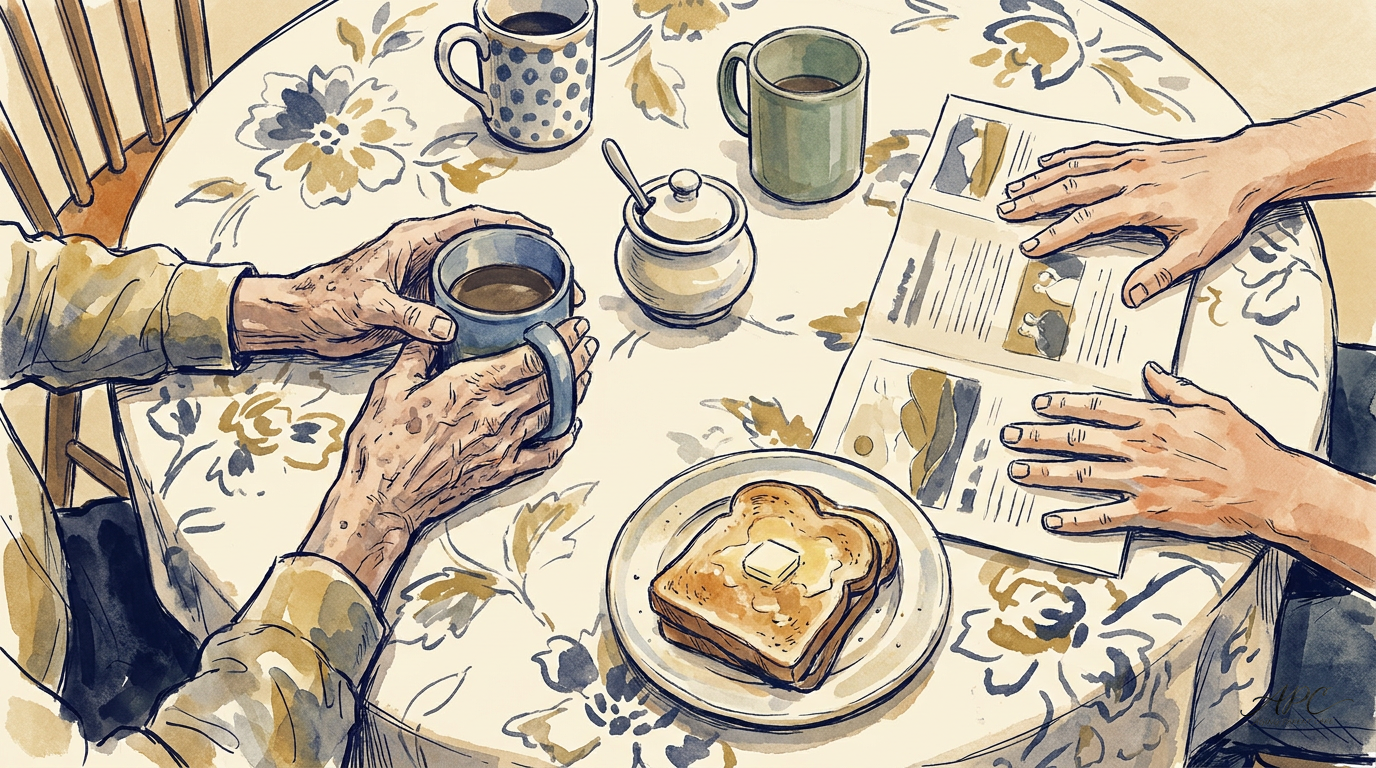
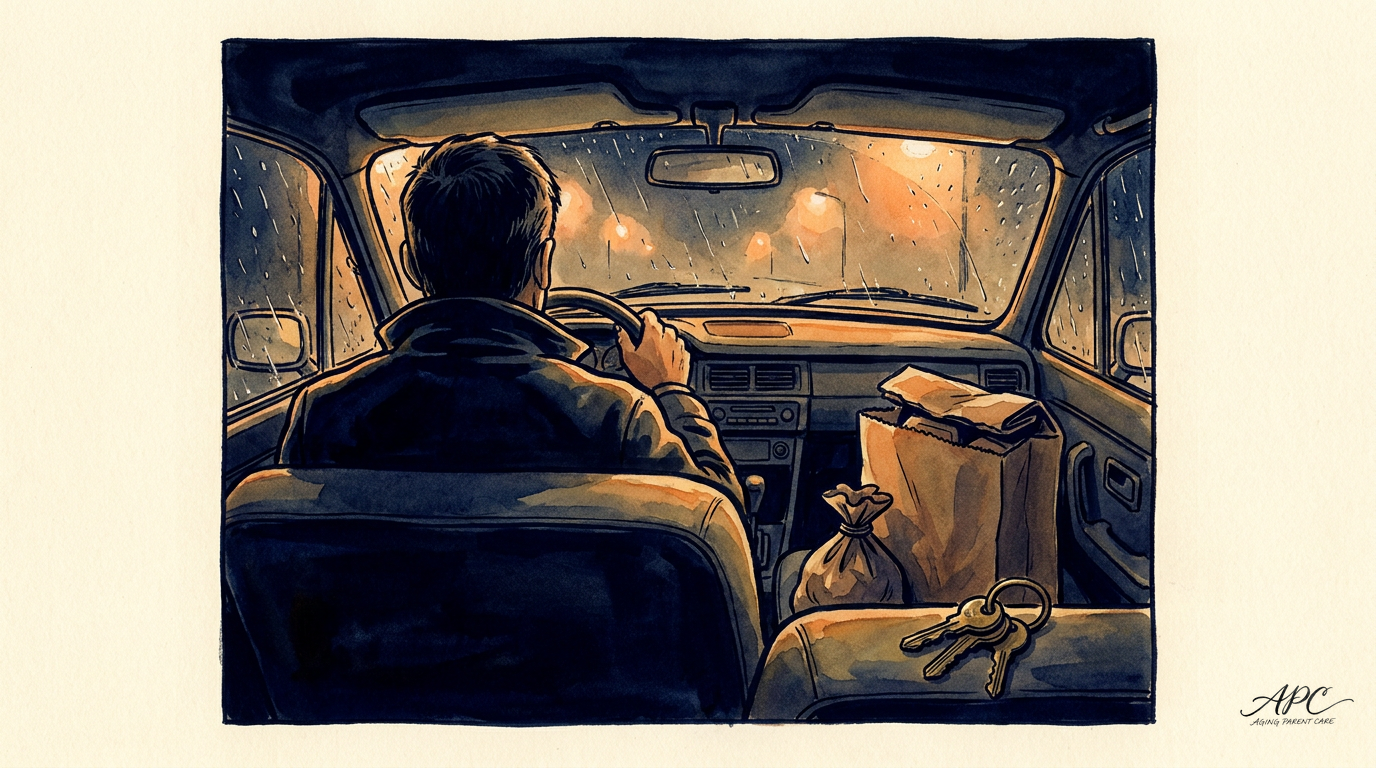
On a Thursday in April, your mother remembers your name. She looks at you across the kitchen table and says it the way she used to say it when you were small and she wanted your full attention. She asks about the dog. She laughs at something on the television. She eats most of her lunch without prompting.
You drive home thinking: maybe the diagnosis was wrong. Maybe she's getting better. Maybe the last six months were a rough patch and not a direction.
On Friday, she doesn't know where she is.
The Whiplash Pattern
That oscillation, the violent swing between a day that feels almost normal and a day that confirms everything you fear, has a name. Clinicians call it anticipatory grief. Caregivers call it something shorter. They call it the worst part.
Three Hearts Home, a caregiving resource and support organization, published a detailed account of this pattern in early 2026, labeling it "emotional whiplash." The term is precise. Whiplash is what happens when you're jerked in two directions faster than your body can stabilize. The emotional version works the same way. The good day yanks you toward hope. The bad day yanks you toward grief. Neither lets you settle.
Why Good Days Make Bad Days Worse
Ordinary hard days are one thing. Everyone has those. But your experience as a caregiver is different because the good days actively make the hard days worse. A good day resets your emotional baseline. It reminds you of who your parent was, which sharpens the contrast with who they're becoming. A good day is a window that opens just long enough for you to see what you're losing, then closes.
Have you noticed that pattern in yourself? The crash after a really good visit?
Pauline Boss, the family therapist who developed the theory of ambiguous loss in the 1970s, described this with clinical clarity. Ambiguous loss occurs when someone you love is physically present but psychologically absent, or vice versa. In dementia caregiving, your parent is there and not there, sometimes within the same hour. Your brain can't process this cleanly. It can't grieve a person who's still alive. It can't stop grieving a person who keeps disappearing.
The result is a grief that has no resolution and no permission to be complete. It accumulates.
The Research
Studies back this up. A 2024 paper in the Journal of Alzheimer's Disease found that caregivers of people with fluctuating symptoms (common in Lewy body dementia, vascular dementia, and mid-stage Alzheimer's) reported higher rates of depression and anxiety than caregivers of people with more stable, predictable declines. The instability itself was the stressor. Not the severity of the illness. The unpredictability.
Think about why. When someone you love is consistently declining, you grieve and you adjust. It's terrible, but the trajectory is legible. You can see where you're going. When the decline is interrupted by good days, you can't adjust. Each good day dismantles the fragile acceptance you built during the bad ones. You're always starting over.
The Guilt Nobody Talks About
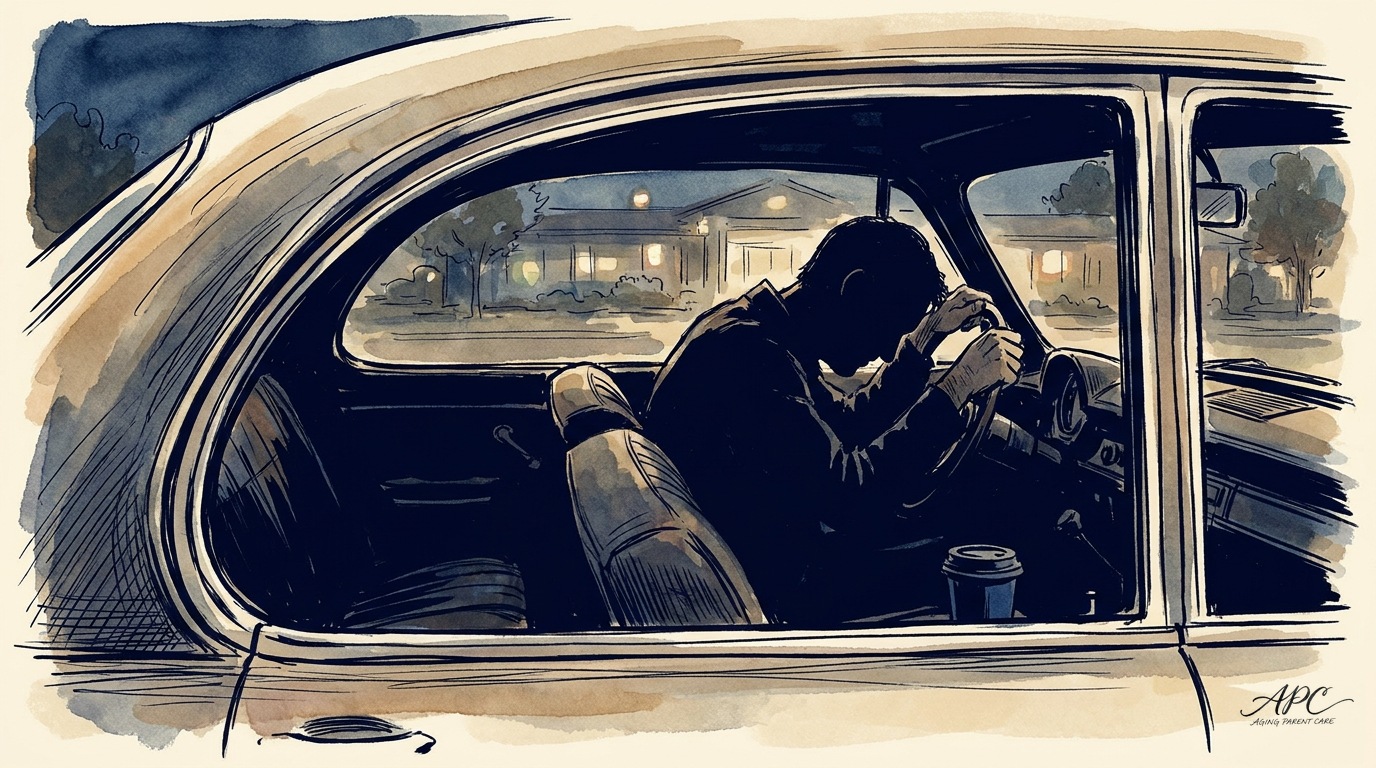
Caregivers describe this in remarkably similar language, regardless of their specific situation. "I wish she would just stay one way." "The good days are harder because they give me hope." "I feel guilty for wanting the good days to stop."
That last one (the guilt about not wanting good days) is almost universal. It's also almost never spoken aloud, because it sounds monstrous to anyone who hasn't lived it.
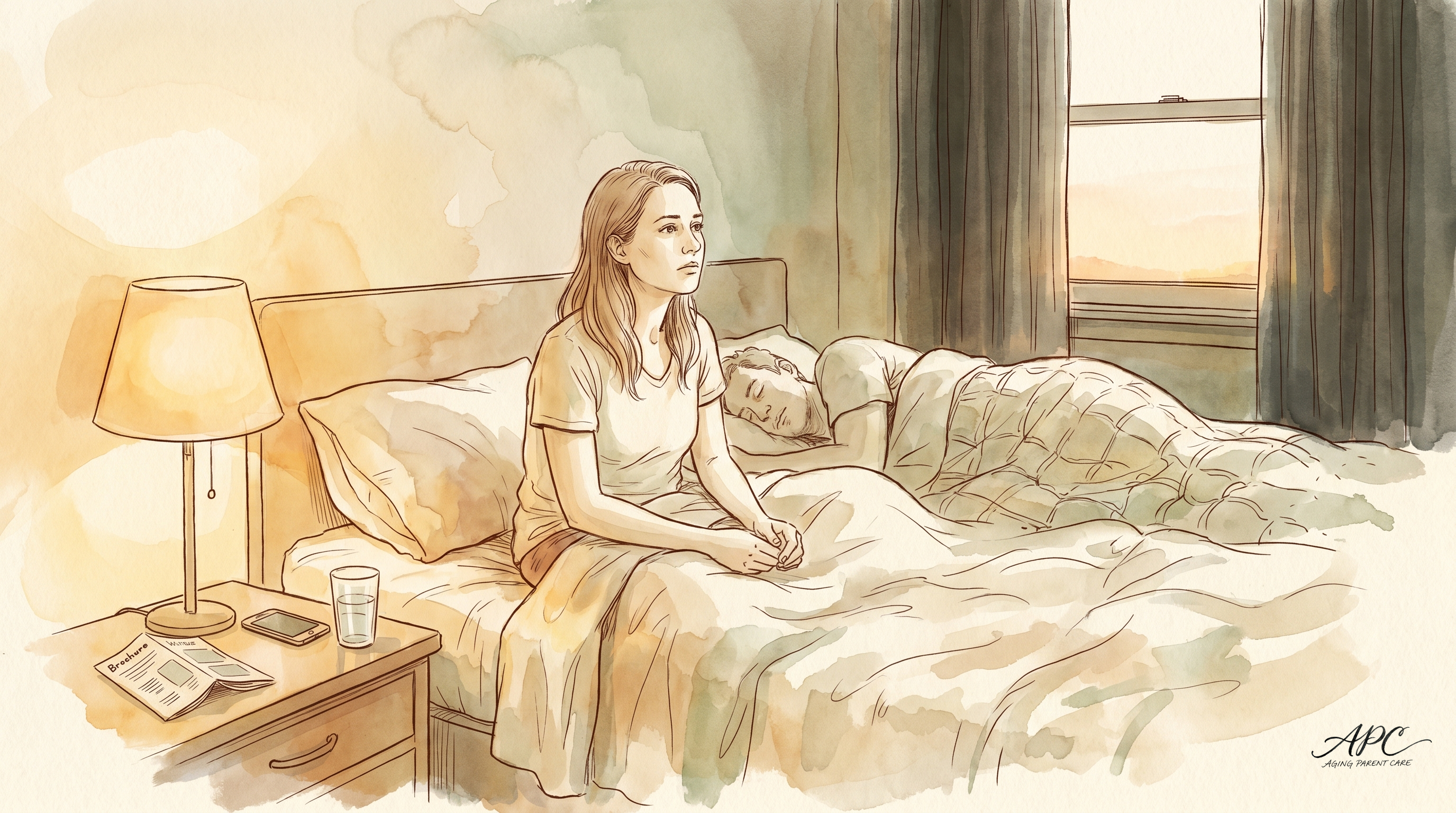
But the feeling makes sense. Your nervous system is trying to protect itself. It's trying to find a stable floor, and the good days keep pulling it out from under you.
What Helps
Name it. The simple act of recognizing "this is anticipatory grief" or "this is emotional whiplash" gives the experience a container. It moves the feeling from something wrong with you to something that's happening to you. That distinction matters. You're not falling apart. You're responding normally to an abnormal situation.
Stop comparing days. The instinct to measure today against yesterday is strong, but it feeds the whiplash cycle. A good day means nothing about the disease's trajectory. A bad day says nothing about whether you failed. They're separate weather systems moving through the same week. You don't have to reconcile them.
Build rituals that don't depend on your parent's cognitive state. This is Pauline Boss's core recommendation for living with ambiguous loss. A ritual can be as small as a cup of tea at the same time each evening. A walk around the same block. A phone call to a friend on Tuesdays. These anchors give your nervous system something predictable to hold onto when everything else is shifting.
Get professional support that understands this specific kind of grief. General therapy helps, but a therapist trained in grief or caregiver psychology will recognize the whiplash pattern immediately and won't waste your time telling you to "focus on the positive." The Caregiver Action Network (caregiveraction.org) and your local Area Agency on Aging can refer you to specialists.
Let the good days be good without making them mean something. This is the one people resist most. Your mother remembered your name on Thursday. That happened, and it was real. You don't have to interpret it. You don't have to decide whether it means she's improving or whether it makes Friday's confusion worse. It can just be Thursday. You can just have had a good Thursday.
Both Waves at Once
Caregiving grief comes in waves from both directions. The loss wave and the love wave hit at the same time, and you're supposed to stand in both of them and keep your balance.
You won't always keep your balance. That's all right.
The whiplash doesn't mean you're weak. It means you're paying attention. It means you love someone whose presence flickers, and you haven't looked away.
That's not weakness. That's the hardest kind of faith there is.
Sources
- Simons, K.S., et al. (2024). Caregiver depression and anxiety in Lewy body and vascular dementia vs. Alzheimer's disease. Journal of Alzheimer's Disease.
- Boss, P. (2004). Ambiguous Loss Research, Theory, and Practice. Journal of Marriage and Family.
- Arruda, M.A., et al. (2020). Anticipatory grief in dementia family caregivers. The Gerontologist.
- Family Caregiver Alliance. Grief and Loss. National Center on Caregiving.
- National Institute on Aging. Grief, Loss, and Dementia.
- Caregiver Action Network. Emotional Support Resources for Family Caregivers.
© 2026 Aging Parent Care. All rights reserved. No portion of this article may be reproduced, distributed, or used in any form without the explicit written permission of Aging Parent Care.
Make Your Business Online By The Best No—Code & No—Plugin Solution In The Market.
30 Day Money-Back Guarantee
Say goodbye to your low online sales rate!