
Still Here, Already Gone
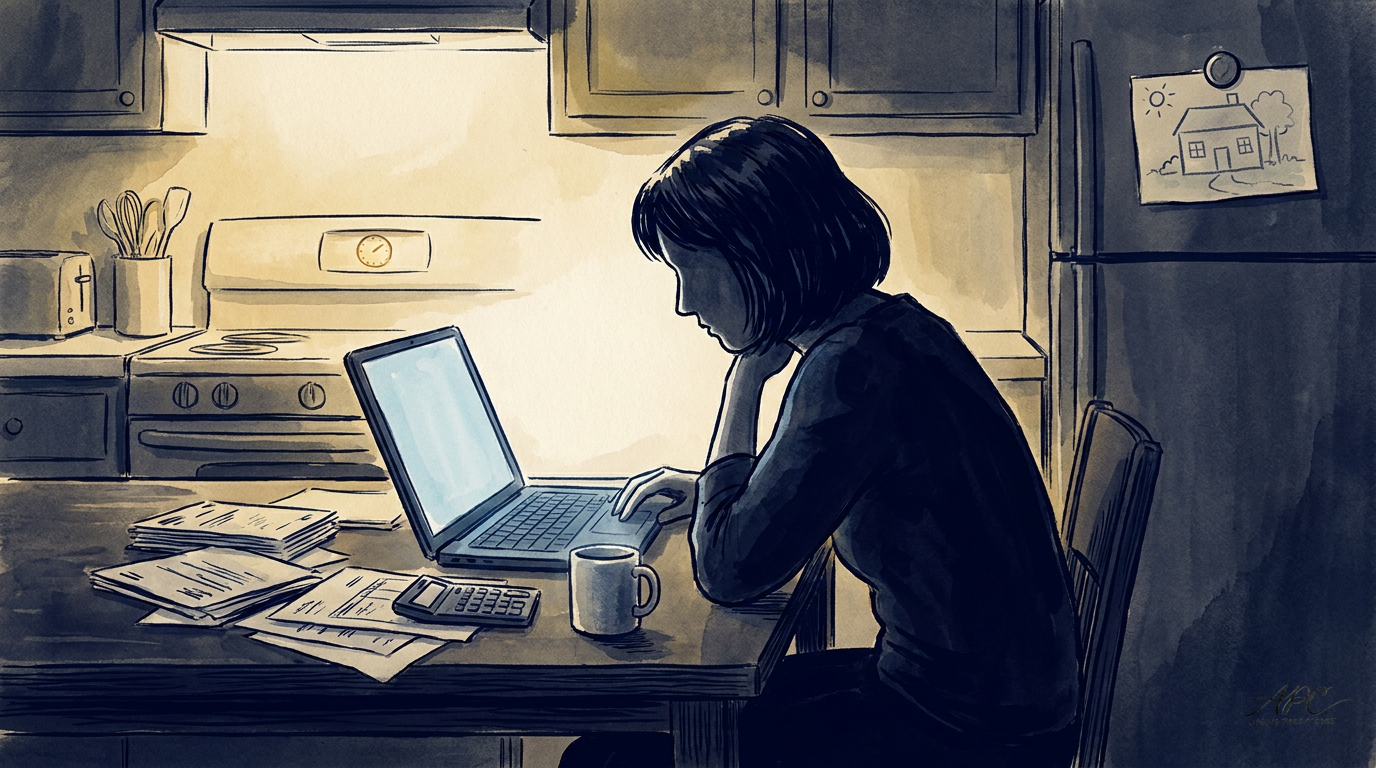
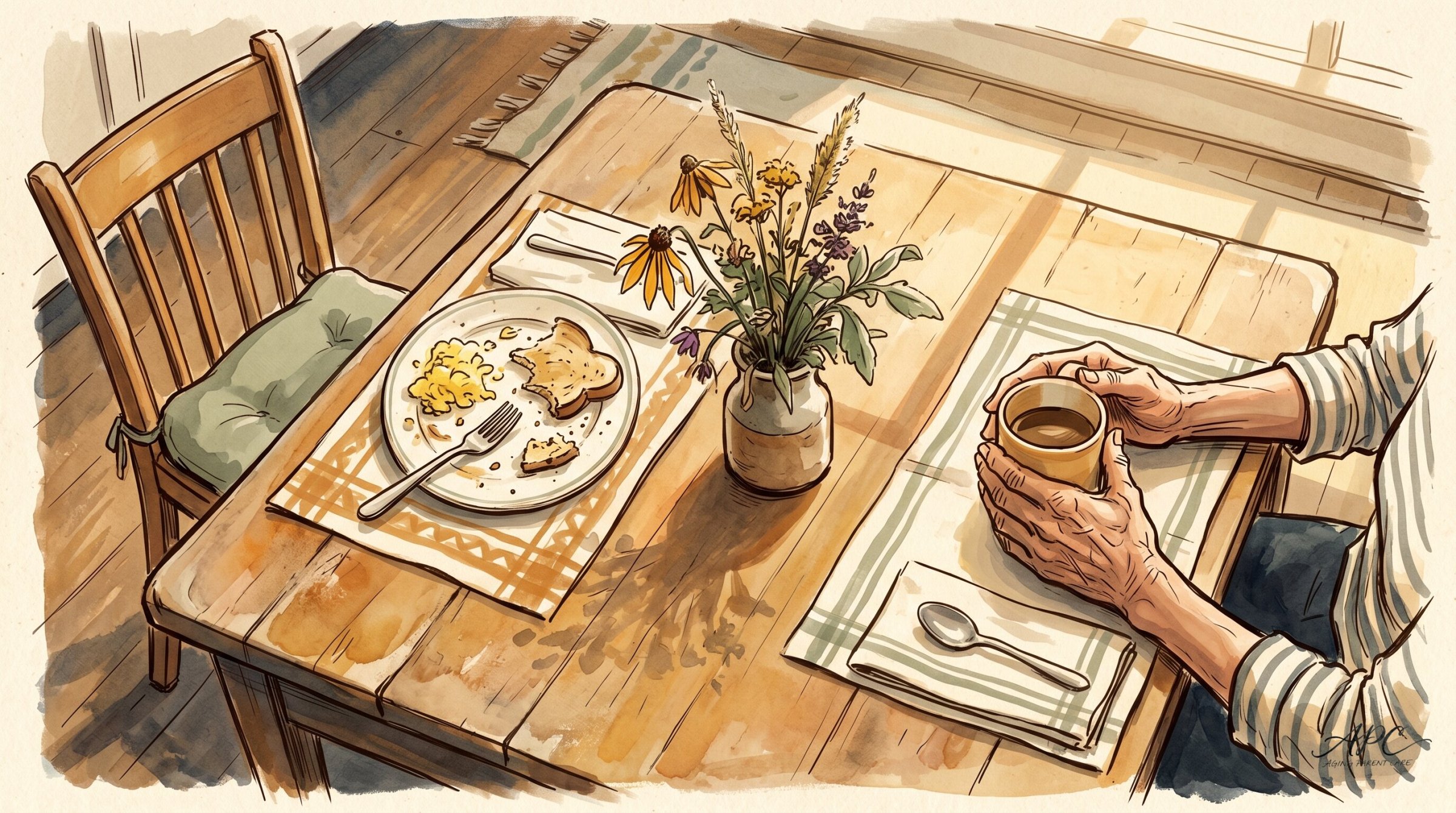
Your mother is sitting across from you at the kitchen table. She's eating scrambled eggs. She's wearing the blue cardigan she's worn for fifteen years. And she just asked you, for the third time this morning, whether your father is coming home soon. Your father died in 2019.
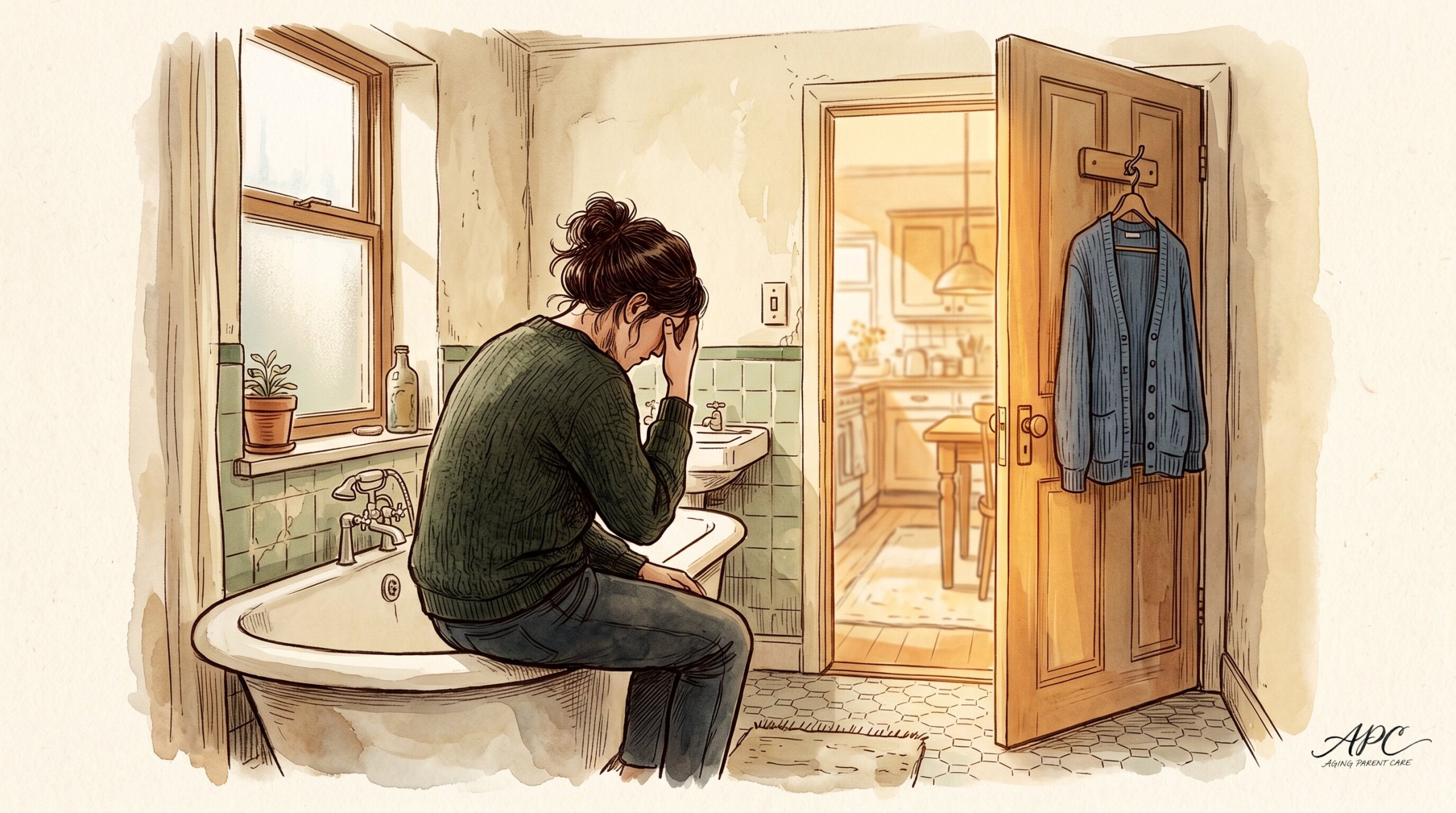
You answer her gently. You don't correct her. You've learned not to. And then you excuse yourself to the bathroom, where you sit on the edge of the tub and cry so she won't hear.
You're grieving someone who's still alive. There's a name for this. It's called anticipatory grief, and the fact that most people have never heard the term is part of why it feels so isolating.
What Anticipatory Grief Is (and Isn't)
Anticipatory grief is the mourning that begins before death. The accurate emotional response to watching someone you love disappear by degrees.
Researchers have studied this extensively in dementia caregivers, and the findings are stark. A 2020 study published in The Gerontologist found that anticipatory grief accounted for 50% of the variance in depression scores among family caregivers. That's the dominant factor. Not the physical demands. Not the financial strain. The grief.
Anticipatory grief is associated with higher anxiety, greater feelings of burden, and diminished ability to solve problems. It doesn't just hurt. It impairs your ability to function at precisely the moment when functioning is what's required of you.
But here's what anticipatory grief is not: it's not giving up. You haven't stopped caring. The opposite. You're paying close attention. You see what's happening. You understand what's coming. And your body and mind are responding to that knowledge.
The Losses Nobody Counts
When someone dies, the loss is singular and recognized. The world pauses, briefly. People send flowers. There's a funeral.
When someone has dementia, the losses accumulate quietly, and nobody sends flowers for any of them.
You lose the conversation first. The long, rambling phone calls about nothing. The gossip about the neighbors. Your mother's opinion on your haircut. Then you lose the recognition. She knows your face but can't find your name. Then she can't find your face.
You lose the shared history. The stories she told about her childhood, the ones you've heard a hundred times and always groaned at. You'd give anything to hear them again, told correctly, with the same punchlines.
You lose the partnership. If this is your parent, you lose the person who told you what to do when the baby had a fever, who knew how to fix the garbage disposal, who remembered which cousin was married to which other cousin. That knowledge is gone. Not archived somewhere. Gone.
Psychologist Pauline Boss calls this "ambiguous loss": the person is physically present but psychologically absent. It's a category of grief that doesn't fit the frameworks most people use to understand mourning. There's no body. There's no funeral. There's just a slow, ongoing subtraction.
Why Nobody Talks About It
Part of the silence around anticipatory grief is cultural. We don't have rituals for it. We have sympathy cards for death. We have nothing for the Tuesday when your father looked at you and said, "Are you the one who comes on Tuesdays?"
Part of it is practical. If you say "I'm grieving," someone will ask who died. When you say "Nobody. She's still here," the conversation stalls. People don't know what to do with grief that has no endpoint. They want to fix it, or at least contain it, and anticipatory grief resists both.
And then there's the guilt. Admitting that you're grieving your parent while they're still alive feels like betrayal. Like you've written them off. You haven't. You're holding two truths at the same time: your mother is here, and your mother is gone. Both are true. The space between them is where anticipatory grief lives.
Living Inside It
There's no "getting over" anticipatory grief. It lasts as long as the caregiving does.
But there are ways to live inside it that don't require you to pretend it isn't happening.
Say it out loud. To a friend, a therapist, a support group, a stranger on an internet forum at two in the morning. Say: "I am grieving my mother, and she is still alive." The sentence sounds contradictory. It isn't. Saying it breaks something open. The Alzheimer's Association runs a 24/7 Helpline (800-272-3900) staffed by master's-level clinicians who specialize in exactly this kind of call.
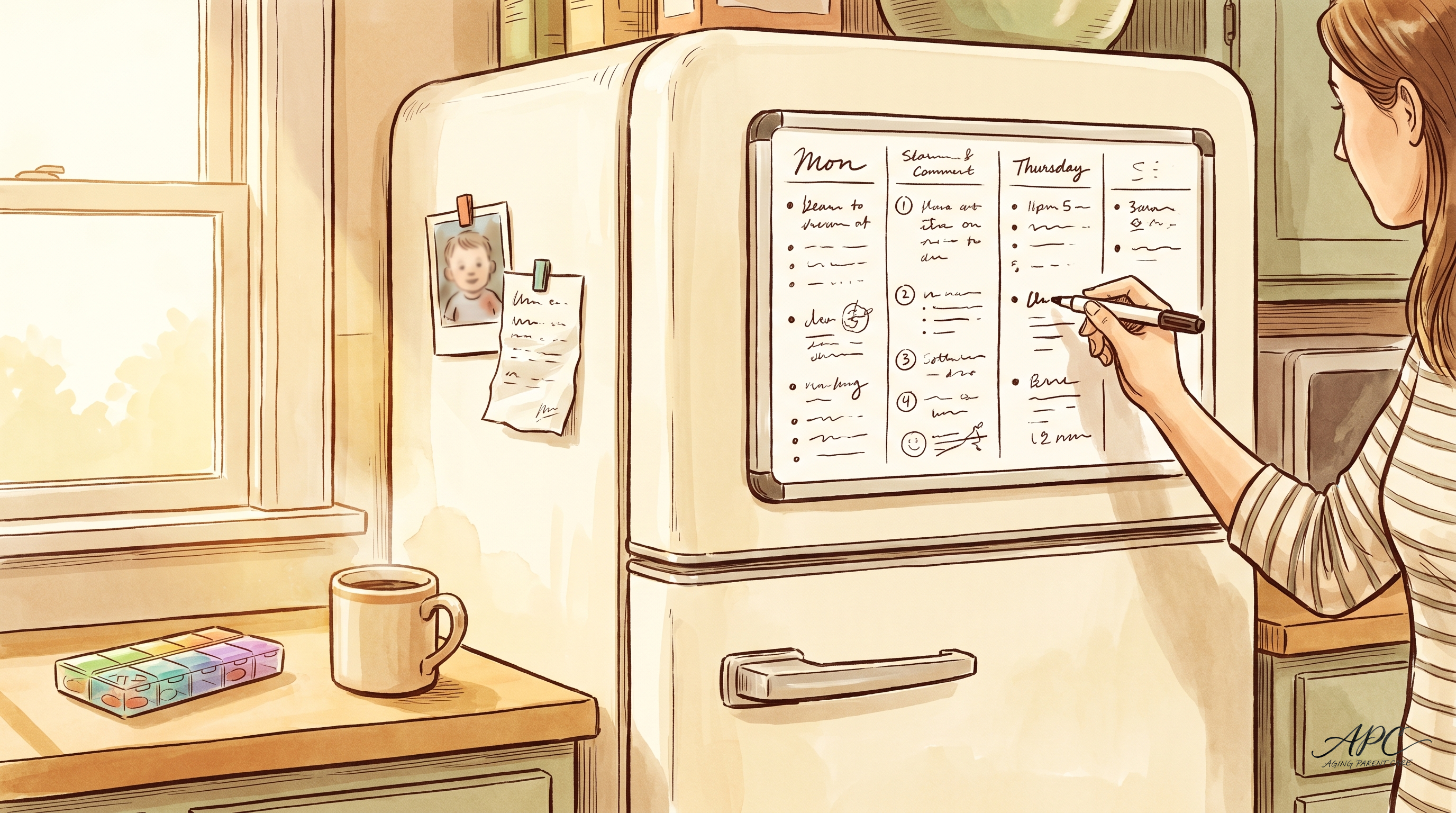
Record what's left. Not for her. For you. Write down the things she says that are still her. The flash of humor. The way she holds her coffee cup with both hands. The moment when she looks at you and you can tell she knows exactly who you are, even if she can't say your name. These moments are real. They count.
Stop performing okay. You don't have to be fine at the family gathering. You don't have to smile when your aunt says, "At least she's still with us." Your aunt means well. Your aunt is also wrong. Part of your mother is not with you, and you're allowed to grieve that absence.
Find others in it. Anticipatory grief is lonely partly because nobody around you seems to be going through it. But roughly 11 million Americans are currently caring for someone with Alzheimer's or another dementia. Many of those people are feeling exactly what you feel. The Association's ALZConnected online community and local support groups exist for this. You don't have to explain the contradiction. They already live in it.
The Permission You Don't Need But Might Want
You're not giving up on your parent by grieving them. You're not being pessimistic or ungrateful. You're responding honestly to a loss that's real and ongoing.
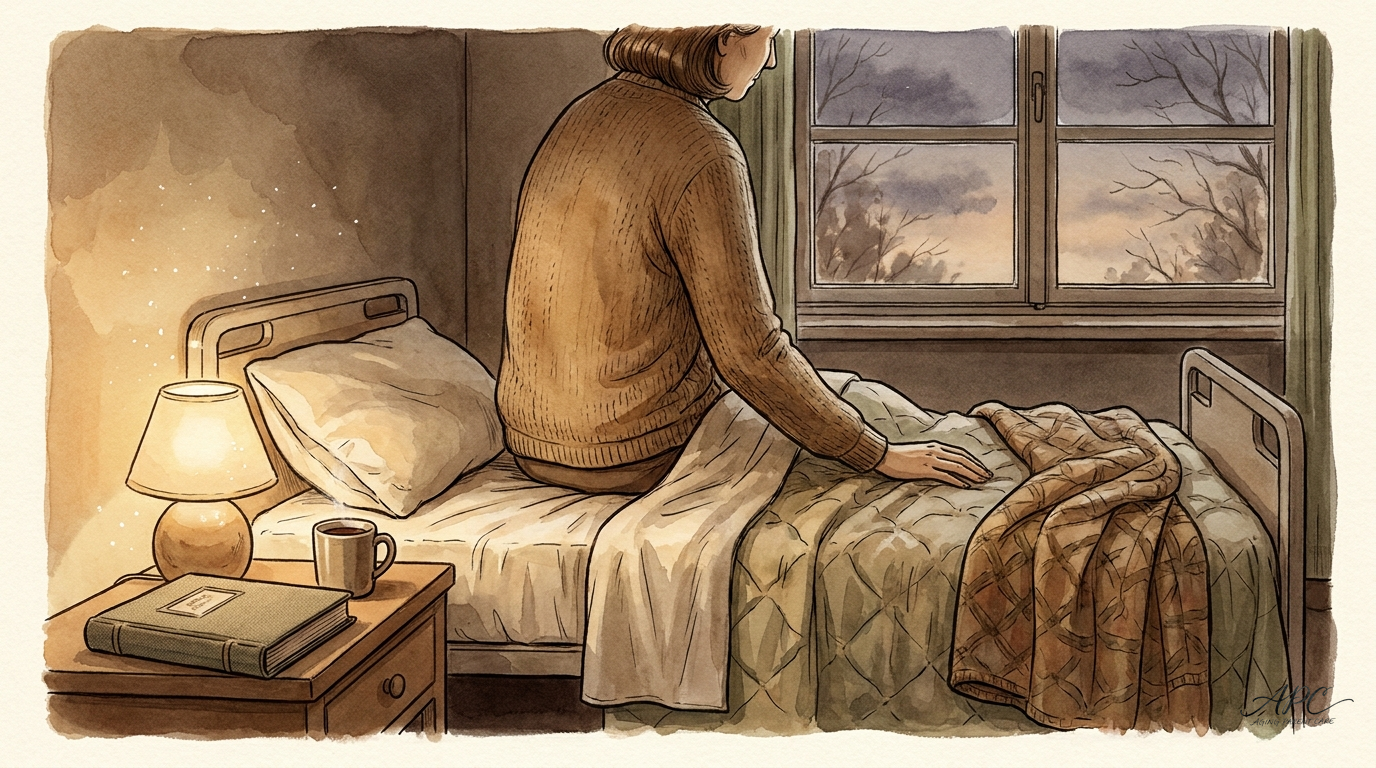
The woman at the kitchen table eating scrambled eggs in the blue cardigan is your mother. She is also not your mother, not entirely, not in the way she was. You love her. You're losing her. You'll continue to lose her.
Both things. At the same time. For as long as it takes.
That is anticipatory grief. You didn't choose it. But you can stop pretending it isn't there.
Sources
- Arruda, M.A., et al. (2020). Anticipatory grief and depression in dementia caregivers. The Gerontologist.
- Boss, P. (2004). Ambiguous Loss Research, Theory, and Practice. Journal of Marriage and Family.
- Alzheimer's Association. Grief and Loss in Caregiving.
- National Institute on Aging. (2024). Grief, Loss, and Dementia.
- Family Caregiver Alliance. Grief and Loss. National Center on Caregiving.
- Alzheimer's Association. (2025). Alzheimer's Disease Facts and Figures.
© 2026 Aging Parent Care. All rights reserved. No portion of this article may be reproduced, distributed, or used in any form without the explicit written permission of Aging Parent Care.
Make Your Business Online By The Best No—Code & No—Plugin Solution In The Market.
30 Day Money-Back Guarantee
Say goodbye to your low online sales rate!