


The $5,419 Question: When Does Keeping Mom at Home Stop Making Financial Sense?

The median monthly cost of assisted living in the United States is $5,419. That number, from A Place for Mom's 2026 data, is the one most families hit first when they start researching options for an aging parent. It's the benchmark. The comparison point. The figure that makes some families exhale with relief and others stop breathing entirely.
But here's the question that number doesn't answer: is it actually cheaper to keep your parent at home?
The honest answer is: it depends. And the variables that determine it aren't the ones you'd think about first.
The Home Care Math
Home care aides in the United States cost a median of $33 per hour in 2025, according to the Genworth/CareScout Cost of Care Survey. If your parent needs help for four hours a day, five days a week, that's $2,640 per month. Manageable for a lot of families, especially if a spouse or adult child covers evenings and weekends.
But care needs escalate. They almost always escalate. A parent who needs help with meal prep and medication reminders this year may need help with bathing and transfers next year. At eight hours a day, seven days a week, the home care bill climbs to $7,392 per month. At that point, you've exceeded the cost of assisted living and you're still managing the house and carrying the cognitive load of being the backup plan for every uncovered hour.
Here's where it gets really uncomfortable. Twenty-four-hour home care, when it becomes necessary, runs $15,000 to $20,000 per month in most markets. In high-cost regions (the Northeast corridor, the Bay Area, metro Chicago), it can exceed $25,000. At that price point, a private room in a nursing home ($9,978/month median) becomes the budget option.
The Hidden Costs of Staying Home
The hourly rate is only part of it. Aging in place carries costs that don't appear on any invoice:
Home modifications. Grab bars, walk-in showers, stair lifts, widened doorways, ramps. A basic bathroom retrofit runs $5,000 to $15,000. A stair lift: $3,000 to $10,000 installed. These are one-time costs, but they add up fast, and they're rarely covered by insurance.
Medical equipment. Hospital beds, lift chairs, wheelchair ramps, shower chairs. Medicare covers some durable medical equipment, but the copays and the items that fall outside coverage create a steady drip of expense.
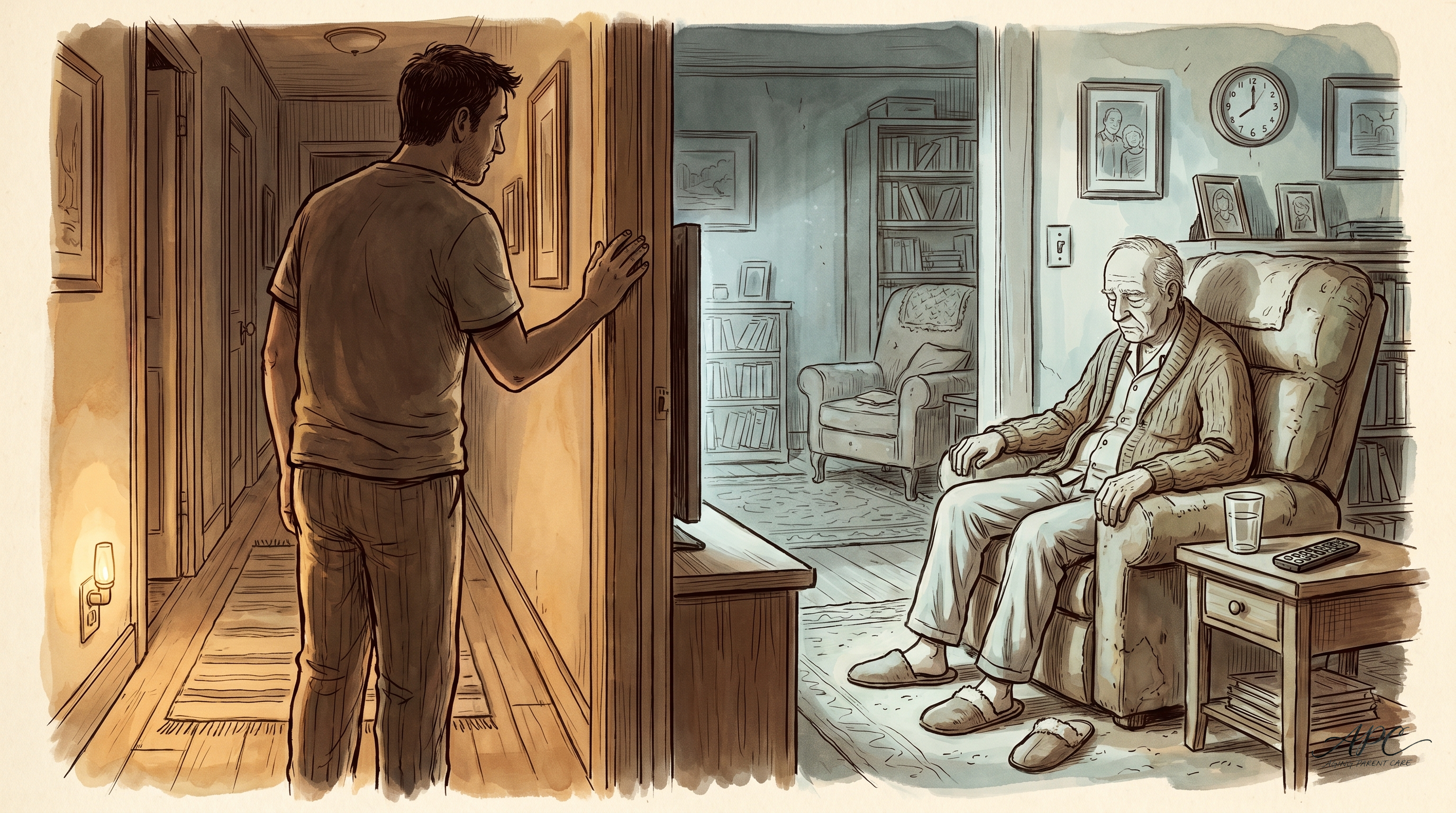
Emergency gaps. What happens when the aide calls in sick? When there's a snowstorm and the caregiver can't get to the house? When your parent falls at 2 a.m. and there's no one there? The informal safety net that home care relies on has holes, and those holes get filled by you, the family member who absorbs the cost in lost work hours and accumulated stress.
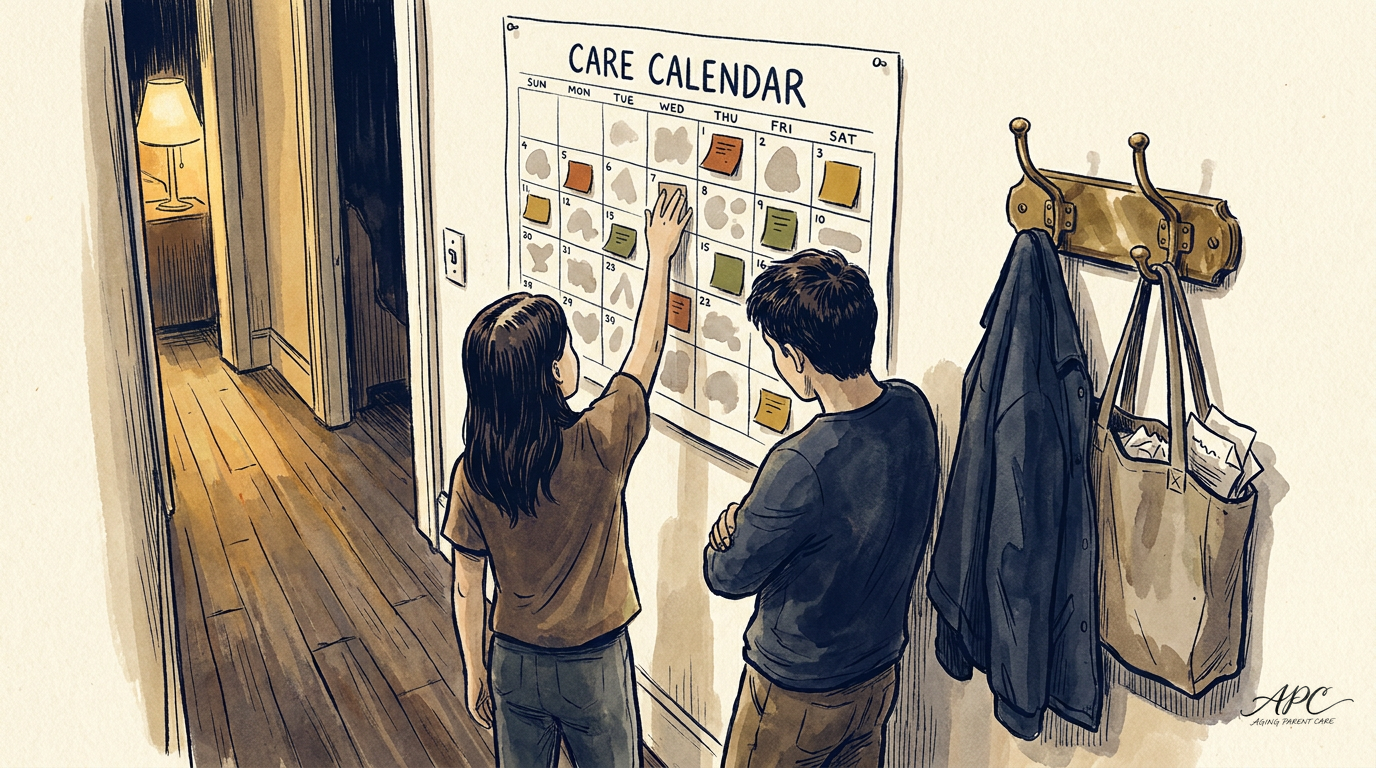
Opportunity cost. This is the one nobody calculates, and it might be the biggest. If you're the adult child providing 20 hours a week of unpaid care, and your earning capacity is $35 an hour, you're contributing $700 a week. That's $2,800 a month. $33,600 a year in uncompensated labor. The AARP's 2026 "Valuing the Essential" report estimates the total economic value of unpaid family caregiving in the United States at over $600 billion annually. That number comes directly out of your retirement account, underfunded by exactly the amount you're spending on your parent's care.

The Inflection Point
So when does keeping your parent at home stop making financial sense? When the full expense (paid care + modifications + equipment + emergency coverage + your unpaid labor + your lost income) exceeds the all-in cost of a well-chosen assisted living community.
For most families, that inflection point arrives when your parent needs more than six hours of daily hands-on assistance, or when cognitive decline creates safety risks that can't be managed with intermittent supervision.
The math typically breaks like this:
- Under 4 hours/day of paid help needed: Home care is usually cheaper. Total monthly cost: $2,000-$3,500 plus your time.
- 4-8 hours/day: The costs converge. Total monthly cost with hidden expenses: $4,500-$8,000. Assisted living at $5,419 median starts looking equivalent.
- Over 8 hours/day: Assisted living or a care facility is almost always more cost-effective, and it provides 24-hour coverage that home care at this level simply doesn't.
The State-by-State Reality
Geography changes everything. In Mississippi, Alabama, and Louisiana, assisted living averages below $4,100 a month. In New Jersey, Massachusetts, and Washington D.C., it runs $7,000 to $9,000. Home care costs track regional labor markets similarly.
And these numbers keep climbing. Year-over-year increases compound the pressure: assisted living costs rose 4.4% in the past year, memory care 3.7%, home care 3%, independent living 1.75%. All of these outpace general inflation, which means the gap between what you can afford and what care costs widens every year regardless of which option you choose.
What Medicaid Does and Doesn't Cover
Medicaid is the largest payer of long-term care in the United States. It covers nursing home care for people who've spent down their assets to state-specific thresholds (typically $2,000 in countable assets for an individual). It also covers home and community-based services (HCBS) through waiver programs, but these programs vary dramatically by state, often have waiting lists of months to years, and are among the first targets when state budgets tighten.
The Medicaid ACCESS Act, introduced by Representative Max Miller (R-OH), proposes expanding Medicaid waiver programs to cover more home-based care. Whether it passes, and in what form, remains uncertain. But the legislative direction suggests growing recognition that the current system pushes families toward institutional care even when home-based care would be cheaper and preferred.
Five Things to Do This Month
Price both options in your parent's specific market. Call two assisted living communities and ask for the base rate plus the full fee schedule (medication management, incontinence care, higher levels of assistance). Then call two home care agencies and get their hourly rate and minimum-hour requirements. You'll have real numbers in a week.
Calculate your own unpaid contribution. Track your caregiving hours for two weeks. Multiply by a reasonable hourly rate. Call it what it is: the actual economic cost of the current arrangement.
Assess the home for safety and modification needs. Your local Area Agency on Aging often provides free home safety assessments. Call the Eldercare Locator at 1-800-677-1116 or visit eldercare.acl.gov.
Check your parent's Medicaid eligibility and whether your state has an HCBS waiver with available slots. The Medicaid Planning Assistance website (medicaidplanningassistance.org) offers state-by-state guides.
Run the numbers at current need and at projected need. Your parent's care requirements in 12 months will likely exceed today's. Plan for the trajectory, not the snapshot.
The Real Question
The $5,419 question isn't really about which option costs less right now. It's about sustainability. The cheapest option that burns you out in 18 months isn't actually cheap. The more expensive option that keeps your family intact and your parent safe may be the better investment.
Run the numbers. All of them. Including the ones that don't come with a receipt.
Sources
- A Place for Mom. (2026). Assisted Living Costs and Pricing.
- Genworth/CareScout. (2025). Cost of Care Survey.
- AARP Public Policy Institute. (2026). Valuing the Essential: The Economic Value of Family Caregiving.
- Centers for Medicare and Medicaid Services. Home and Community-Based Services (HCBS) Waivers.
- KFF. (2024). 10 Things to Know About Medicaid Long-Term Services and Supports.
- U.S. Administration for Community Living. Eldercare Locator. 1-800-677-1116.
© 2026 Aging Parent Care. All rights reserved. No portion of this article may be reproduced, distributed, or used in any form without the explicit written permission of Aging Parent Care.
Make Your Business Online By The Best No—Code & No—Plugin Solution In The Market.
30 Day Money-Back Guarantee
Say goodbye to your low online sales rate!