

The Guilt That Keeps You From Asking for Help Is the Same Guilt That Will Break You
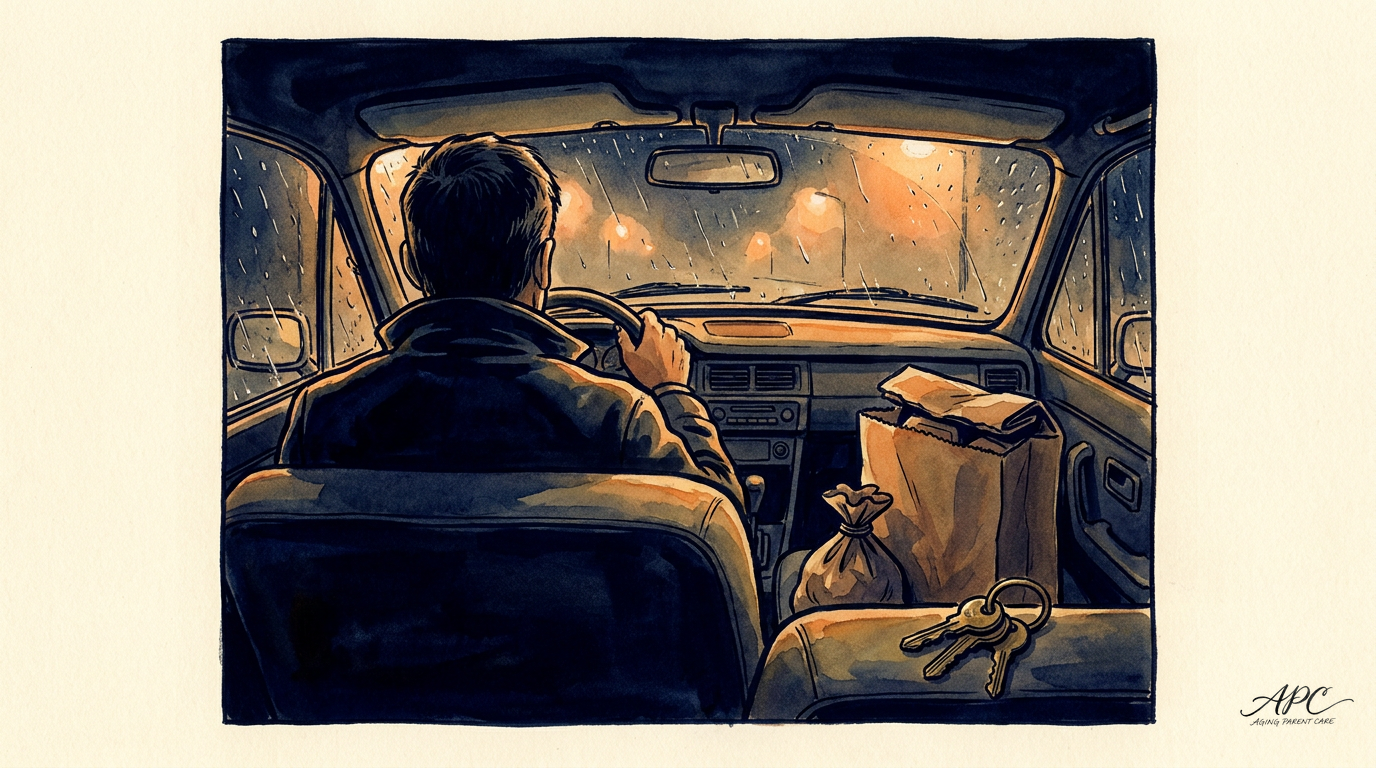
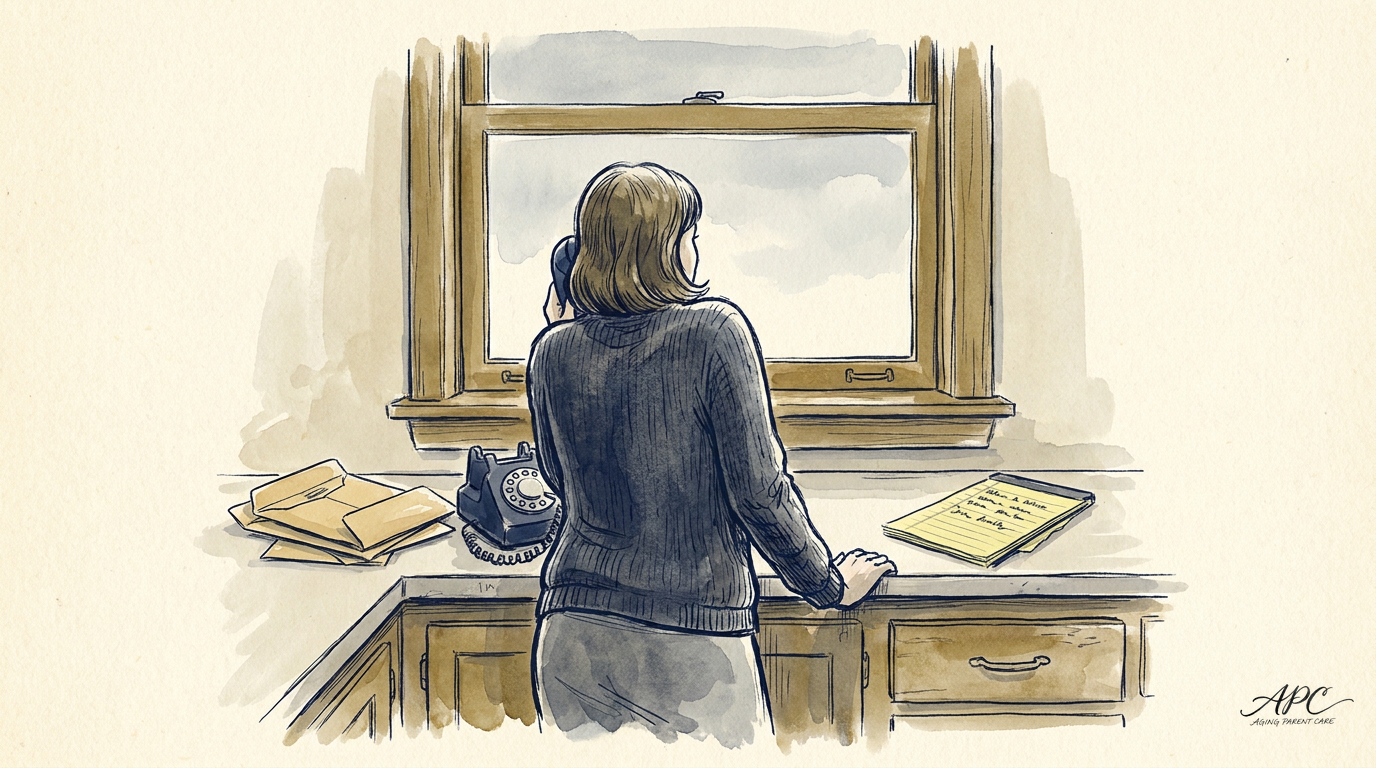
Linda Nakamura kept a mental scorecard. Every morning she drove forty minutes from her apartment in Glendale to her mother's house in Pasadena, made breakfast, sorted the medications, helped her mother to the bathroom, and started laundry. By 2 p.m. she was back at her desk for a half-shift at the insurance brokerage where she'd worked for eleven years. By evening she was on the phone with her mother again, checking whether she'd eaten dinner, whether she'd remembered to lock the door.
She did this for three years. She never once asked her brother, who lived twenty minutes away, for a weekday shift. She never called the Area Agency on Aging. She never looked into respite care. When a coworker suggested she was burning out, Linda's answer was instant: "She's my mother. I should be able to handle this."
That word, "should," is doing enormous damage. Up to 50% of family caregivers experience significant guilt. Not mild discomfort. Guilt that wrecks your sleep, corrodes your relationships, and becomes the single biggest barrier to seeking the support that would keep you functional.
And the guilt isn't one thing. It wears at least four different faces, and naming them is the first step toward loosening their grip.
Task-Based Guilt: "I'm Not Doing Enough"
This is the most common form. You're already doing more than one person can reasonably sustain, but the internal standard keeps shifting. You managed three doctor's appointments this week, but you forgot to pick up the compression socks. You cooked six dinners, but Tuesday's was reheated soup and you felt the failure in your chest.
Sound familiar?
Task-based guilt feeds on comparison. You compare yourself to an imaginary perfect caregiver, or to a sibling who swoops in for a weekend and seems effortlessly competent. The comparison is never fair. It never accounts for the 340 days a year you showed up and they didn't.
The antidote isn't affirmation. It's arithmetic. Write down what you did this week. Every drive, every call, every load of laundry, every hour spent on hold with the insurance company. When you see the actual volume in front of you, the gap between what you're doing and what anyone could reasonably expect closes. Fast.
Emotional Guilt: "I Resent My Own Parent"
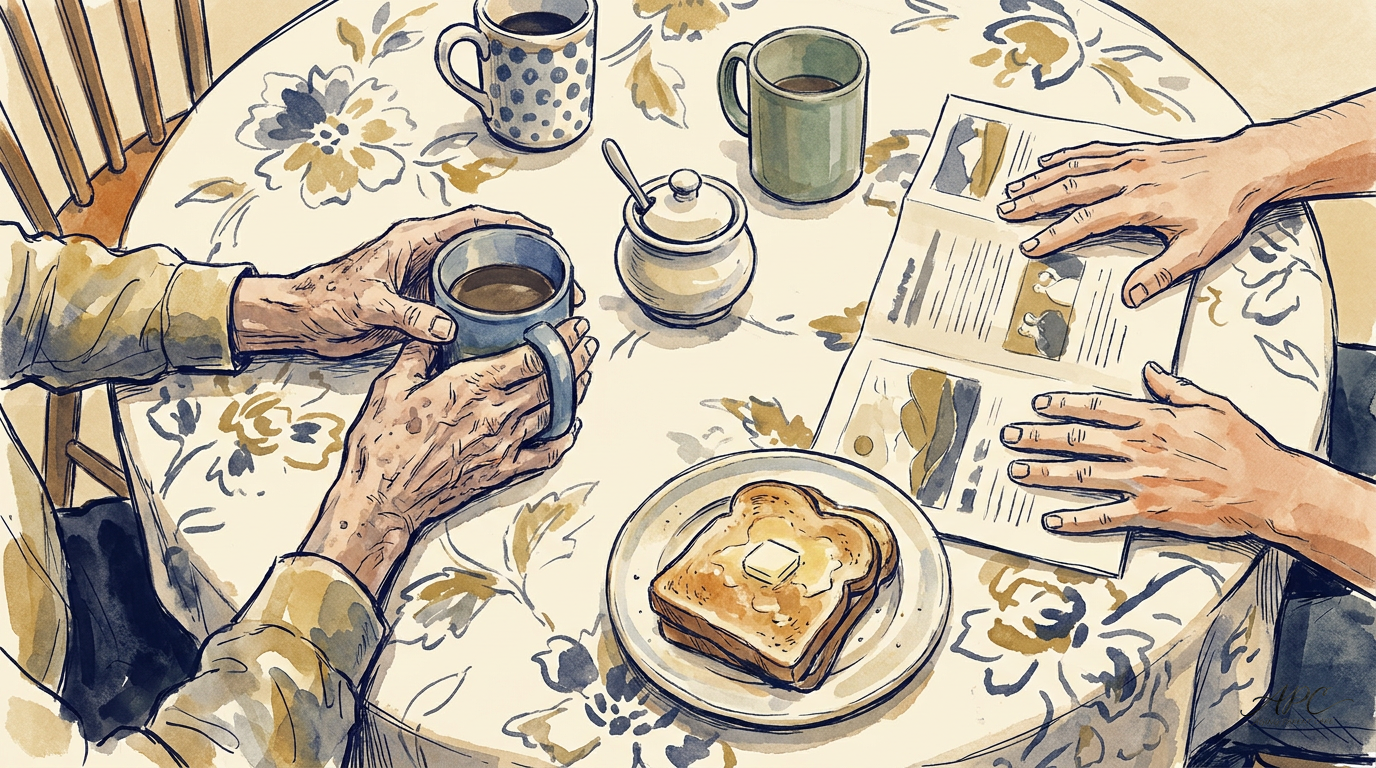
You love your mother. You also, on certain Tuesdays, want to scream at her for asking you to adjust the thermostat for the fourth time in an hour. Then the guilt arrives like a wave: How can I be angry at someone who's sick? What kind of person feels this way?
A normal one. Resentment coexists with love. It signals that your emotional reserves are depleted. Therapists who specialize in caregiver distress point out that anger and love coexist in every close relationship, and illness amplifies both. The goal is to stop treating the anger as evidence of moral failure.
Here's one approach that works: externalize the anger. Say, out loud or in writing, "I am angry at this situation." Not "I am angry at my mother." The distinction matters. You didn't choose the disease. You didn't choose the insurance bureaucracy. Directing your frustration at the circumstances rather than the person (or yourself) creates space to keep going.
Time-Based Guilt: "I'm Failing Everyone Else"
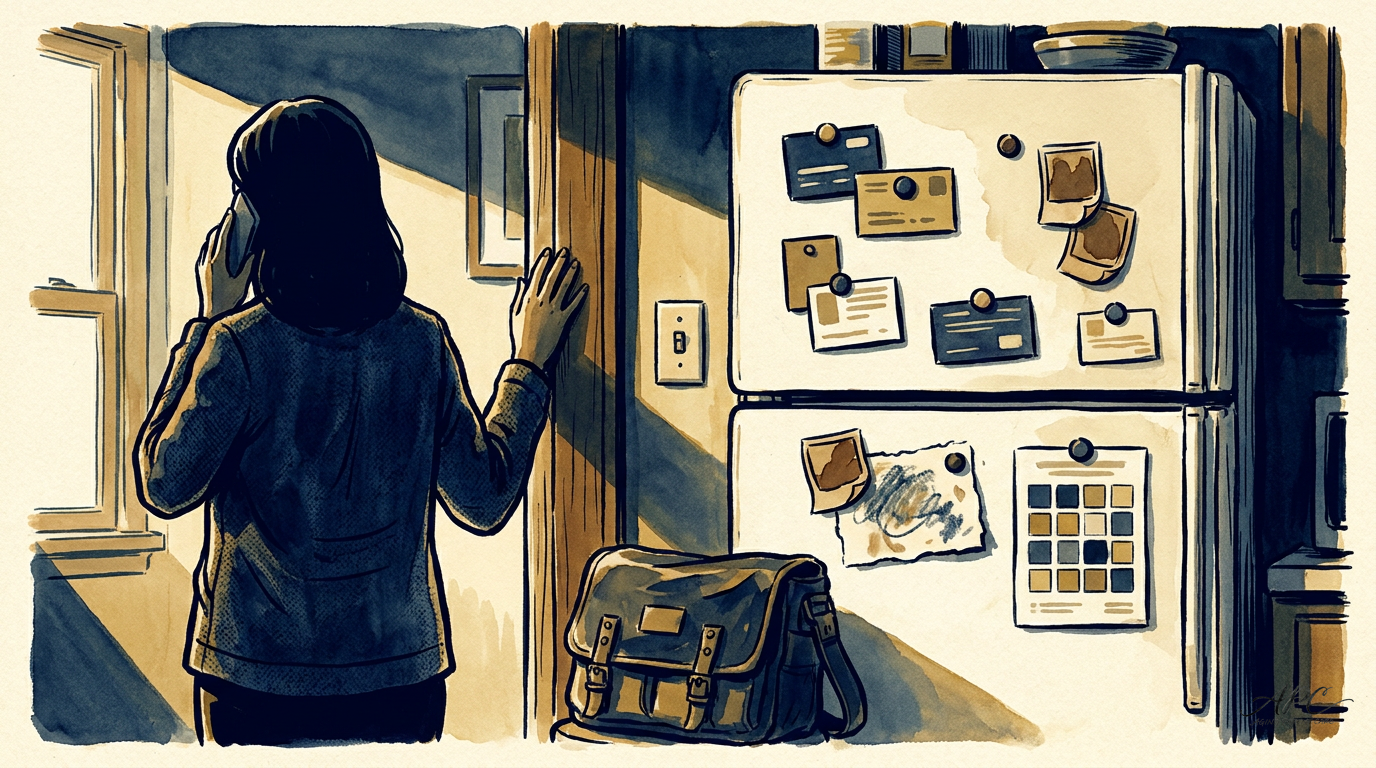
The hours you spend caregiving are hours you're not spending with your children, your spouse, your friends, or yourself. Your daughter's school play falls on the same afternoon as your father's cardiology appointment. You choose the appointment. Then you spend the evening apologizing to a nine-year-old who says it's fine but whose face says otherwise.
Time-based guilt is structural. Trying harder won't fix it. The only solution is adding help to the system. A home health aide for eight hours a week. A neighbor who drives your parent to physical therapy on Thursdays. A sibling who takes the Saturday morning shift. Every hour of help you accept is a load-bearing wall that keeps the house standing.
And this is where guilt becomes most dangerous: it tells you that accepting help means you've failed, when the truth is that refusing help is what leads to failure.
Decision Guilt: "I Put Them There"
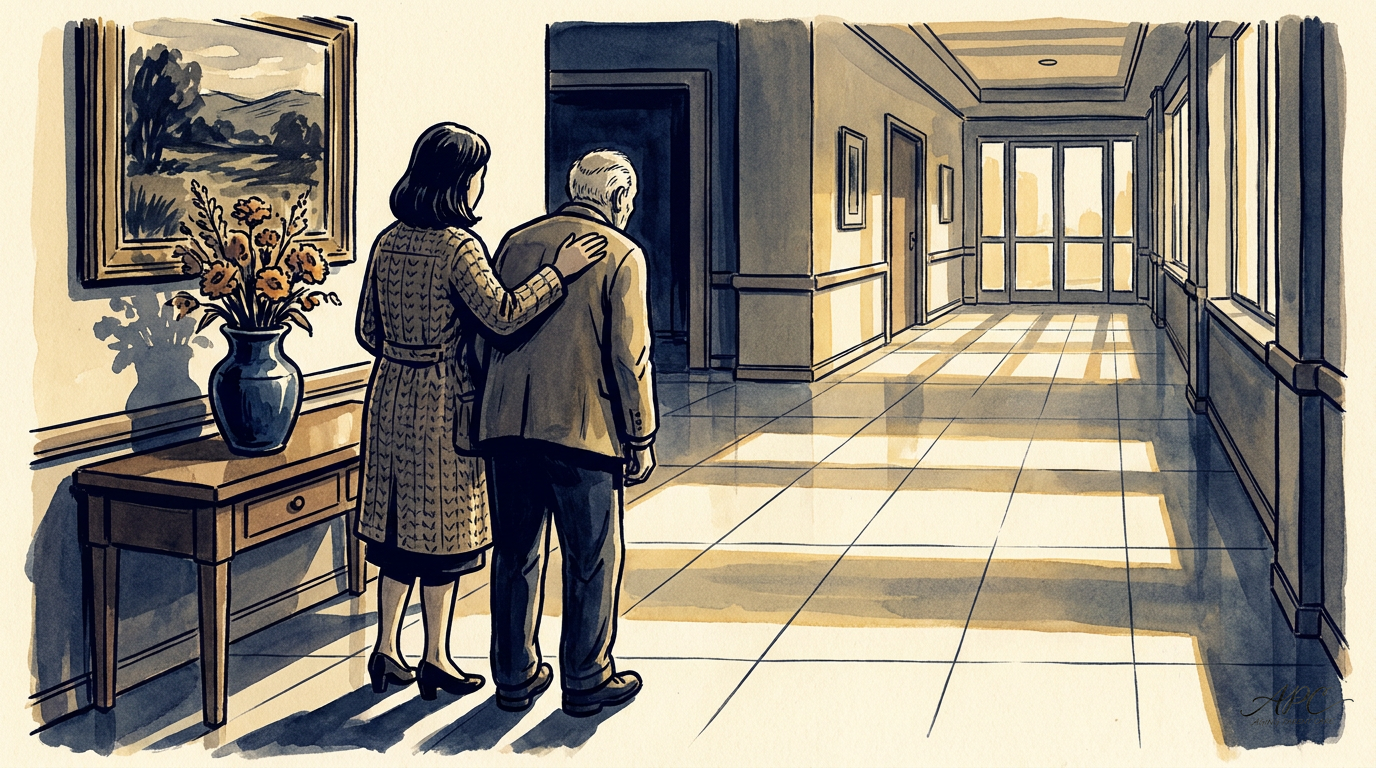
For many families, the hardest moment is the decision to move a parent into assisted living or a nursing facility. The guilt that follows can be crushing. You promised your father he'd never go to a home. He's in one now. The promise echoes.
Decision guilt is retrospective. It replays a choice that's already been made, searching for the version of events where you could have done more, held on longer, figured out another way. But the decision was usually made because the alternatives were already exhausted. Your parent needed more than one person could provide. The house was no longer safe. The medical needs exceeded what you could manage at 3 a.m. with a YouTube video and a blood pressure cuff.
So how do you move past it? Forgiving yourself for a necessary decision happens repeatedly (sometimes daily) until the rawness fades.
The Way Through
Linda Nakamura eventually called her brother. Not because the guilt disappeared, but because her doctor told her that her blood pressure had reached a level that required medication, and she realized she was becoming a patient herself. Her brother took Tuesdays and Thursdays. A home health aide covered Monday mornings. Linda's mother didn't suffer from the change. She barely noticed.
Guilt will tell you that you're the only one who can do this, that asking for help is a betrayal, that any resentment you feel disqualifies you from the role. Guilt is not telling the truth.
The help you're afraid to ask for is what allows you to keep showing up. And showing up, imperfectly, with a rotating cast of helpers and a few missed compression socks? That's enough.
Sources
- Losada-Baltar, A., et al. (2018). Guilt and psychopathology in dementia caregivers. Journal of Affective Disorders.
- Family Caregiver Alliance. Caregiver Guilt. National Center on Caregiving.
- National Institute on Aging. Caring for a Person With Alzheimer's Disease: Tips for Caregivers.
- AARP. (2022). Caregiver Guilt Is Normal. Here's How to Handle It.
- Boss, P. (2004). Ambiguous Loss Research, Theory, and Practice. Journal of Marriage and Family.
- U.S. Administration for Community Living. National Family Caregiver Support Program.
© 2026 Aging Parent Care. All rights reserved. No portion of this article may be reproduced, distributed, or used in any form without the explicit written permission of Aging Parent Care.
Make Your Business Online By The Best No—Code & No—Plugin Solution In The Market.
30 Day Money-Back Guarantee
Say goodbye to your low online sales rate!