


The Math of Staying Home

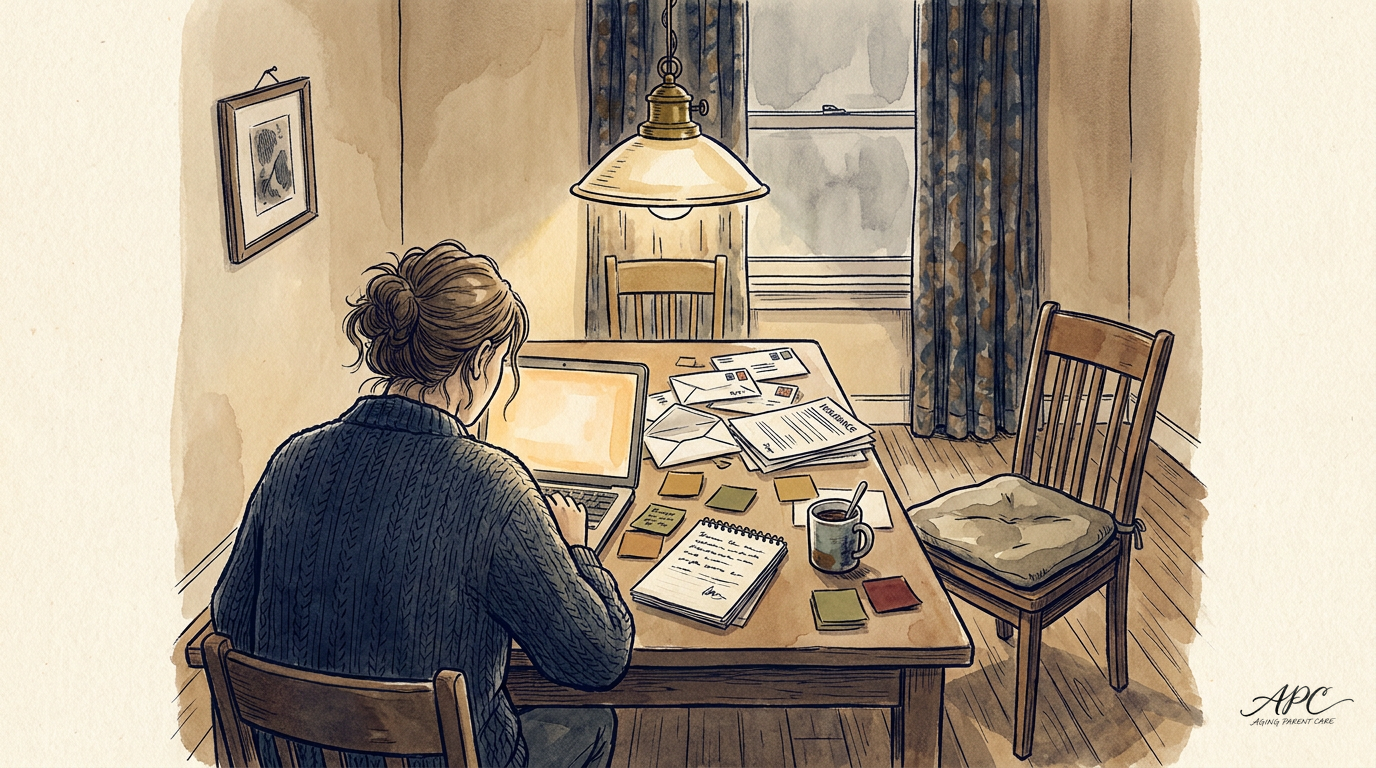
Raymond Okafor's daughter Adaeze did the math on a yellow legal pad at her desk in Philadelphia. She'd been telling herself for months that keeping her father in his three-bedroom house in Germantown was the right thing. He'd lived there for 34 years. He knew the neighbors. His church was three blocks away. The idea of moving him felt like erasure.
But her father had fallen twice in six months. He couldn't manage the stairs reliably. He was forgetting to turn off the stove. And the home aide who came four hours a day, five days a week, was costing $2,800 a month.
Adaeze wrote two columns on the legal pad. The numbers didn't tell the story she wanted them to tell.
The 2026 Cost Reality
On the home care side, a part-time aide at 20 hours per week runs $2,400 to $2,800 per month in most markets. Full-time coverage at 44 hours pushes that to $5,280 to $6,160. Live-in or around-the-clock care? That crosses $10,000 and can reach $15,000 or more.
Assisted living, by comparison, runs $5,500 to $6,200 per month for a private one-bedroom at the 2026 national median. Care tier add-ons for medication management or mobility assistance add $500 to $2,500 on top of that.
Here's the crossover point, and it's clearer than most people expect: if your parent needs more than about 40 hours of weekly help, assisted living is often cheaper than home care.
The Costs the Spreadsheet Misses
Home modifications are the first invisible cost. Walk-in showers, grab bars, stair lifts, widened doorways, ramps. You're routinely looking at $15,000 to $40,000 for aging-in-place renovations.
Then there's your time. If you're supplementing paid care with your own labor, your time has a cost. It's not on the spreadsheet, but your body knows it.
Emergency gaps are the third. Home aides call in sick. They quit. Agencies have staffing shortages. When the aide doesn't show, someone has to. That someone is you. In an assisted living facility, staffing is the facility's problem. At home, staffing is yours.
And social isolation rounds out the list. When aging in place means your parent sits alone in a house for 20 hours a day because the aide left at 2 p.m. and nobody else is coming, the emotional calculus changes. How do you put that on a spreadsheet?

When Staying Home Still Makes Sense
Staying home works best when your parent's care needs are moderate and stable. The home should be single-story or modifiable without a major renovation. Social connections matter enormously: friends in the neighborhood, a faith community, regular visitors. And your parent's cognitive function needs to be intact enough that the unsupervised hours between aide shifts are safe.
The key word is "stable." Home care works when the situation isn't changing quickly. When it is, staying home becomes a moving target.
When the Math Says Move
If your parent currently needs 20 hours of weekly help and the needs are increasing, project forward six months. If the trajectory points toward 40+ hours, start visiting assisted living facilities now, while you have time to choose rather than scramble. That difference (choosing vs. scrambling) changes everything about the outcome.
The Part That Isn't Math
Adaeze Okafor did all of this on her yellow legal pad. The numbers pointed toward assisted living. She made the decision after visiting a facility in Mount Airy, a neighborhood her father knew. She watched a group of residents playing dominoes in the common room. Her father loved dominoes. He hadn't played in two years because there was nobody to play with.
She brought him to visit. He played three games. He lost all three and complained about it for the entire car ride home. It was the most animated he'd been in months.
Raymond Okafor moved to the Mount Airy facility in March. He plays dominoes three times a week. He still complains about losing. He's stopped falling.
The math said move. So did the dominoes.
Sources
1. U.S. News 2026 Cost Guide
2. SeniorLiving.org
3. NIA aging in place research
Sources
- CareScout/Genworth. "2025 Cost of Care Survey Results." Genworth Financial, 2025.
- CareScout. "Cost of Long Term Care by State." Genworth, 2025.
- AARP. "What Are the Costs of Aging in Place?" AARP, 2025.
- National Institute on Aging. "Aging in Place: Growing Older at Home." NIH, 2025.
- Carnemolla, P. and Bridge, C. "Housing Design and Community Care: How Home Modifications Reduce Care Needs." International Journal of Environmental Research and Public Health, 2019.
- U.S. Bureau of Labor Statistics. "Home Health and Personal Care Aides: Occupational Outlook Handbook." BLS, 2025.
© 2026 Aging Parent Care. All rights reserved. No portion of this article may be reproduced, distributed, or used in any form without the explicit written permission of Aging Parent Care.
Make Your Business Online By The Best No—Code & No—Plugin Solution In The Market.
30 Day Money-Back Guarantee
Say goodbye to your low online sales rate!