


The Medicaid Cliff Is Coming. 4.5 Million Families Need a Backup Plan.

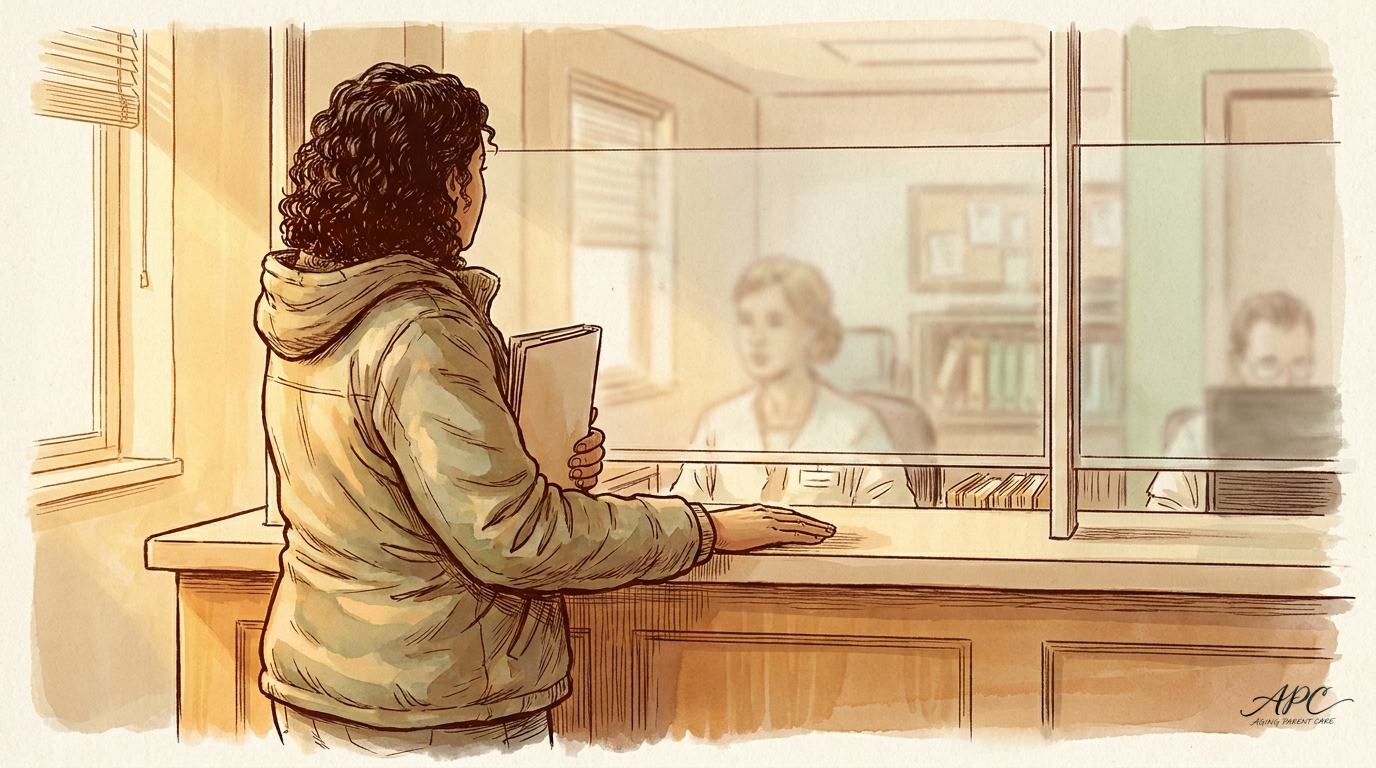
The call will come on an ordinary Tuesday. Your mother's assisted living facility will leave a voicemail, professional and regretful, explaining that they can no longer accept her Medicaid rate. Or the home health aide who's been coming three mornings a week will tell you that her agency lost its state contract. Or you'll open a letter from your state Medicaid office informing you that your father's eligibility is under review.
This is already taking shape.
The reconciliation package moving through Congress, informally called the "One Big Beautiful Bill," contains roughly $1 trillion in Medicaid cuts over the next decade. That's hard to grasp in the abstract, so here's what it looks like at ground level: an estimated one million dual-eligible older adults (people who qualify for both Medicare and Medicaid) could lose coverage. States facing tighter federal matching rates may eliminate optional benefits, including assisted-living waivers and home and community-based services. The 4.5 million Americans currently receiving Medicaid-funded home care are directly in the path of these changes.
Two out of every three nursing home residents in this country rely on Medicaid to pay their bills. That statistic cuts across every income bracket. It reflects what happens when anyone lives long enough to exhaust their savings, which is exactly what a $9,000-per-month memory care facility does to a middle-class retirement account in about three years.
The math isn't complicated. It's just brutal.
If you have a parent currently receiving Medicaid-funded care, or a parent who may need it within the next five years, the time to build a backup plan is now. Not after the bill passes. Not after your state announces its response. Now.
Here's what to do in the next 90 days.
Step one: understand your parent's current Medicaid status.Medicaid is 50 different programs, one per state, each with its own eligibility rules, benefit packages, and waiver programs. Your parent may be receiving services through a home and community-based services (HCBS) waiver, which is the category most vulnerable to cuts. Or they may be in a nursing facility under mandatory Medicaid coverage, which is harder (though not impossible) for states to cut. Pull your parent's most recent Medicaid determination letter. Know the program name, the benefit category, and the renewal date.
Do you know which one your parent is on? If not, that's your first homework.
Step two: get the legal paperwork in order.If your parent doesn't have a durable power of attorney, a healthcare proxy, and a current will, stop reading this article and call an elder law attorney today. These documents cost between $1,500 and $3,500 to prepare, depending on complexity and location. Without them, you can't make financial or medical decisions on your parent's behalf, which means you can't respond to a coverage crisis when it arrives. Every elder law attorney in the country is busier this year than last. The wait for an appointment is growing.
Step three: learn your state's Medicaid waiver programs.Each state runs its HCBS waivers differently. Some states (New York, California) have relatively generous programs. Others (Texas, Mississippi) have long waiting lists and limited slots. If your parent is on a waiver, find out where they are on the priority list and what would happen if that waiver program were reduced or eliminated. Your local Area Agency on Aging (find yours at eldercare.acl.gov or by calling 211) can walk you through your state's specific programs.
Step four: calculate the private-pay gap.If Medicaid coverage is reduced or eliminated, someone has to pay. So what do the numbers actually look like? The 2025 Genworth Cost of Care Survey puts the national median for a home health aide at $33 per hour. A semi-private room in a nursing facility averages $8,669 per month. A private room: $9,733. Assisted living: $5,511. These are medians. In major metro areas, add 30 to 60 percent.

Pull together your parent's actual financial picture: Social Security income, pension (if any), savings, home equity, life insurance cash value. Then compare that to the monthly cost of their current level of care at private-pay rates. The gap between those two numbers is the problem you need to solve.
Step five: explore every alternative funding source.Veterans' benefits. The VA's Aid and Attendance program provides up to $2,431 per month for qualifying veterans and $1,318 for surviving spouses. A lot of families don't know this benefit exists. Worth checking.
Long-term care insurance. If your parent purchased a policy years ago, dig it out and read the benefit triggers. Many policies require the insured to need help with two or more activities of daily living. If your parent meets that threshold, file the claim now, not later.
Reverse mortgage. For parents who own their home, a Home Equity Conversion Mortgage can provide monthly income or a line of credit. It's not a perfect tool, and the fees are significant, but for some families it bridges the gap between Medicaid loss and facility costs.
Life insurance conversion. Some life insurance policies can be converted to long-term care benefit plans through life settlements or accelerated death benefits. This is worth investigating if your parent holds a policy with a face value above $100,000.
State pharmaceutical assistance programs, Supplemental Security Income, and Medicare Savings Programs can also reduce out-of-pocket costs, freeing up dollars for care.
Step six: have the family meeting.This is the step nobody wants to take. Sit down with every sibling, every stakeholder, and put the numbers on the table. How much does care cost now? How much will it cost if Medicaid support shrinks? Who can contribute what (whether in money or in time)? A conversation with real numbers is uncomfortable. A crisis without a plan is worse.
The legislative process isn't finished. The final bill may differ from current proposals. Courts may intervene. States may find workarounds. But planning based on hope is just waiting.
The families who'll handle this transition best are the ones who spent these 90 days doing the unglamorous work: reading the fine print, filing the paperwork, calculating the gap, and having the hard conversation at the kitchen table before the voicemail arrives.
Sources
- KFF. "Potential Impacts of Medicaid Cuts on Older Adults and People with Disabilities." 2025.
- KFF. "Medicaid in the United States." 2024.
- Medicaid.gov. "Home and Community-Based Services." Centers for Medicare and Medicaid Services.
- Genworth Financial. "Cost of Care Survey 2025."
- U.S. Department of Veterans Affairs. "Aid and Attendance Benefits and Housebound Allowance."
- U.S. Department of Housing and Urban Development. "Home Equity Conversion Mortgages for Seniors."
- Eldercare Locator. U.S. Administration on Aging. eldercare.acl.gov.
© 2026 Aging Parent Care. All rights reserved. No portion of this article may be reproduced, distributed, or used in any form without the explicit written permission of Aging Parent Care.
Make Your Business Online By The Best No—Code & No—Plugin Solution In The Market.
30 Day Money-Back Guarantee
Say goodbye to your low online sales rate!