
Why Your Sister Isn't Helping: The Pew Data Behind the Sibling Caregiving Gap
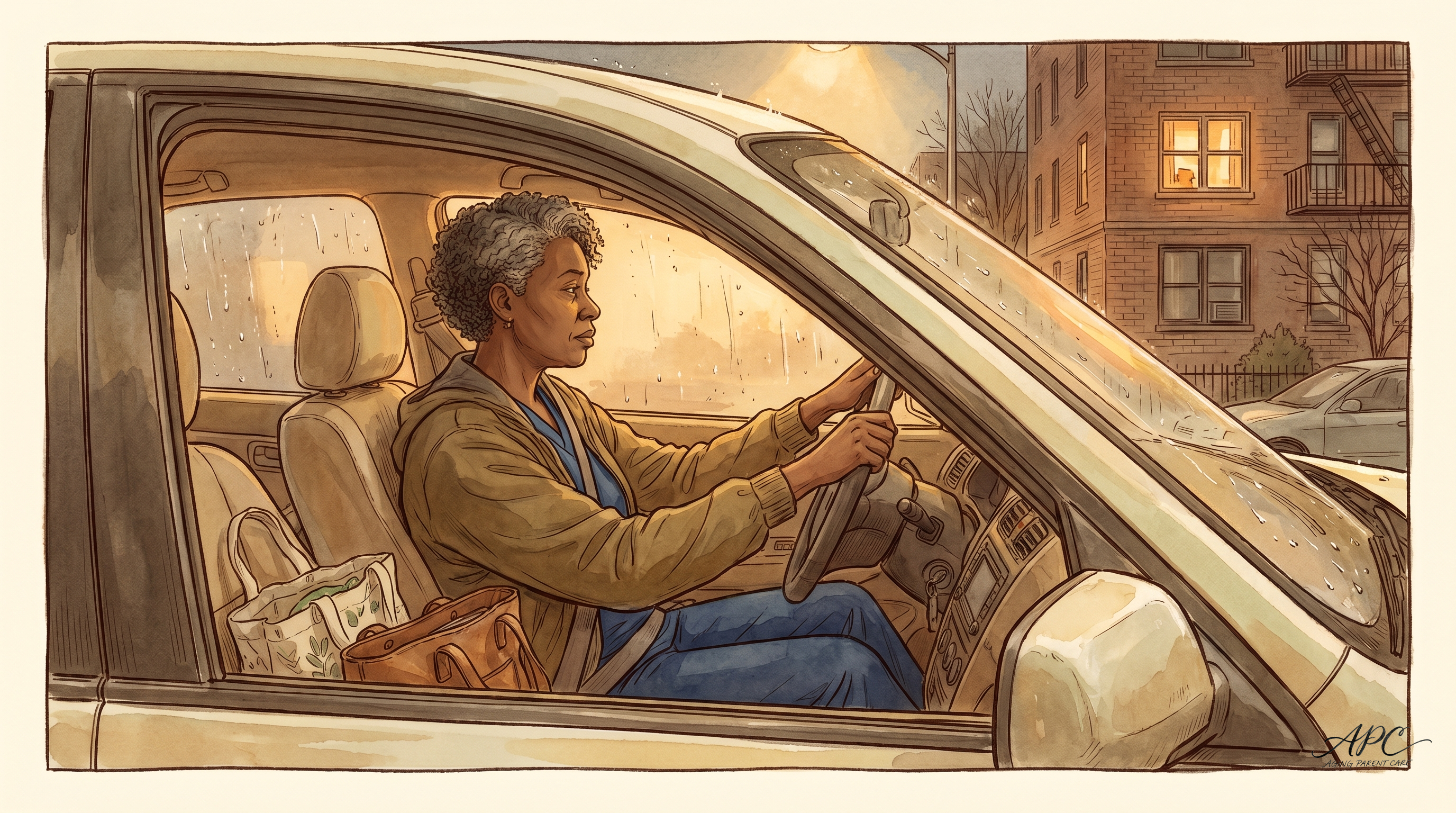
Denise Okafor calls her brother twice a month. The calls last about twelve minutes. He asks how their mother is doing; she tells him. He says he wishes he could do more; she says she understands. Then one of them has to go. Denise has been the primary caregiver for their mother for three years. Her brother lives forty minutes away.
This pattern (one sibling carrying the weight while others remain peripheral) isn't a character flaw or a family failing. It's, according to a decade of research including a major 2024 Pew Research Center report, the statistical norm. Understanding why it happens, and what it actually costs the person doing the work, is the first step toward changing it.
What the Pew Data Actually Says
The 2024 Pew Research Center survey on family caregiving, which drew on a nationally representative sample of 5,044 adults, found that 23 percent of Americans report having provided unpaid care to an older adult in the previous twelve months. Among those caregivers, the burden is distributed sharply along gender and geography lines.
Women are significantly more likely than men to serve as the primary caregiver when an older parent needs help: 61 percent of primary caregivers in the Pew sample were women. Daughters are more likely than sons to provide personal care (bathing, dressing, medication management) and emotional support. Sons, when they do contribute, are more likely to provide financial help or assistance with home maintenance and transportation.
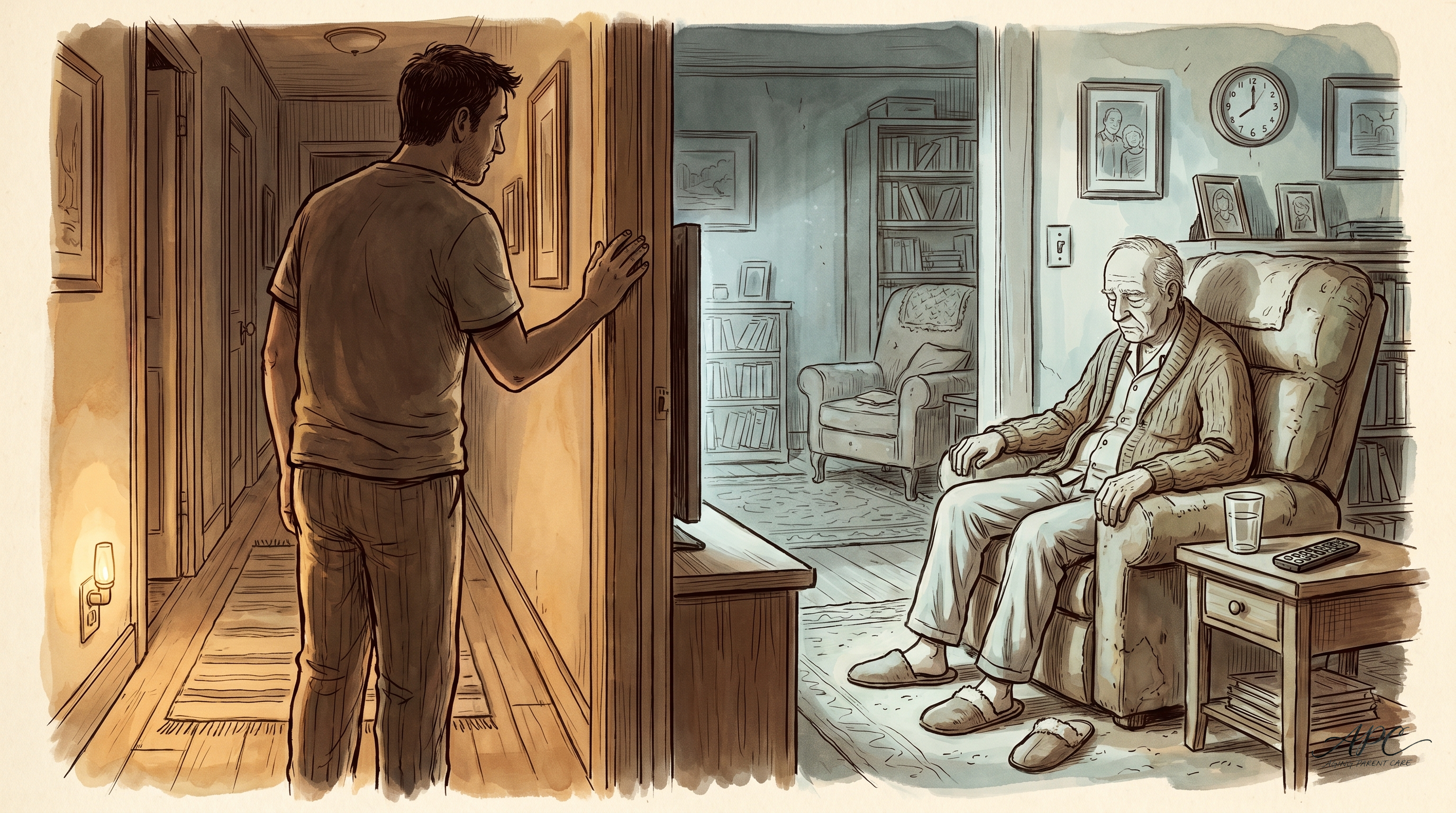
Geographic proximity matters as much as gender. The sibling who lives closest almost always ends up doing the most. And the shift happens gradually, through an accumulation of convenience: who can drop by when there's a problem, who gets the call from the neighbor who noticed the lights on all night, who's available when the discharge nurse calls from the hospital at 2 p.m. on a Tuesday.
The result? A structural caregiving gap the Pew data describes in detail: the primary caregiver spends an average of 26 hours per week on caregiving tasks, while secondary contributors average fewer than 8 hours per month. The primary caregiver is three times more likely to report that caregiving has negatively affected their career. Four times more likely to report financial strain.

According to the Pew data, the types of care provided also differ significantly by relationship. Primary caregivers (most often daughters) are far more likely to provide hands-on personal care and coordinate the medical and logistical complexity of a parent's life. Contributing siblings are more likely to make financial contributions or take on defined, bounded tasks. There's a difference between writing a check for a home health aide and being the person who manages that aide, handles the scheduling when they call out sick, and fields the questions that no aide is qualified to answer.
Why Siblings Don't Step Up (It's Rarely Malice)
The most common explanation for the sibling caregiving gap is simple avoidance: the non-contributing siblings know that if they don't act, the primary caregiver will handle it. This is the dynamic family therapists describe as the "over-functioning/under-functioning" cycle. The more competently you handle everything, the less visible the need for help becomes to everyone else.
But research on sibling caregiving dynamics, including a series of studies by sociologist Dr. Ingrid Arnet Connidis, points to more complex factors. Siblings often have genuinely different assessments of how much help a parent needs. The sibling who visits once a month sees a parent who's managing reasonably well, because the daily management is invisible to them. The sibling who's there every day sees the full picture, including the things your parent would never reveal to a less familiar presence.
And then there's what psychologists call "role identity." Some people have internalized a sense of themselves as caregivers; others haven't. Daughters who grew up in families where women handled domestic and care responsibilities often feel that taking on the caregiver role is simply what you do. Siblings who grew up with a different sense of their role may not be refusing to help so much as genuinely not seeing how to enter a caregiving situation that already has an established structure. Does that excuse it? No. But it explains it.
What Actually Helps Bridge the Gap
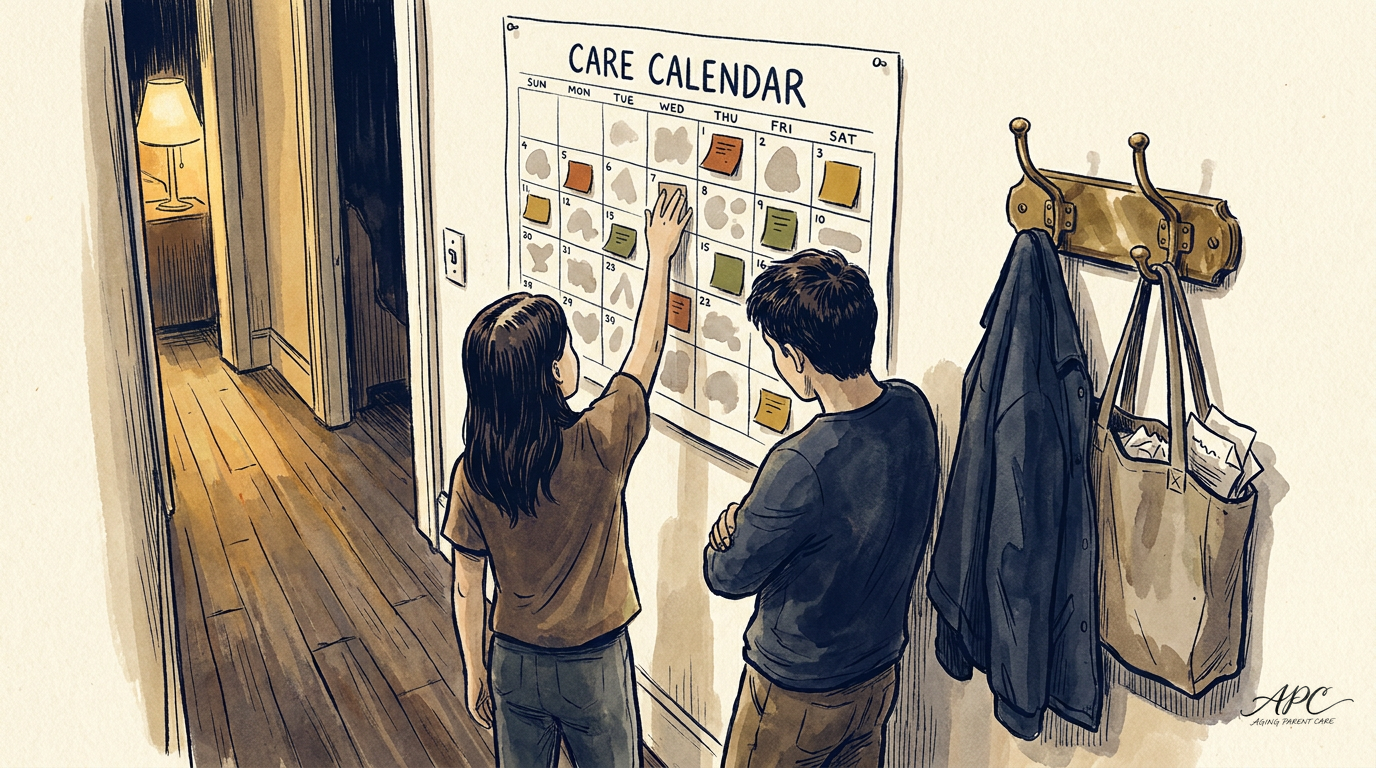
Family meetings, approached as logistics conversations rather than grievance forums, are one of the most consistently effective tools for redistributing caregiving. The goal is to identify specific tasks with specific owners. Grievance conversations rarely produce change. Logistics conversations do.
"Can you take over the monthly insurance billing and the call with the pharmacist?" is more actionable than "I need more help." It's harder to say no to a bounded, named task than to a general appeal. Every single time.
Some families benefit from a formal family meeting facilitated by a social worker or geriatric care manager. Geriatric care managers are professionals with training in aging, social work, or nursing who can help you assess your parent's needs, develop a care plan, and work through the dynamics that make family caregiving so charged. They charge by the hour, typically $150 to $250 per session, and the investment often prevents far more costly dysfunction down the line.
Denise eventually sent her brother a written list of twelve tasks. A plain logistics document. He took four. He does them consistently. The distribution remains uneven, and Denise knows that. But those are four fewer things she carries alone.
Sources
- Pew Research Center. About a Quarter of U.S. Adults Are Helping Care for an Older Adult. May 2024.
- Connidis, I.A., & Kemp, C.L. (2008). Negotiating actual and anticipated parental support. Journal of Aging Studies.
- Family Caregiver Alliance. Women and Caregiving: Facts and Figures.
- Tolkacheva, N., et al. (2011). Sibling differences in caregiver burden: The moderating role of personality. Journal of Family Issues, 32(9), 1216-1237.
- Aging Life Care Association. What Is Aging Life Care?
© 2026 Aging Parent Care. All rights reserved. No portion of this article may be reproduced, distributed, or used in any form without the explicit written permission of Aging Parent Care.
Make Your Business Online By The Best No—Code & No—Plugin Solution In The Market.
30 Day Money-Back Guarantee
Say goodbye to your low online sales rate!