


Your Parent's Dementia Diagnosis Just Changed. Here Is What the New Drugs Actually Do.
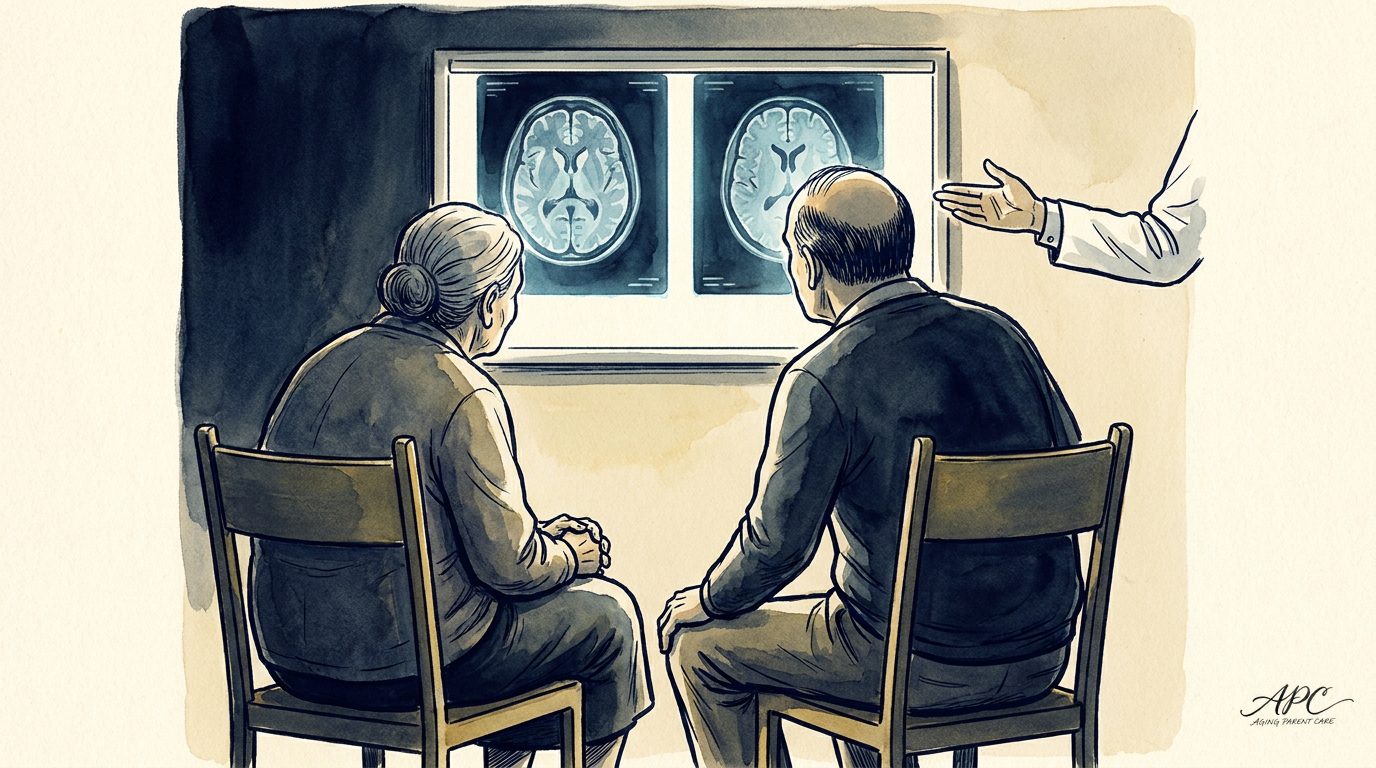
The call usually comes on an ordinary Tuesday. Your mother's neurologist has results. There's a new class of drug, the doctor says, and your parent might qualify. You hang up and Google the name, and within twenty minutes you're drowning in press releases that read like miracles and Reddit threads that read like warnings.
This article is the conversation you need before your next appointment.
What These Drugs Are
Two anti-amyloid antibody drugs are now FDA-approved for early-stage Alzheimer's disease: lecanemab (brand name Leqembi) and donanemab (brand name Kisunla). Both work by the same basic mechanism. They're monoclonal antibodies, lab-engineered proteins designed to bind to amyloid-beta plaques in the brain and help the immune system clear them. Amyloid plaques are sticky protein deposits that accumulate between neurons. For decades, the dominant hypothesis in Alzheimer's research has held that this buildup is a primary driver of cognitive decline.
These drugs don't cure the disease. The damage already done stays done. What they do, based on Phase 3 clinical trial data, is slow the rate of cognitive decline by roughly 27% (lecanemab) to 35% (donanemab) over 18 months compared to placebo. In practical terms? A patient on donanemab might retain the ability to manage their own medications or remember a grandchild's name for several months longer than they would without treatment.
Several months. That's the scale we're talking about. Borrowed time, measured in seasons.
Whether that time is worth the cost and the logistical weight depends entirely on your family's specific situation. Here's what you need to weigh.
The Cost
Lecanemab costs approximately $26,500 per year. Donanemab runs about $32,000 per year, though Eli Lilly has indicated that treatment courses may be shorter (patients who clear their amyloid can stop). Medicare Part B covers both drugs, but copays can still reach $6,600 annually for patients without supplemental coverage. If your parent has a Medigap plan or Medicare Advantage, out-of-pocket costs vary widely. Call the plan before the prescription.
The Logistics
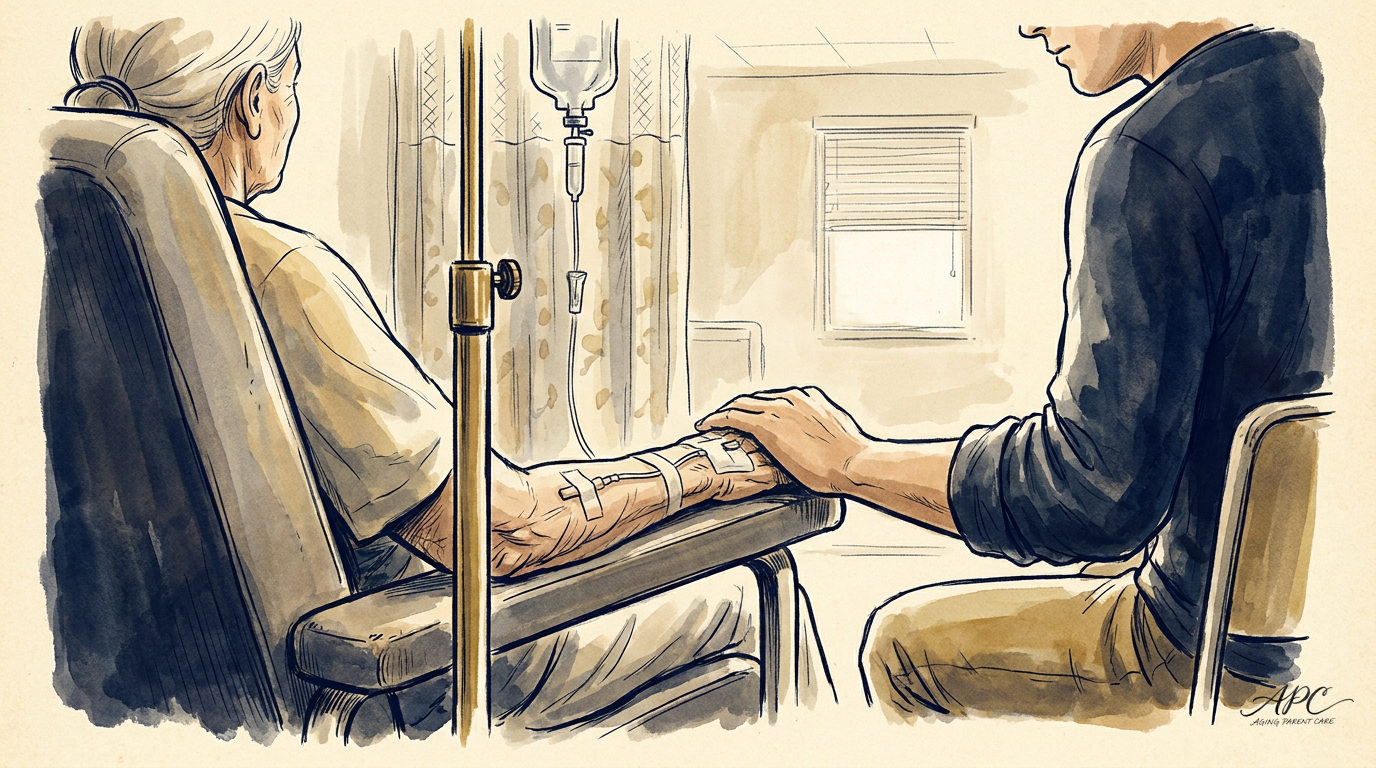
This isn't a pill you pick up at the pharmacy. Lecanemab currently requires biweekly intravenous infusions at an infusion center, each session lasting about an hour plus monitoring time. An at-home injectable form is pending FDA approval as of early 2026. If approved, it would change the logistics considerably. Donanemab is given as a monthly IV infusion. Both drugs require regular MRI monitoring, typically every few months, to watch for side effects.
The Risks
The side effect that matters most is ARIA: amyloid-related imaging abnormalities. That's a clinical term for brain swelling (ARIA-E) or microbleeds (ARIA-H) that show up on MRI scans. In clinical trials, ARIA occurred in 17% of lecanemab patients and roughly 30% of donanemab patients. Most cases were mild and resolved without symptoms. Some weren't. A small percentage of participants experienced headaches, confusion, dizziness, nausea, or visual disturbances. In rare cases, ARIA led to hospitalization. Three deaths in the donanemab trial were linked to ARIA complications.
The risk is higher for patients who carry two copies of the APOE4 gene, a known genetic risk factor for Alzheimer's. Genetic testing (a blood draw) is now standard before prescribing either drug. If your parent is APOE4 homozygous, the conversation with their neurologist needs to be longer and more specific.
Who Qualifies
Not everyone qualifies. Both drugs are approved only for early-stage Alzheimer's, meaning mild cognitive impairment or mild dementia with confirmed amyloid pathology. Confirmation requires either a PET scan or a cerebrospinal fluid test (lumbar puncture). If your parent is in moderate or advanced stages, these drugs aren't indicated. Clinical trials excluded patients in later stages, so there's no efficacy data for them.
And this is where families often hit the wall. The diagnosis comes, the drug exists, but the window for treatment may have already closed. Early detection matters more now than it did five years ago, precisely because these drugs only work in that early window.
What Is Coming Next
Beyond lecanemab and donanemab, the pipeline is active. BrightFocus Foundation's 2026 forecast notes that research is expanding beyond amyloid-only targets. Drugs addressing tau protein tangles and neuroinflammation are in Phase 2 trials. Others target synaptic repair. None are available yet. Planning around future drugs is premature, but knowing the field is moving matters for morale and for long-term care planning conversations.
What to Do With This Information
Start with your parent's doctor. Ask three specific questions: Does my parent meet the diagnostic criteria for these drugs? What's their APOE4 status? Given their overall health and care situation, does the benefit-to-risk ratio favor treatment?
Then be honest about logistics. Biweekly or monthly infusion appointments require transportation and scheduling, plus someone to drive your parent home. If your parent lives alone and you live three hours away, the drug's efficacy is irrelevant if they can't get to appointments. Factor in the MRI monitoring schedule. Factor in who will watch for symptoms of ARIA between scans.
Have the harder conversation, too: what does "slowing decline" mean to your parent, not just to you? Some families decide that several additional months of mild-stage function is worth the side-effect risk and the time commitment. Others decide it isn't. Both answers are valid.
And look into financial assistance early. Both Eisai (lecanemab) and Eli Lilly (donanemab) offer patient assistance programs. The Alzheimer's Association maintains an updated list of copay assistance resources. Do this research before the prescription is written, not after the first bill arrives.
The Hardest Part
The hardest part of these new drugs isn't the science. It's the hope management. A drug that slows decline by 27 to 35 percent matters. It's also a long way from the breakthrough you're praying for when you sit in the neurologist's waiting room. Holding the real progress and the real limitations at the same time is the work.
No one prepares you for it. But now you have the numbers. That's a start.
Sources
- van Dyck CH, et al. Lecanemab in Early Alzheimer's Disease. NEJM, 2023.
- Sims JR, et al. Donanemab in Early Symptomatic Alzheimer's Disease. NEJM, 2023.
- FDA. FDA Grants Traditional Approval to Leqembi for Treatment of Alzheimer's Disease.
- Alzheimer's Association. Anti-Amyloid Treatments for Alzheimer's.
- CMS. Medicare Coverage of Anti-Amyloid Antibodies for Alzheimer's Disease.
- National Institute on Aging. Alzheimer's Disease Genetics Fact Sheet.
© 2026 Aging Parent Care. All rights reserved. No portion of this article may be reproduced, distributed, or used in any form without the explicit written permission of Aging Parent Care.
Make Your Business Online By The Best No—Code & No—Plugin Solution In The Market.
30 Day Money-Back Guarantee
Say goodbye to your low online sales rate!