


Your Parent's Unpaid Bills Might Be the First Sign of Dementia

The first sign wasn't forgetting a name. It wasn't repeating a story at dinner. For Linda Ogden's mother, it was a stack of envelopes.
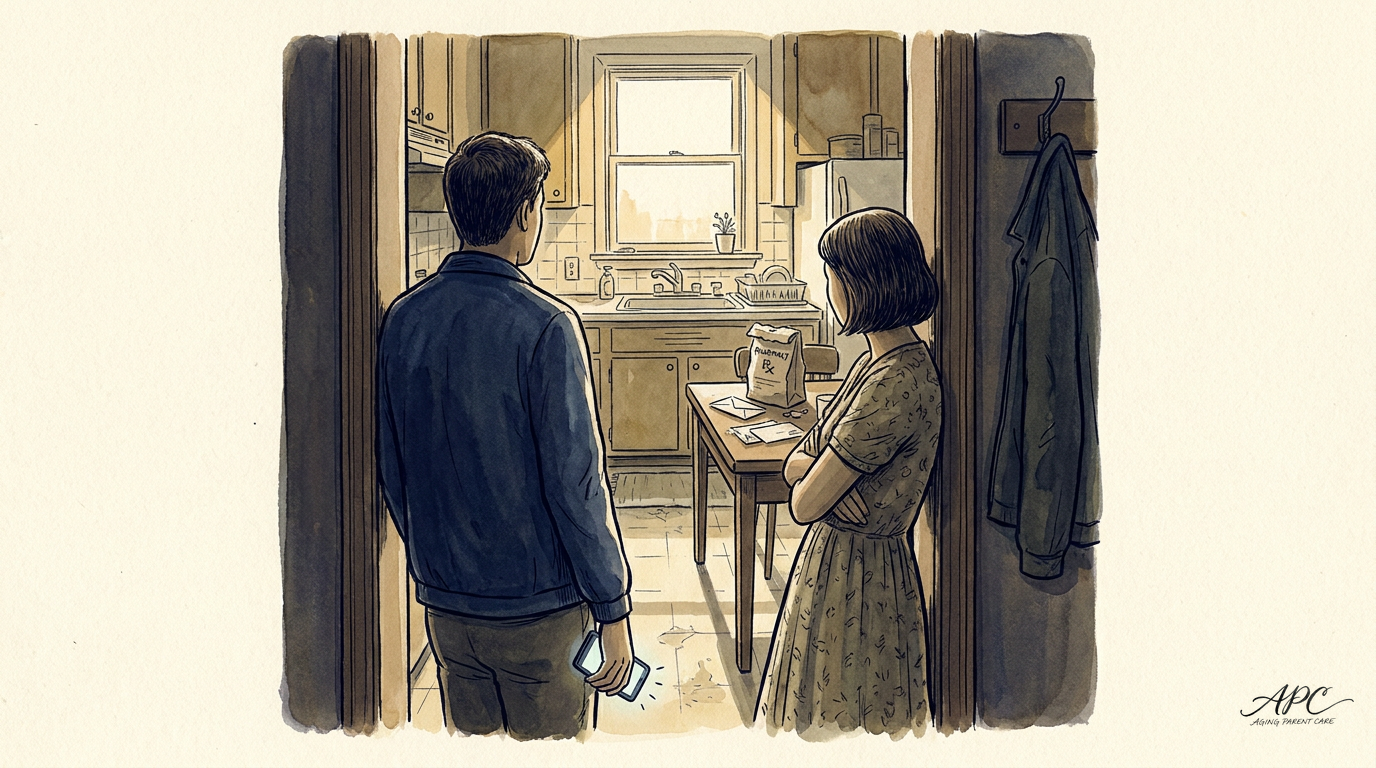
Linda found them in a kitchen drawer in her mother's house in Richmond, Virginia. Fourteen unopened bills, some dating back five months. The electric company had sent a disconnection notice. The supplemental insurance premium had lapsed. A handwritten check to the church sat inside its envelope, sealed and stamped but never mailed.
Her mother, a retired school librarian who once balanced the household books to the penny, had simply stopped paying attention to money.
It's a common story. Research published in JAMA Internal Medicine found that missed bill payments and new credit delinquencies can begin appearing up to six years before a formal Alzheimer's diagnosis. Six years. That's a flashing light that most families drive right past, because the person in question still sounds like themselves on the phone and still remembers where the coffee mugs go.
The checkbook, it turns out, is one of the most sensitive early-detection instruments we have. Why? Because paying bills on time requires several cognitive functions working together: reading and understanding a statement, remembering when it's due, initiating the action to pay it, executing the steps in the right order, and then filing or discarding the paperwork. Neurologists call these instrumental activities of daily living, or IADLs. They're the first to erode, often years before the basic activities (dressing, eating, bathing) show any decline.
The financial signals extend beyond unpaid bills. AARP identifies 15 early warning signs of cognitive impairment, and several of them live in the financial lane: unusual charitable donations, susceptibility to phone scams, duplicate purchases, confused tax filings, and sudden changes in spending patterns. A parent who's always been frugal starts buying things from late-night television. A parent who managed a stock portfolio for decades suddenly can't explain what's in it.
These behaviors get dismissed. You tell yourself your parent is "just getting older" or "has always been a little disorganized." The dismissal is understandable. Nobody wants to see what these signals actually mean. But the gap between noticing and acting is where preventable damage happens: drained savings, stolen identities, lapsed insurance, penalties, and legal exposure.
Dr. Lauren Nicholas, a health economist at the University of Colorado, studied Medicare claims and credit report data for more than 80,000 individuals. Her findings were stark. People who eventually received a dementia diagnosis showed measurable financial decline, including missed payments and subprime credit scores, beginning in the preclinical period, well before any doctor had written anything in a chart. The financial system was recording cognitive decline before the medical system was.

So what should you actually look at?
Start with the mail. Not the email (though that matters too), but the physical mail. A pile of unopened envelopes is one of the most reliable red flags in geriatric assessment. If your parent lets you into their home, look at the kitchen counter, the dining room table, the desk. Stacks of unsorted paper are a signal.
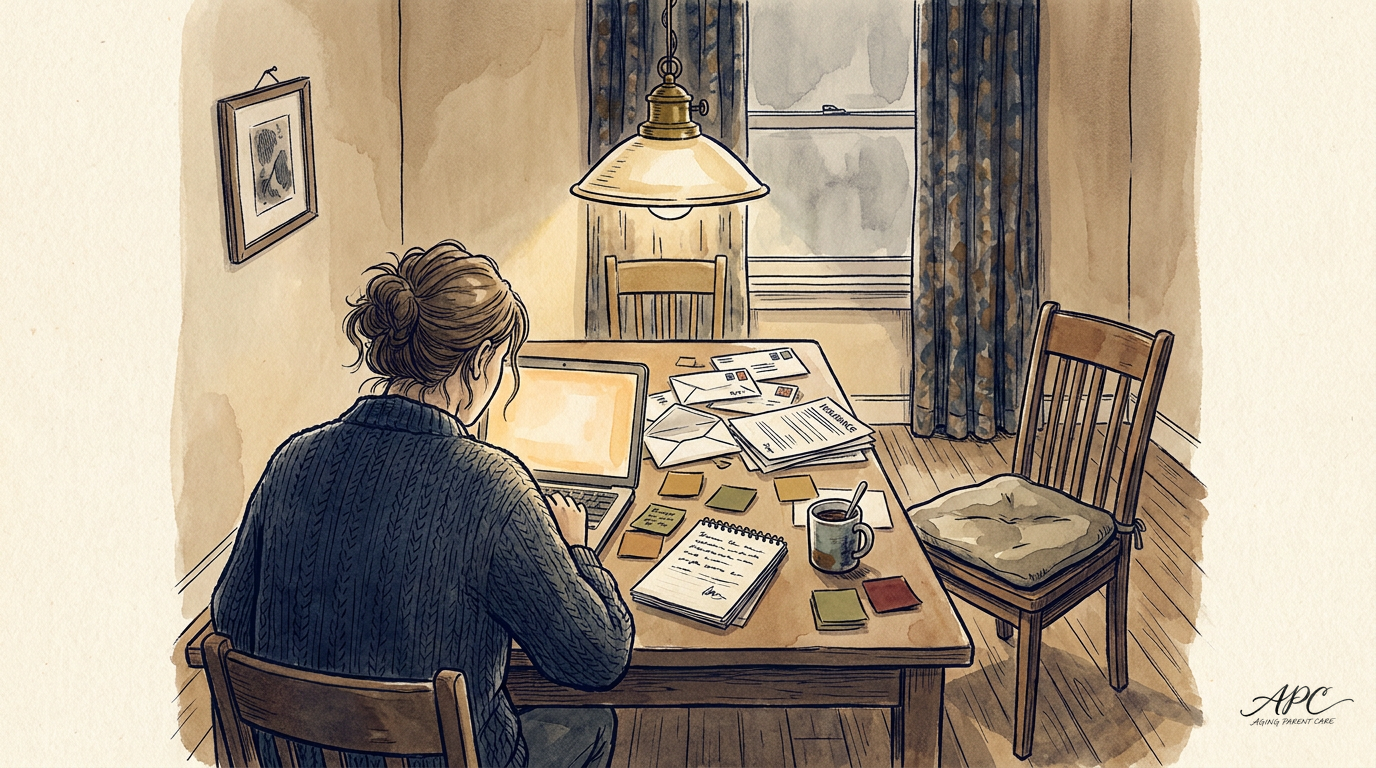
Next, look at the checking account. If your parent banks online and you have access (or can get it with their permission), review three months of transactions. Don't fixate on any single missed payment. You're looking for a pattern: irregular timing, duplicate payments to the same vendor, checks written to unfamiliar names, automatic payments that have been canceled for no clear reason.
Third, check for scam exposure. The Federal Trade Commission reported that adults over 60 lost more than $1.9 billion to fraud in 2024, a figure that's risen every year for a decade. People in the early stages of cognitive decline are disproportionately targeted because they're trusting and their judgment about risk has begun to shift. If your parent mentions a new "friend" who calls regularly, or a prize they're expecting, that deserves a direct conversation. Don't wait on that one.
Fourth, ask about taxes. If your parent has always done their own taxes and suddenly hands them off, or files late, or files twice, that's a cognitive task that's become too complex for them to manage.
Here's the harder question: what do you do with this information once you have it? Confrontation rarely works. Telling a parent "I think something is wrong with your brain" will, in most cases, produce denial, anger, or both. A better approach is to frame the conversation around help rather than diagnosis. "I noticed a few of your bills got behind. Can I help you set up autopay?" This is a practical offer that opens the door. It also gives you a reason to stay involved in their financial picture going forward.
If the pattern is pronounced, the next step is a visit to their primary care physician. You can call the doctor's office in advance (HIPAA allows you to share information with a provider, even if the provider can't share back without consent) and describe what you've observed. Ask for a cognitive screening at the next appointment. The Montreal Cognitive Assessment, or MoCA, takes about ten minutes and is far more sensitive than the older Mini-Mental State Exam.
The point of all this is to pay attention to what the checkbook is already telling you. Financial confusion is the first observable symptom in millions of households of a disease that will eventually take much more.
Linda Ogden's mother was diagnosed with early-stage Alzheimer's eight months after the kitchen-drawer discovery. By then, Linda had set up autopay on every account, added her name to the checking account, and filed a power of attorney. She had time because she noticed.
Not every family gets that window. But every family can look.
Sources
- Nicholas LH, et al. Financial Presentation of Alzheimer Disease and Related Dementias. JAMA Internal Medicine, 2017.
- AARP. 15 Warning Signs of Cognitive Impairment You Might Be Missing.
- Federal Trade Commission. Protecting Older Adults: Fraud Reports and Financial Losses.
- National Institute on Aging. Understanding Memory Loss.
- Alzheimer's Association. Cognitive Assessment and the Montreal Cognitive Assessment (MoCA).
- National Institute on Aging. Alzheimer's Disease Fact Sheet. 2023.
© 2026 Aging Parent Care. All rights reserved. No portion of this article may be reproduced, distributed, or used in any form without the explicit written permission of Aging Parent Care.
Make Your Business Online By The Best No—Code & No—Plugin Solution In The Market.
30 Day Money-Back Guarantee
Say goodbye to your low online sales rate!