
Your Sister Isn't the Problem. Grief Is.
The fight started, as most of them do, over something small. A prescription that wasn't refilled. A doctor's appointment that nobody drove to. A text message that went unanswered for two days.

Your sister didn't call back. Your brother showed up with opinions but no overnight bag. Someone said I have a job too, you know, and someone else said you haven't been here in three weeks, and within minutes you were both standing in your mother's kitchen having the same argument you've had since you were eleven.
Here's the thing nobody tells you: the fight has nothing to do with the prescription. Nothing to do with the driving or the texting or the showing up. The fight is about grief, specifically anticipatory grief, which is the mourning that begins while the person you love is still alive.
What Anticipatory Grief Actually Looks Like
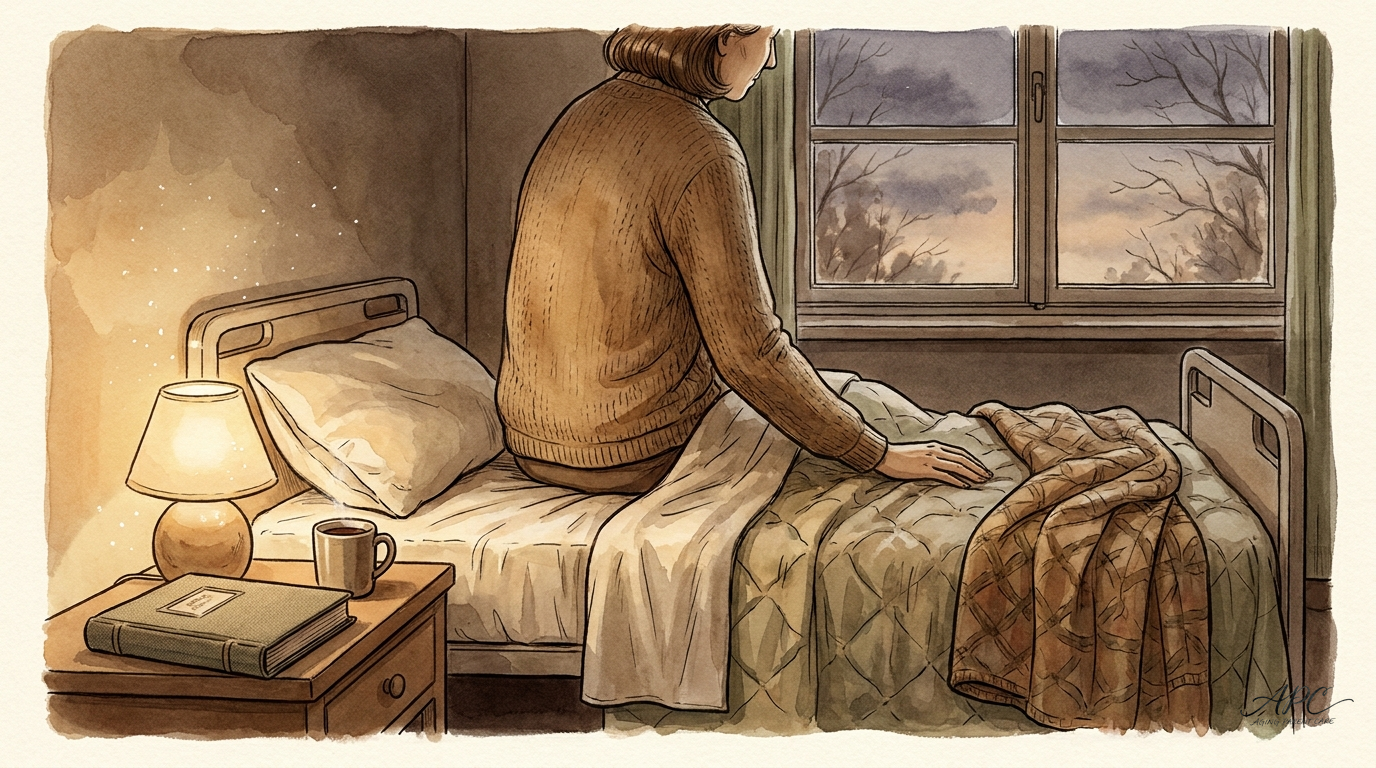
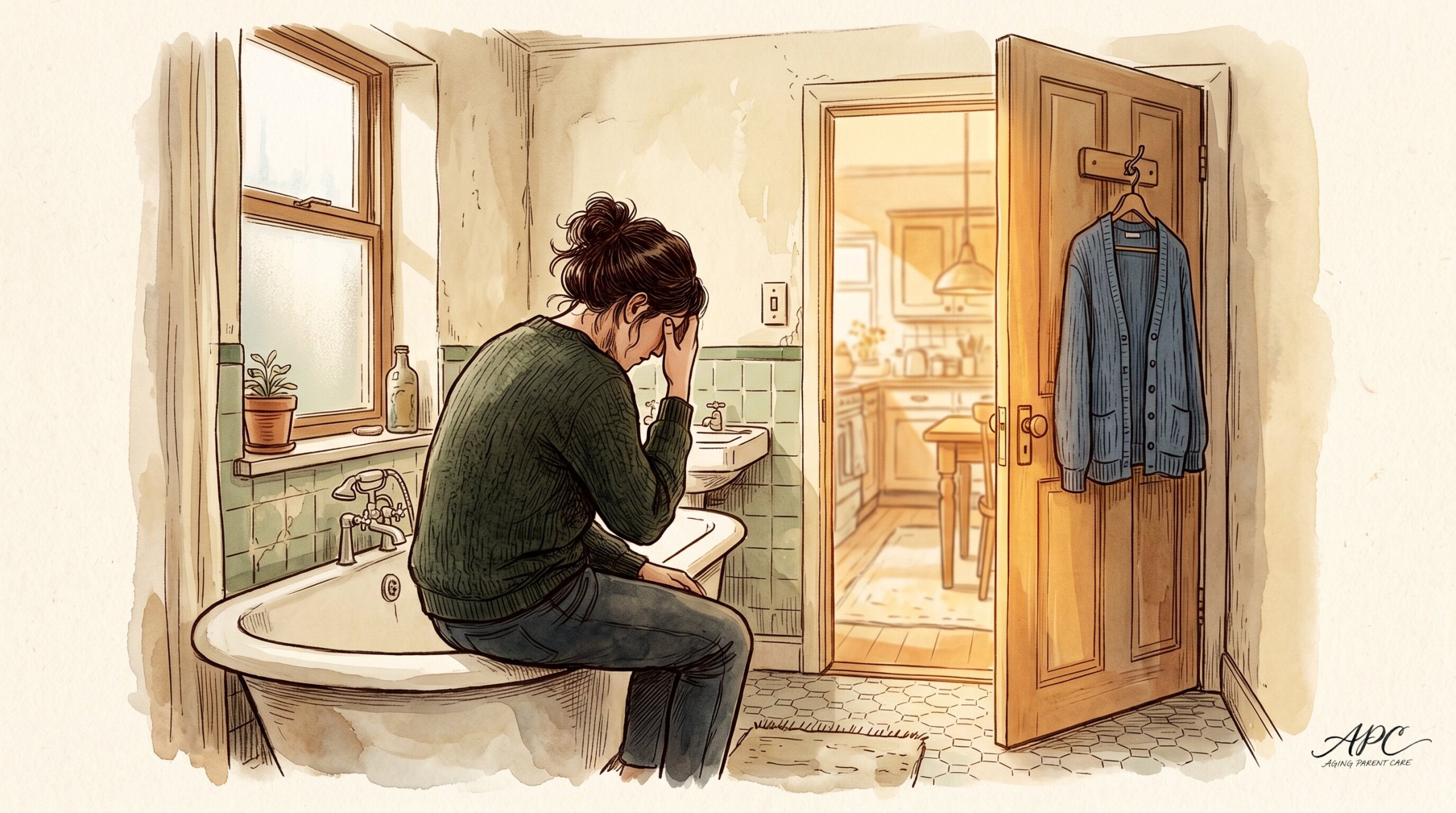
Anticipatory grief seeps in. It has no clear starting point, no obvious trigger. It shows up as irritability, difficulty concentrating, a low-grade sadness that doesn't have a name yet. You start mourning the version of your parent who remembered your birthday without being reminded. You grieve the conversations you used to have that aren't possible anymore. You lose something every week, and there's no ceremony for any of it.
A 2024 study in BMC Palliative Care found that anticipatory grief among family caregivers of chronically ill patients was associated with significant increases in anxiety, depression, and interpersonal conflict. The grief begins at the first sign of decline. And it compounds.
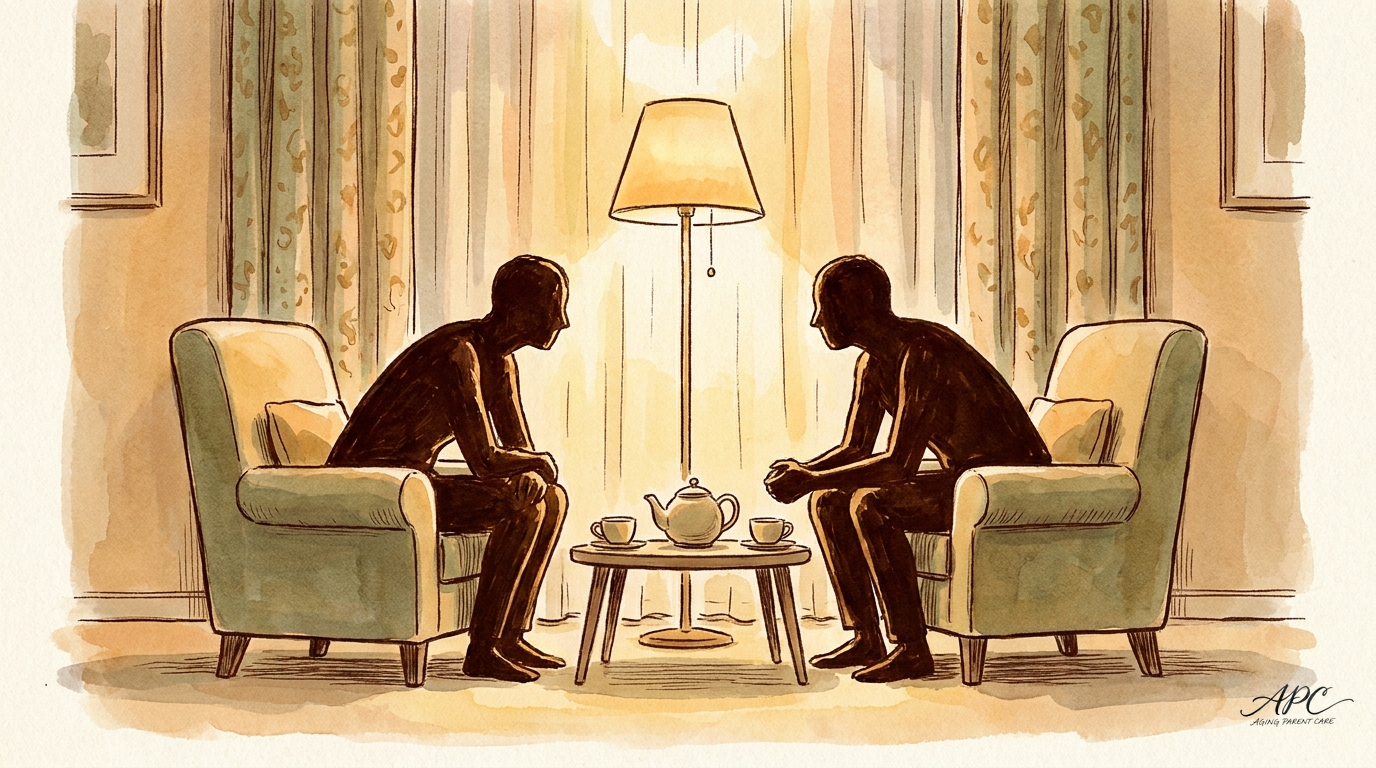
But here's the part that causes the most damage: siblings experience this grief on different timelines. The sibling who lives closest, who sees the daily changes, who cleans the kitchen and refills the pill organizer, is often months ahead in the grief process. They've already mourned the parent who could drive, the parent who knew what day it was. The sibling who visits every few weeks sees a snapshot. The parent is having a good day. The house looks fine. And they say, with genuine confusion, She seems okay to me.
Can you feel how that lands? That sentence, delivered in good faith, can feel like a dismissal of everything you've witnessed and absorbed. The gap isn't malice. It's grief.
The Roles We Inherited
Every family has a structure that predates the caregiving crisis. There's the responsible one, the distant one, the peacemaker, the one who left. These roles were assigned decades ago (often in childhood), and they reassert themselves with startling force when a parent begins to decline.

Research from the Gerontologist confirms what most caregiving families already know: the child who was closest to the parent emotionally (or geographically) almost always becomes the primary caregiver, regardless of whether that arrangement is sustainable or even logical. Nobody discusses the allocation. It just gets inherited.
The resentment that follows runs deeper than scorekeeping. It comes from decades of one child being expected to do more, with that expectation never examined, only enforced.
Sam Craddock, a gerontologist who studies sibling dynamics in caregiving families, describes a pattern he calls the paradox of proximity: the sibling who does the most caregiving often has the least power in family decisions about care, because the other siblings view their involvement as voluntary rather than structural.
Why the Conversation Keeps Failing
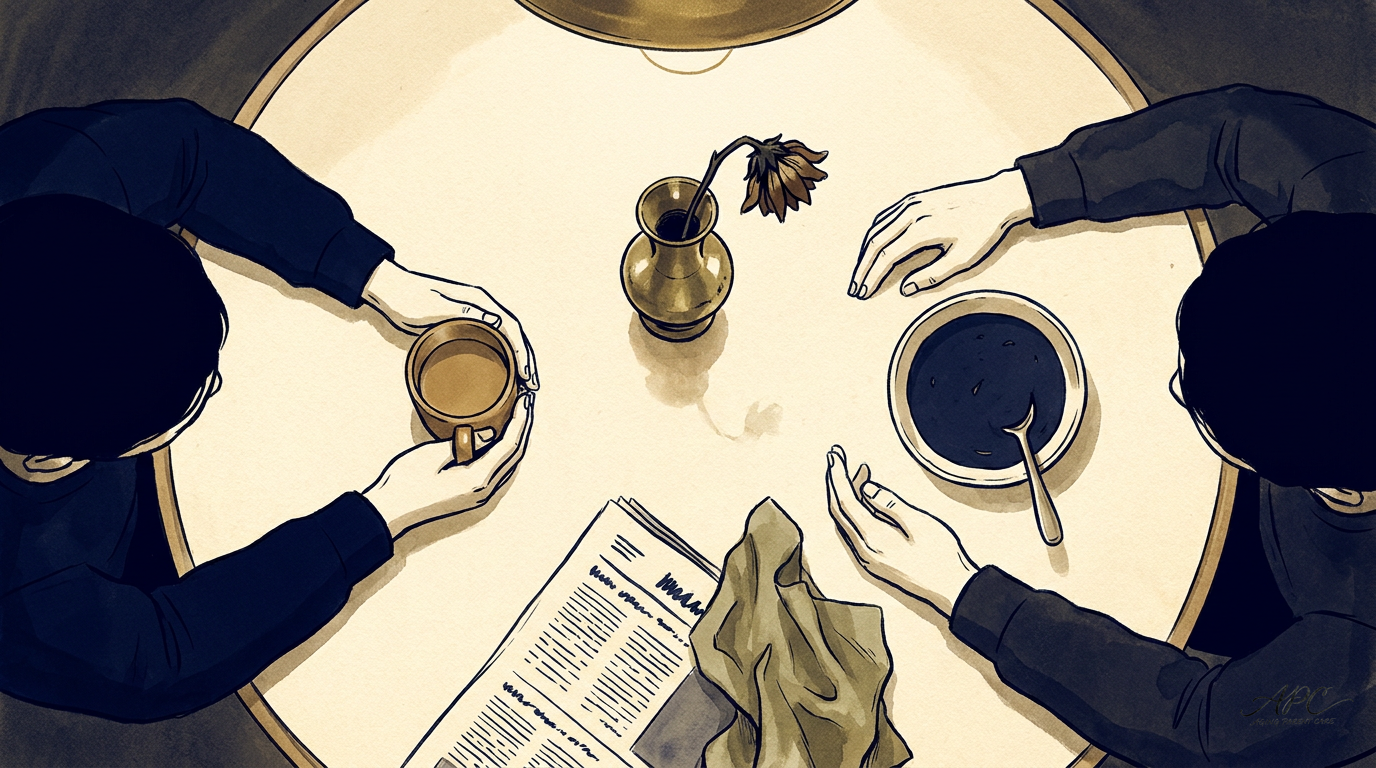
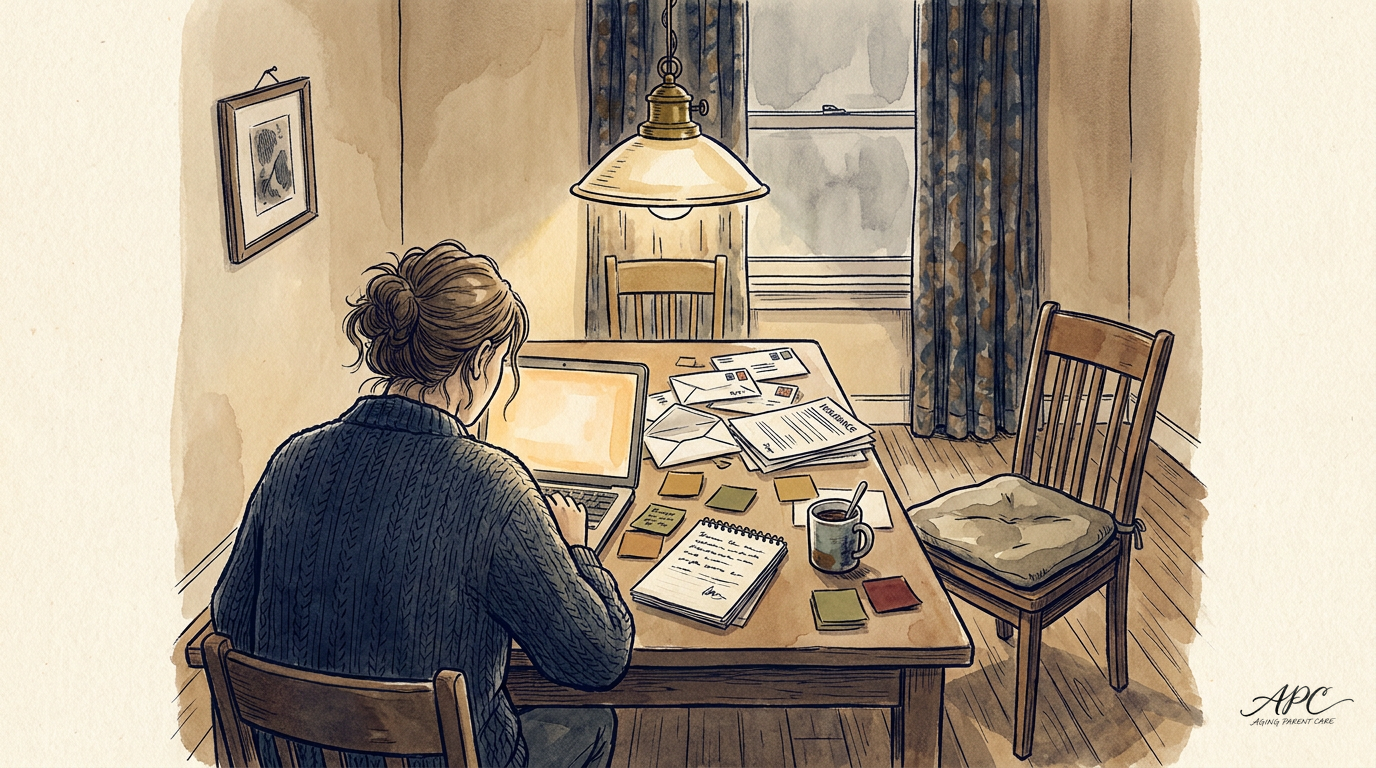
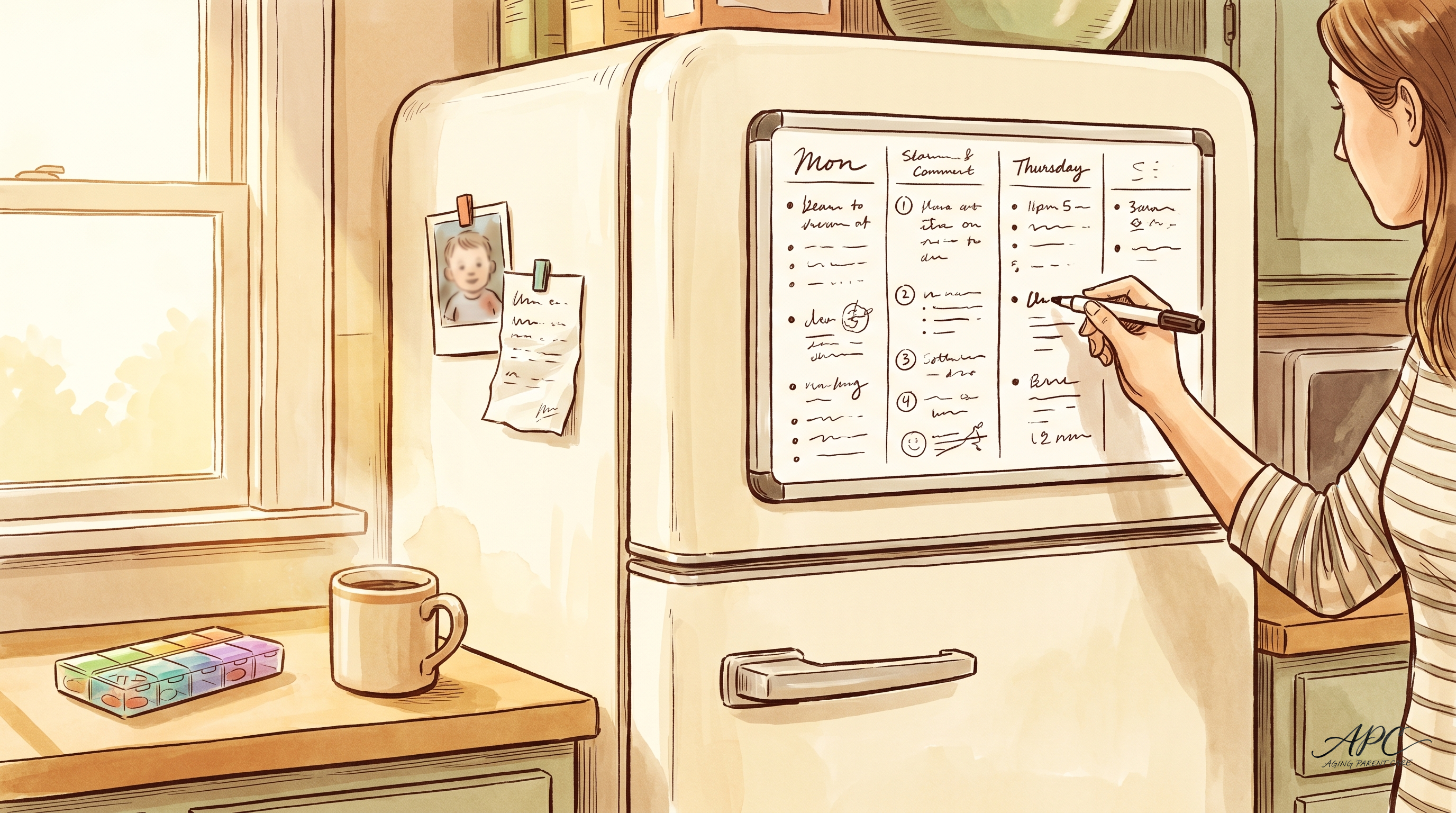
When you call your brother to ask for help and he says just tell me what you need, that sounds reasonable. But think about what it actually does. It puts the entire cognitive and emotional burden of care coordination on you. You don't just need someone to drive Mom to the cardiologist. You need someone to know that the cardiology appointment exists, that it was rescheduled twice, that she needs to fast beforehand, that her insurance changed, and that she'll say she's fine when she isn't.
What you actually need is shared awareness. And shared awareness can't be delegated.
This is where most sibling caregiving conversations break down. One sibling is operating from a project-management model: assign tasks, measure contribution. The other is drowning in an emotional-labor model: anticipating needs, absorbing decline. They're speaking different languages about the same parent.
What Actually Helps
First, name what's happening. Say the words: I think we're all grieving, and we're doing it at different speeds. This single sentence can disarm a conflict faster than any division of tasks. It reframes the argument from you're not doing enough to we're all losing something and we don't know how to talk about it.
Second, stop negotiating from resentment. If you've been keeping a ledger of every unmatched sacrifice, that ledger will poison every conversation. Put it down. The imbalance is real, but the ledger has never once produced the outcome you want.
Third, assign roles based on capacity, not guilt. One sibling may contribute financially but not physically. Another may handle research and phone calls but not direct care. Stop measuring contribution on a single axis.
Fourth, get outside support. A family meeting with a geriatric care manager or a social worker can do in one hour what eighteen months of sibling texts can't. These professionals are trained to help exactly these conversations. Your local Area Agency on Aging can provide referrals, and many offer this service free of charge.
Fifth, forgive the version of your sibling who doesn't understand yet. They will. The grief will reach them. It always does.
The Thing Under the Thing
Your family is losing someone in slow motion, and none of you were taught how to do this together. That's the problem. Not your sister. Not the distance.
The fights about prescriptions and visits and who does what are real. The logistics matter. But underneath every one of those fights is a family trying to absorb a loss that hasn't finished happening yet.
Start there. The tasks will follow.
Sources
- Coelho A, et al. Anticipatory Grief in Family Caregivers of Patients with Chronic Illness. BMC Palliative Care, 2024.
- Semple SJ. Conflict in Alzheimer's Caregiving Families. The Gerontologist, 1992.
- Family Caregiver Alliance. Sharing Caregiving Responsibilities with Other Family Members.
- AARP. When Siblings Don't Agree on Parent Care.
- National Institute on Aging. Getting Help with Caregiving.
- U.S. Administration for Community Living. Eldercare Locator.
© 2026 Aging Parent Care. All rights reserved. No portion of this article may be reproduced, distributed, or used in any form without the explicit written permission of Aging Parent Care.
Make Your Business Online By The Best No—Code & No—Plugin Solution In The Market.
30 Day Money-Back Guarantee
Say goodbye to your low online sales rate!