You're Grieving Someone Who Is Still Alive. That's Not Crazy. That's Tuesday.
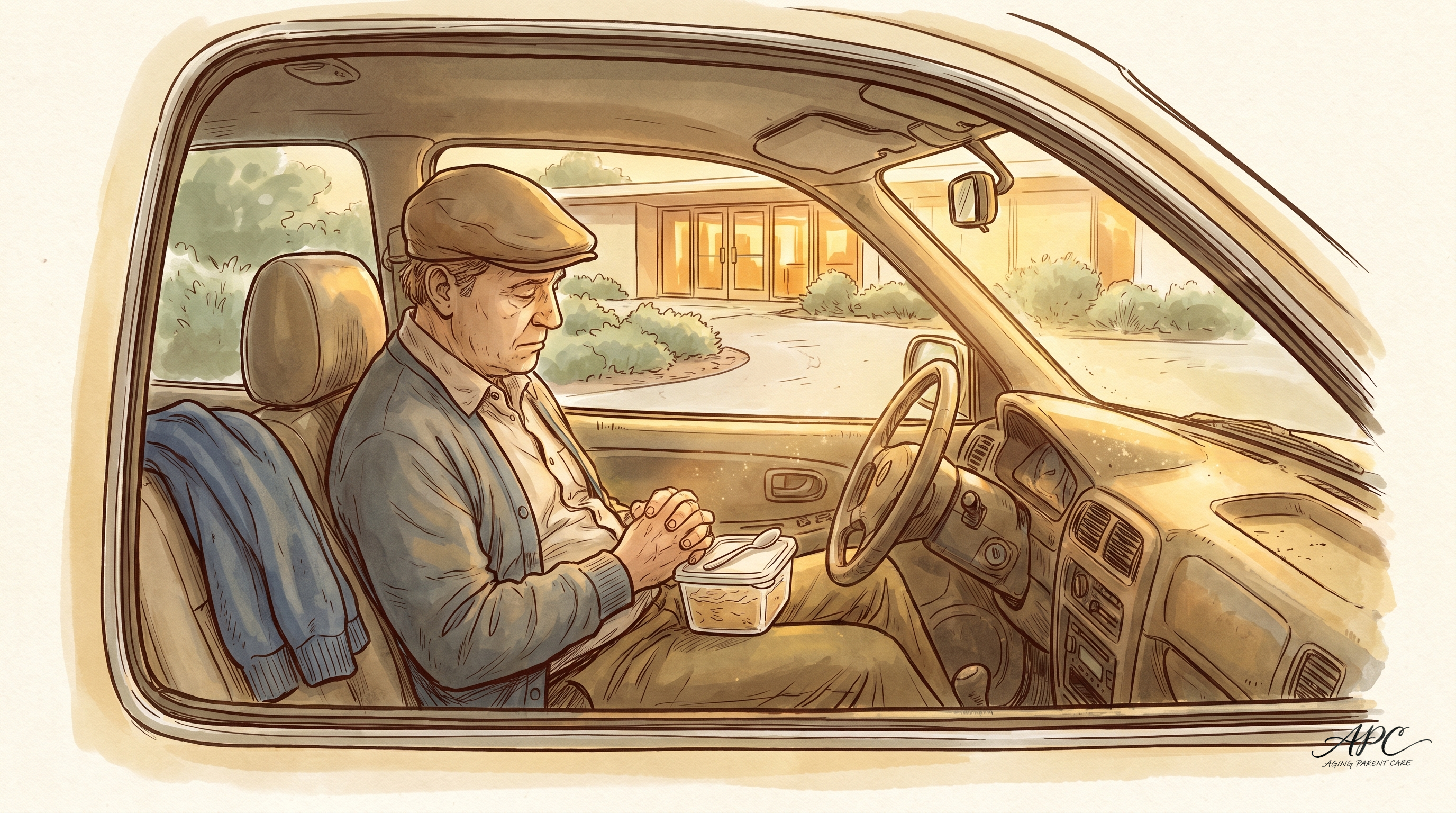
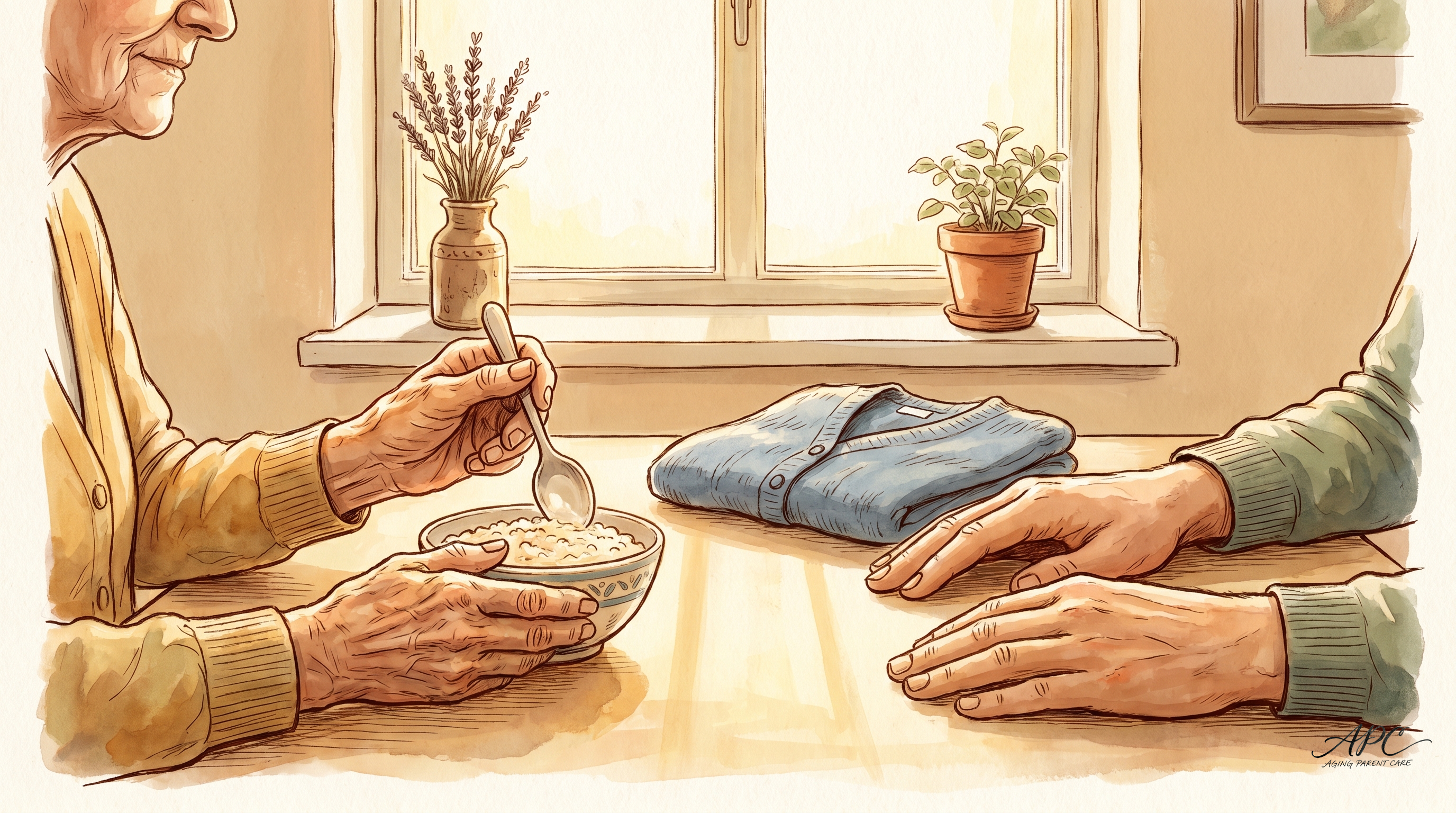
Linda Vargas would go see her mother on Tuesdays and Saturdays. She'd kept this schedule for eleven months, since the move to the memory care wing. She brought the same things each time: a small container of arroz con leche that her mother had made every Sunday for forty years, and a blue cardigan that smelled like the house on Elm Street where Linda had grown up.
On a Saturday in March, Linda walked in and her mother looked at her for a long moment. Then she said, "Are you the one who brings the rice pudding?"
Not "are you Linda." Not "mi hija." Just: are you the one.
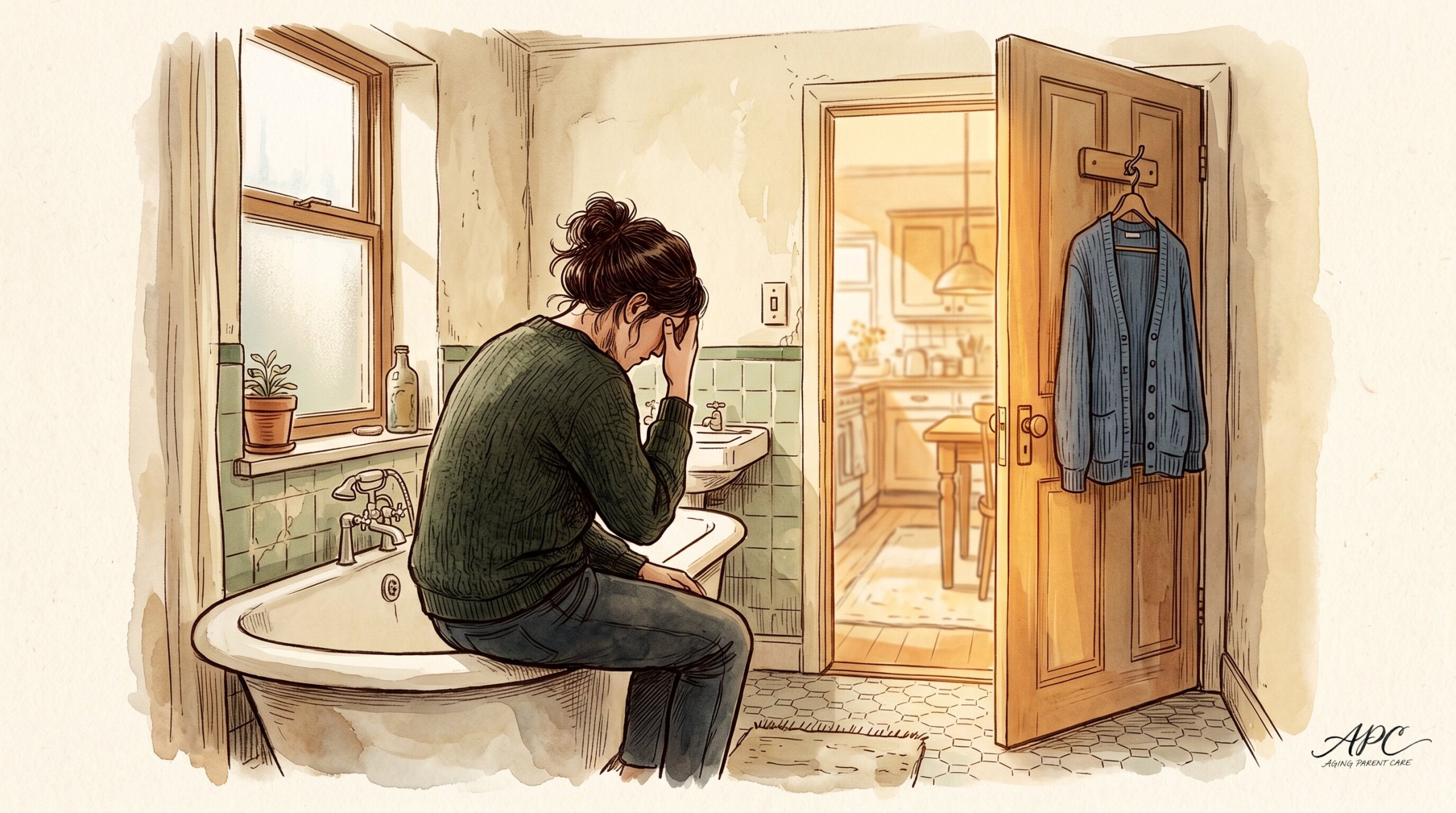
Linda sat down, opened the container, and handed her mother a spoon. They ate together in silence. When Linda got to her car, she sat in the parking lot for twenty minutes.
"The strange thing," she told me, "is that it was a good visit. She ate. She smiled. She seemed comfortable. But I drove home from a good visit and felt like someone had died."
What This Is
Anticipatory grief doesn't have a starting gun. It arrives without announcement, usually in small moments that look ordinary from the outside. A repeated question. A blank look where recognition used to live.
Regular grief, the kind that follows a death, is legible. People understand it. They bring food. They use words like loss and healing. There are rituals.
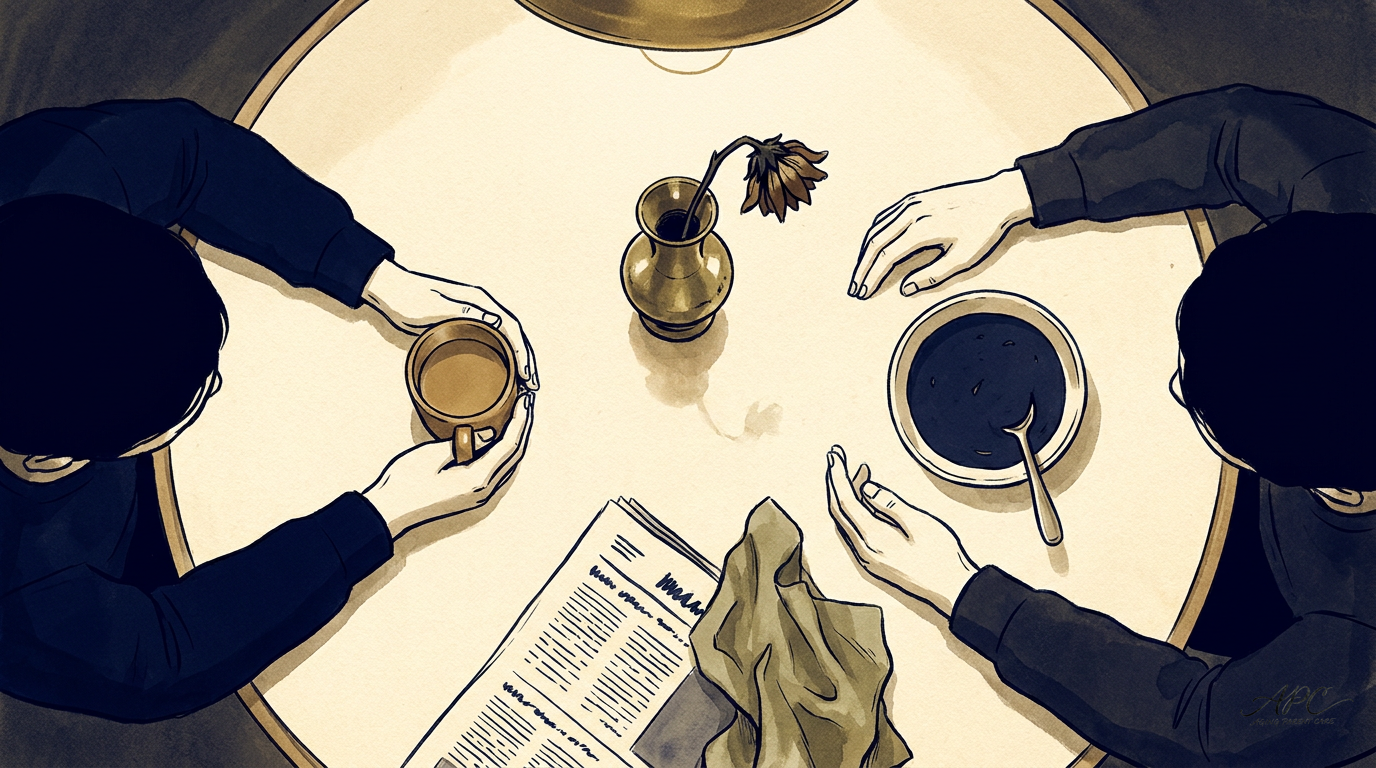
Anticipatory grief has none of this. You're mourning someone who's sitting across from you at lunch. So what do you do with that?
The Middle Is the Worst Part
Here's the thing researchers found that surprises people: the grief is often most intense not in the late stages, but in the moderate stages. When they flicker.
The moderate stage is a coin flip every visit. Your mother knows your name today but not yesterday. She tells a joke you've heard a hundred times and then, ten minutes later, asks when her husband is coming home. He died in 2016.
If you're in the moderate stage right now, and every visit leaves you wrecked, this isn't because you're fragile. This is the hardest part. Full stop.
The Things You'll Feel and Not Say
You'll imagine your parent dying. Not because you want it. Because your mind keeps rehearsing the ending. And then you'll feel relief in the imagining (just for a moment) and then the guilt from the relief will hit you like a wall.
You'll feel angry at the person who is sick. Not at the disease. At them. The anger makes no sense and it's as real as the floor beneath your feet.
You'll be jealous of your friends whose parents are healthy. You won't say it out loud. You'll think it every time someone complains about their mom calling too much.
Every one of these is documented in the clinical literature. They are signs that you're paying close attention to a loss that has no clean edges.
What Helps
Language. The day a social worker used the phrase "anticipatory grief" in a family meeting, the weight in her chest loosened, just slightly. "It was like finding out the thing that was wrong with me had a name," Linda said.
Permission to stop performing. You don't owe anyone a brave face. You can be grateful and gutted at the same time. You don't owe anyone a silver lining.
One person who won't flinch. For Linda, it was a woman named Rosario whose husband had Alzheimer's. They texted most days. Short messages. "Bad visit." "Yeah." That was usually the whole conversation. It was enough.
Tuesday and Saturday
Linda still goes on Tuesdays and Saturdays. She still brings the arroz con leche and the blue cardigan. She's stopped grading her visits.
"I used to walk in hoping she would know me," Linda said. "Now I just walk in. Whatever version of her is there, I sit with that version."
Sources
1. The Gerontologist - Complete Model of Grief in Dementia Caregiving
2. NIH/PMC - Alzheimer's Caregiver Anticipatory Grief Study
Sources
- Alzheimer's Association. "Grief and Loss as Alzheimer's Progresses." alz.org, 2025.
- Kustanti CY, Chu H, Kang XL, et al. "Anticipatory Grief Prevalence Among Caregivers: A Meta-Analysis." BMJ Supportive & Palliative Care, 2022.
- Nielsen MK, et al. "Do We Need to Change Our Understanding of Anticipatory Grief in Caregivers?" Clinical Psychology Review, 2016.
- Family Caregiver Alliance. "Women and Caregiving: Facts and Figures." caregiver.org, 2024.
- AARP and National Alliance for Caregiving. "Caregiving in the U.S. 2025." AARP Public Policy Institute, 2025.
© 2026 Aging Parent Care. All rights reserved. No portion of this article may be reproduced, distributed, or used in any form without the explicit written permission of Aging Parent Care.
Make Your Business Online By The Best No—Code & No—Plugin Solution In The Market.
30 Day Money-Back Guarantee
Say goodbye to your low online sales rate!