
How to Get Power of Attorney for an Elderly Parent, Step by Step

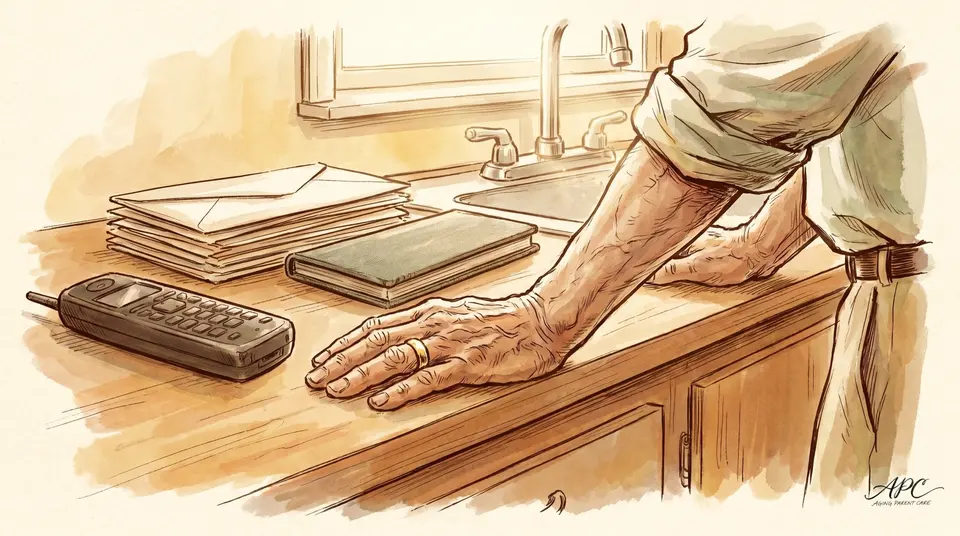
Three days after his mother's stroke, Marcus was sitting at her kitchen table in Tucson, going through a drawer of old utility bills and birthday cards, looking for one thing. He needed a document that would let him talk to her doctors, pay her electric bill, and weigh in on her rehab. There was nothing. No power of attorney, no advance directive, nothing signed. Here is the part almost no family hears in time: the single afternoon it takes to sign a power of attorney is what stands between a family and months in court at the worst possible moment.
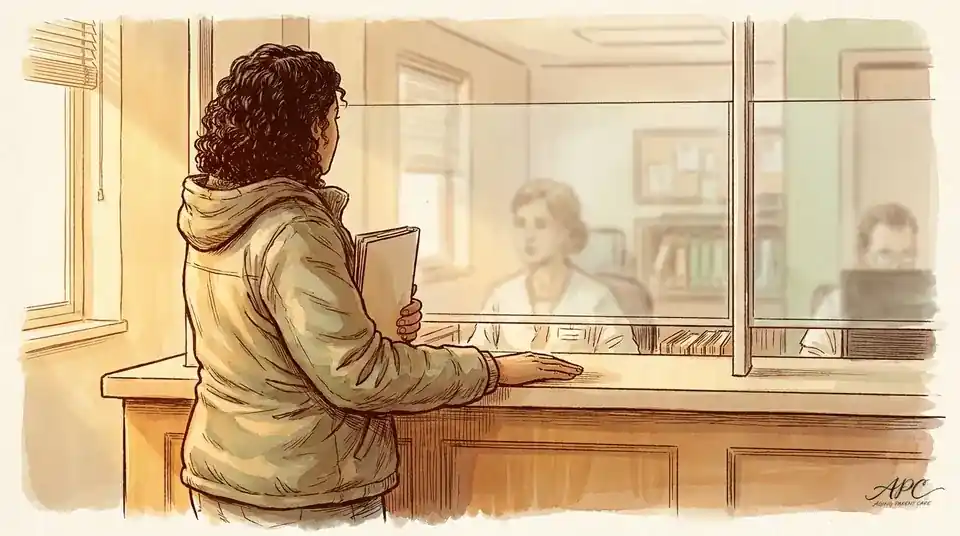
Marcus's mother was alive, awake for parts of the day, and glad to see him. She just could not sign anything anymore, and that was the whole problem. Her doctors would not discuss her treatment with him. Her mortgage company would not take his calls. When he tried to pay her electric bill out of her own checking account, the bank told him he had no legal authority to touch it. The window where she could have named him had already closed, quietly, somewhere between the ambulance and the rehab floor.
What came next took Marcus five months in court and several thousand dollars in legal fees to get guardianship, a process that ended with a judge formally declaring his own mother legally incapacitated. A power of attorney, signed six months earlier, would have cost a small fraction of that and taken one afternoon. That gap, between an afternoon and five months in court, is the reason this document is not optional.
What a power of attorney is, and why it has to come first
- It is permission, not surrender. Your parent keeps every right they had, for as long as they stay mentally competent.
- Two documents cover most families. A durable financial power of attorney and a healthcare power of attorney.
- Marriage and blood do not count. A spouse or adult child has no automatic legal authority without one.
- It must be signed while they are competent. Once a court rules someone lacks capacity, it is too late.
- The cost gap is enormous. A few hundred dollars for a POA, versus several thousand and months in court for guardianship.
What is a power of attorney, really?
A power of attorney is a legal document that lets one person, called the principal, authorize someone else, called the agent, to act on their behalf.1 That is it. It is not a dramatic step, and it is not handing over the car keys. The person who signs it keeps every right they had before, for as long as they are mentally competent. The agent only steps in when they are actually needed.
Most families need to know about two of them:
- Durable financial power of attorney. This covers money matters: bank accounts, bills, taxes, property. The word "durable" is the part that matters. It means the document stays valid even after the person who signed it becomes incapacitated, which is exactly when a family needs it most.2
- Healthcare power of attorney. Sometimes called a health care proxy or durable power of attorney for health care, this lets the agent make medical decisions and talk to doctors when your parent cannot speak for themselves.3
Most attorneys suggest signing both at the same time. Some states fold them into one form; others keep them separate. Either way, it is one conversation and one appointment.4
Doesn't being a spouse or child already give me authority?
This is the assumption that traps the most families, and it is wrong. Marriage does not hand you legal authority over a spouse's finances or medical care, and being someone's adult child does not either.1 Without a signed POA, even the closest relative is a stranger to banks, hospitals, and insurance companies. That is what Marcus ran into at his mother's bank: the teller was sympathetic, and it changed nothing.
Put plainly: without the document, a husband cannot get into his wife's retirement account, and a wife cannot authorize surgery for her husband.2 The closeness is real. The legal standing simply is not there until something is signed.
How many families actually have this in place?
Fewer than you would hope. Only about one in three US adults has named a healthcare power of attorney.5 A national poll of adults between 50 and 80 found that 54 percent had not completed a durable power of attorney of any kind.6 Even a basic will is the exception, not the rule: as of 2024, only 32 percent of Americans had one, let alone the documents that back it up.7 Marcus and his mother were not careless. They were ordinary.

The free Aging Parent Care Starter Kit walks you through the first documents to gather and the questions to ask, in plain language, at your own pace. Get it sent straight to your inbox.
Send me the free Starter KitWhat happens if there's no POA when someone is incapacitated?
The family goes to court, the way Marcus did. A judge appoints a guardian or conservator, the process runs for months, and the legal fees climb into the thousands for an uncontested case, higher still if any relative objects.1 While all of that grinds forward, bills sit unpaid, medical decisions wait, and savings drain into fees that a single signed form would have made unnecessary.
And here is the hard part. Once a court determines that someone lacks the mental capacity to sign, it is too late.1 They can no longer sign a power of attorney themselves. Guardianship becomes the only road left, which is the exact road Marcus did not want to be on.
By the time the document is needed, it can no longer be signed. A power of attorney requires a competent signer. That is the whole reason it has to come first.
Why parents resist, and why the worry usually melts
Most resistance comes from a misunderstanding. A lot of older adults hear "power of attorney" and picture handing over control today. It does not work that way. Your parent keeps full authority over everything until, and unless, they cannot exercise it themselves.4 Saying that plainly is often enough to settle the whole conversation. A dementia diagnosis alone does not erase the right to sign, either, as long as the person still understands what they are signing.1
The money worry tends to melt too. An attorney-drafted POA usually runs a few hundred dollars, and many state bar associations and legal aid offices offer free or low-cost forms.8 Set that next to the several thousand dollars and the months of court time that guardianship demands, and the math makes itself.
How do we actually get one done?
A power of attorney moves from good intention to signed document in five concrete steps:
- Pick the agents. Choose one person for financial decisions and one for healthcare; they can be the same person. Name alternates for both. Pick someone who will actually follow through, not just someone who would be hurt by not being asked.
- Decide form versus attorney. For straightforward situations, state-specific forms from a bar association or legal aid society do the job. For blended families, sizable assets, or property in more than one state, a few hundred dollars buys an attorney's time and a lot of peace.8
- Sign it correctly. Most states follow the Uniform Power of Attorney Act, but the exact rules vary.2 Some states require witnesses, some require notarization, some require both. Get this wrong and the document may not hold up when it counts.
- Distribute copies. Give copies to the named agents, the family attorney, and the primary care doctor for the healthcare version. Keep the original somewhere safe at home, and tell at least two people where it is.4
- Revisit every three to five years. Laws change. Relationships change. The agent named a decade ago might not be the right choice today.
Frequently Asked Questions
Does signing a POA mean my parent gives up control now?
No. Your parent keeps full authority over their own finances and medical care for as long as they are mentally competent. The agent only steps in when, and if, your parent can no longer act for themselves.1 Signing it changes nothing about daily life.
Can we just do it later, once something happens?
That is the contradiction that catches families. A POA can only be signed while the person is mentally competent. By the time it is clearly needed, after a stroke or a dementia diagnosis, it is often too late, and guardianship becomes the only option left.1
Do we need an attorney, or is a form enough?
For simple situations, a state-specific form from a bar association or legal aid society is fine. For blended families, larger estates, or property across state lines, an attorney-drafted POA usually costs a few hundred dollars and is worth it.8
How much does guardianship cost if we skip the POA?
Several thousand dollars for an uncontested case, more if anyone objects, plus months in court while the petition works through the system.1 A power of attorney that would have prevented all of it costs a small fraction of that.
Marcus's mother recovered enough to come home with help, and one of the first things he did was call an attorney for himself and write his own durable POA, with his sister named as the alternate. He still tells the version of the story where he is sitting at that kitchen table with a drawer full of birthday cards and not one useful piece of paper. He tells it to anyone whose parent is still well, because that is the only time the document can be written, and almost nobody believes how short that window can be.
Every elder law attorney has a version of Marcus's story: a family that meant to get around to it, a parent who was still doing fine, and then a Tuesday that changed everything. A power of attorney takes one conversation and one appointment, and it costs less than a car payment. Have that conversation this week, and use the free Aging Parent Care Starter Kit to gather the documents and the questions it needs, sent straight to your inbox.
Was this article useful?
Got feedback?
Let us know what was useful, unclear, or missing.
Related from Aging Parent Care
Sources
- AARP. "What Is a Power of Attorney?" aarp.org/caregiving/financial-legal/types-of-power-of-attorney
- Nolo. "Durable Powers of Attorney for Health Care and Finances." nolo.com/legal-encyclopedia/durable-power-of-attorney-health-finances-29579.html
- National Institute on Aging. "Advance Care Planning: Advance Directives for Health Care." nia.nih.gov/health/advance-care-planning/advance-care-planning-advance-directives-health-care
- American Bar Association. "Power of Attorney." americanbar.org/groups/real_property_trust_estate/resources/estate-planning/power-of-attorney
- Yadav KN, et al. "Approximately One In Three US Adults Completes Any Type Of Advance Directive For End-Of-Life Care." Health Affairs, 2017. healthaffairs.org/doi/10.1377/hlthaff.2017.0175
- AARP and University of Michigan National Poll on Healthy Aging. "Despite COVID, Many Still Don't Have Advance Directives." aarp.org/caregiving/financial-legal/poll-many-have-no-advance-directives
- Caring.com. "2024 Wills and Estate Planning Study." caring.com/resources/2024-wills-survey
- ElderLawAnswers. "Financial Power of Attorney vs. Medical Power of Attorney." elderlawanswers.com/financial-power-of-attorney-vs-medical-power-of-attorney-21489
This content is for educational and informational purposes only. It is not a substitute for professional medical, legal, or financial advice. Always consult qualified healthcare providers, attorneys, or financial advisors for guidance specific to your situation. Statistics and policy details cited were accurate at the time of publication and may have changed.
© 2026 Aging Parent Care. All rights reserved. No portion of this article may be reproduced, distributed, or used in any form without the explicit written permission of Aging Parent Care.
Keep reading
- Your Parent's Doctor Won't Talk to You. Here's What HIPAA Actually Allows.
- Can Medicaid Take Your Parent's House? How Estate Recovery Really Works.
- How to Protect an Elderly Parent From Scams
- Long-Term Care Insurance in 2026: Is It Worth It?
Paperwork done early is a crisis skipped later. The Complete Aging Parent Caregiving Guide covers the full arc in 30 chapters, and the Guide and Workbook together add the fillable templates families use to put it into practice.
Make Your Business Online By The Best No—Code & No—Plugin Solution In The Market.
30 Day Money-Back Guarantee
Say goodbye to your low online sales rate!
How do you get power of attorney for an elderly parent with dementia?
A parent must have legal capacity at the moment of signing, which means early-stage dementia does not automatically prevent it, but the window closes as the disease progresses. An elder law attorney can assess capacity and witness the signing. Once capacity is gone, the remaining path is guardianship or conservatorship through a court, which is slower and more expensive.
Do I need power of attorney for an elderly parent?
Without it, no one can legally manage a parent's bank accounts, sign documents, or make medical decisions if the parent becomes unable to. Hospitals and banks do not make exceptions for family. It is the first document most families need and the one most often missing when the crisis arrives.
What legal documents do elderly parents need?
The core set is seven documents: durable financial power of attorney, healthcare power of attorney, HIPAA authorization, a living will or advance directive, a will or trust, a beneficiary review on accounts and policies, and a list of where everything is kept. Most can be completed without a lawyer in most states, though an elder law attorney adds protection for complex estates.