Can Medicaid Take Your Parent's House? How Estate Recovery Really Works.

Three months after the funeral, the letter came. The state wanted its money back for the nursing home, and the only thing the family owned worth anywhere near that was Mom's house. If that is where your family is headed, or where it might be one day, here is the part too few people hear in time: the house can usually be protected, but most of the protections have to be in place before that letter ever arrives.
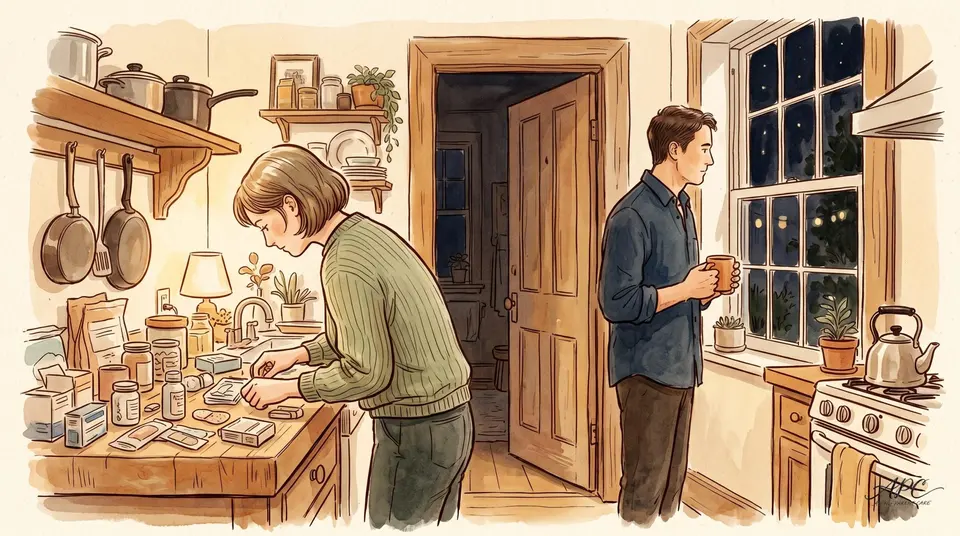
Renee opened it standing at her mother's kitchen counter, in the small Cleveland house where she grew up. Her mom, Lorraine, had spent her last two years in a nursing home that Medicaid paid for. When Lorraine died, Renee and her brother assumed the house would just pass to them, the way houses do. Then a notice arrived from the state Medicaid office: it had a claim against the estate for the cost of that care. The house, the one real thing their mother left, was suddenly on the table.
If no one has explained this to you yet, that is normal, and it is not your fault. It has a name. Medicaid Estate Recovery, sometimes called MERP. A 1993 federal law requires every state to run one, so when someone who got long-term care through Medicaid dies, the state tries to recover what it spent.1 The home is usually the one asset big enough to come after. Let me walk you through what they can actually touch, what stops them, and the timing that decides whether those protections are still on the table.
What protects a parent's house from estate recovery
- Nothing happens while they are alive. Medicaid never takes the home during a parent's lifetime.
- A surviving spouse. While a husband or wife is living, the home is exempt from recovery.
- A protected child. A child under 21, or a child of any age who is blind or disabled, blocks recovery.
- The caregiver child exception. An adult child who lived in and cared for the parent for two or more years may keep the home.
- Time. The strongest plans are made years ahead, before the five-year look-back applies.
What Medicaid can and cannot claim
While your parent is alive, the home is safe. They keep owning it, and if a husband or wife still lives there, that spouse stays put no matter what the other one's care costs. Recovery is something that only happens after death, and in most states only through the probate estate.2
How hard the state pushes depends a lot on where your parent lived. Some states only go after assets that pass through probate. Others have expanded recovery and reach further, into things like jointly held property or a living trust.2 A general summary helps for orientation, but the person who can tell you what is true in your parent's state is an elder law attorney there.
The protections that actually exist
A handful of exemptions can delay, shrink, or erase a claim. Families who know them ahead of time are in a far stronger spot than families who meet them for the first time on letterhead:
- Surviving spouse protection. As long as a husband or wife is living, the home is exempt from recovery. The state cannot take it out from under a living spouse.2
- Protected child. If a child under 21, or a child of any age who is blind or permanently disabled, survives the parent, recovery is blocked.1
- The sibling exemption. A sibling who has an ownership stake in the home and lived there for at least the year before the parent entered care can be protected too.2
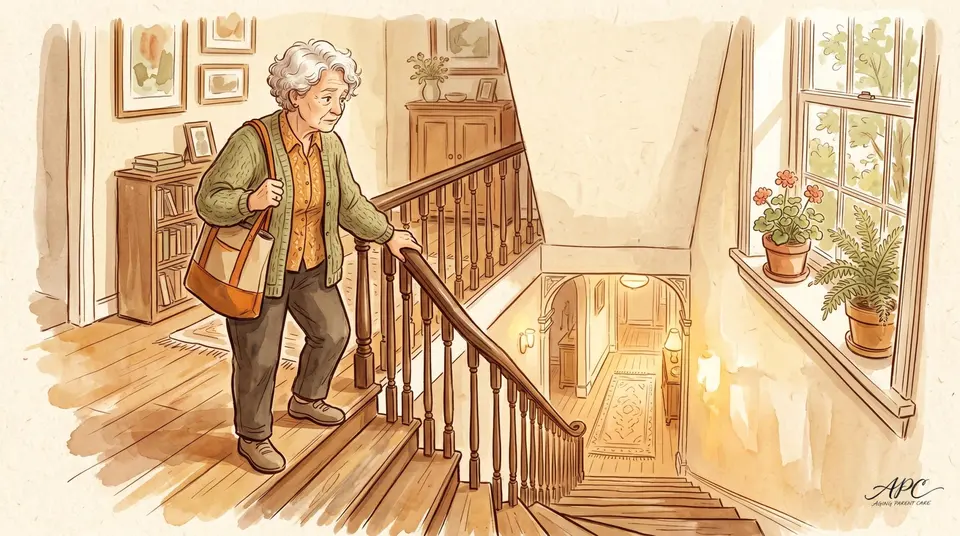
- The caregiver child exception. If an adult child lived in the parent's home and gave care that kept the parent out of a facility for at least the two years before nursing home admission, the home can be transferred to that child without a penalty and protected from recovery.3
That last one saves homes, and it is the one families lose by accident. Only a biological or adopted child qualifies, not a grandchild or a niece, and the proof has to exist: physician letters, a care log, utility bills showing you both lived there, pharmacy records.3 If you are in the caregiving years right now, this is the quiet thing worth doing today.
The caregiver child exception saves houses. It is also the one most families lose, not because they did not qualify, but because no one kept the paperwork.

Why timing matters more than most families realize
Here is the catch that trips good families up. For nursing home Medicaid, the state looks back 60 months, five years in most states, at any assets a person gave away or transferred. Quietly signing the house over to the kids right before applying does not work; a transfer inside that window creates a penalty period that delays coverage.4
What does work has to be set up early, with someone who does this for a living:
- Certain irrevocable trusts, generally put in place more than five years before care is needed.2
- A life estate, which lets a parent keep living at home while changing how the house passes on.2
- A documented caregiver child arrangement, built and recorded during the caregiving years.
These need an attorney who specializes in Medicaid planning, not a general estate lawyer, because the rules turn on small state-specific details.
Hardship waivers, the option nobody advertises
Every state's program has to offer an undue hardship waiver, and almost no one mentions it. If recovery would, for example, take the only home of a survivor or wipe out their sole source of income, the state can reduce or drop the claim.1 It is an application with a deadline, and it has to go in within the window after the notice arrives.
The free Aging Parent Care Starter Kit walks you through the first steps in plain language, at your own pace. Get it sent straight to your inbox.
Send me the free Starter KitWhat you can do now
If your parent is already on Medicaid or likely headed there, call an elder law attorney. The National Academy of Elder Law Attorneys keeps a public directory, and many attorneys give a free first call.5 Bring three questions:
- How aggressive is estate recovery in my parent's state, probate only or expanded?
- Does our situation qualify for any exemption right now?
- Given where we are on the timeline, what can still be done?
If you are early, years before any nursing home is on the horizon, you are in the best possible position. That is when the protective structures are easiest to set up and the five-year clock is not a problem yet.
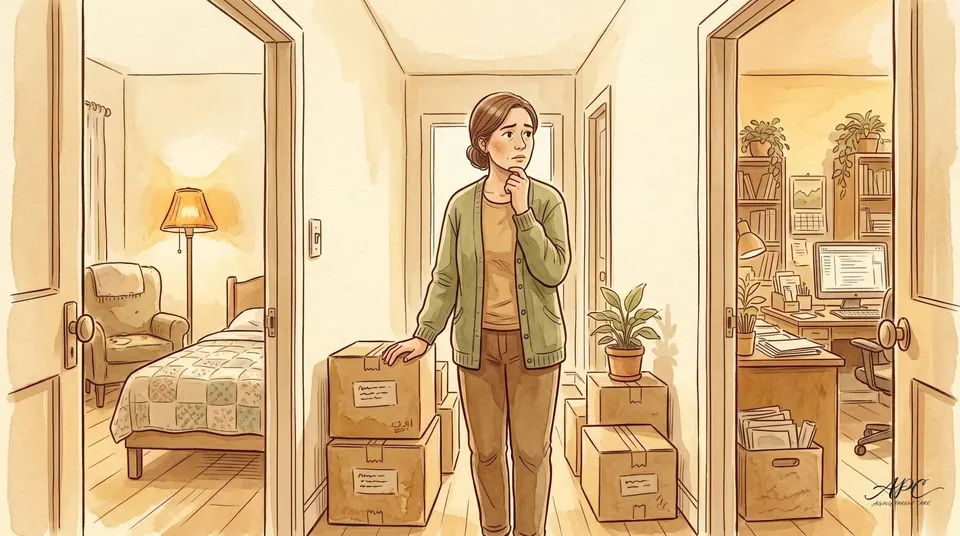
Renee's story did not end with that letter. She had moved back into the house in her mother's last years, sleeping in her childhood bedroom, driving Lorraine to dialysis, handling the medications, holding off the nursing home as long as she could. An elder law attorney looked at all of it and saw what Renee had not: the years she spent in that house were not just grief, they were a record. She had kept the calendar, the pharmacy printouts, a folder of doctor's notes that named her as the one providing care at home. It was enough to make the caregiver child case. The house stayed in the family. It could have been simpler still if someone had told them in 2022 what they learned in 2026.
Frequently Asked Questions
Can Medicaid take the house while my parent is still alive?
No. The home is exempt from recovery during your parent's lifetime. Estate recovery only begins after death, and in most states only through the probate estate.2
Does putting the house in my name protect it?
Not if it is done close to applying. Transfers within the five-year look-back create a penalty period that delays eligibility.4 Protective transfers have to be structured early and correctly by a Medicaid planning attorney.
We already got a recovery letter. Is it too late?
Not necessarily. Exemptions and hardship waivers can still apply after a notice arrives, but they run on deadlines, so contact an elder law attorney in the state right away.1
Medicaid never touches the house while your parent is alive; after death the state can claim it through the estate, and the protections that stop that are mostly set up years ahead. Make one call to an elder law attorney in your parent's state, and use the free Aging Parent Care Starter Kit to gather the documents that conversation needs.
Was this article useful?
Got feedback?
Let us know what was useful, unclear, or missing.
Related from Aging Parent Care
Sources
- MACPAC. "Medicaid Estate Recovery: Improving Policy and Promoting Equity," March 2021. macpac.gov/publication/medicaid-estate-recovery-improving-policy-and-promoting-equity
- American Council on Aging. "What is the Medicaid Estate Recovery Program (MERP)?" medicaidplanningassistance.org/medicaid-estate-recovery-program
- American Council on Aging. "Medicaid Caregiver Child Exemption: Transferring a Home." medicaidplanningassistance.org/child-caregiver-exemption
- American Council on Aging. "Understanding the Medicaid Look-Back Period and Penalty." medicaidplanningassistance.org/medicaid-look-back-period
- National Academy of Elder Law Attorneys. "Find a Lawyer" directory. naela.org/findlawyer
This content is for educational and informational purposes only. It is not a substitute for professional medical, legal, or financial advice. Always consult qualified healthcare providers, attorneys, or financial advisors for guidance specific to your situation. Statistics and policy details cited were accurate at the time of publication and may have changed.
© 2026 Aging Parent Care. All rights reserved. No portion of this article may be reproduced, distributed, or used in any form without the explicit written permission of Aging Parent Care.
Related legal and paperwork guides
- Your Parent Wants a Greener Goodbye. Here's How to Actually Arrange One.
- A Parent Just Died. Here's Exactly What to Do in the First Hours.
- Your Parent's Doctor Won't Talk to You. Here's What HIPAA Actually Allows.
- How to Get Power of Attorney for an Elderly Parent, Step by Step
- What Does Caregiver Burnout Feel Like? 7 Symptoms Families Mistake for Stress
The Complete Aging Parent Caregiving Guide covers the full caregiving arc in 30 chapters, and the Guide and Workbook together add the fillable templates families use to put it into practice.
Make Your Business Online By The Best No—Code & No—Plugin Solution In The Market.
30 Day Money-Back Guarantee
Say goodbye to your low online sales rate!