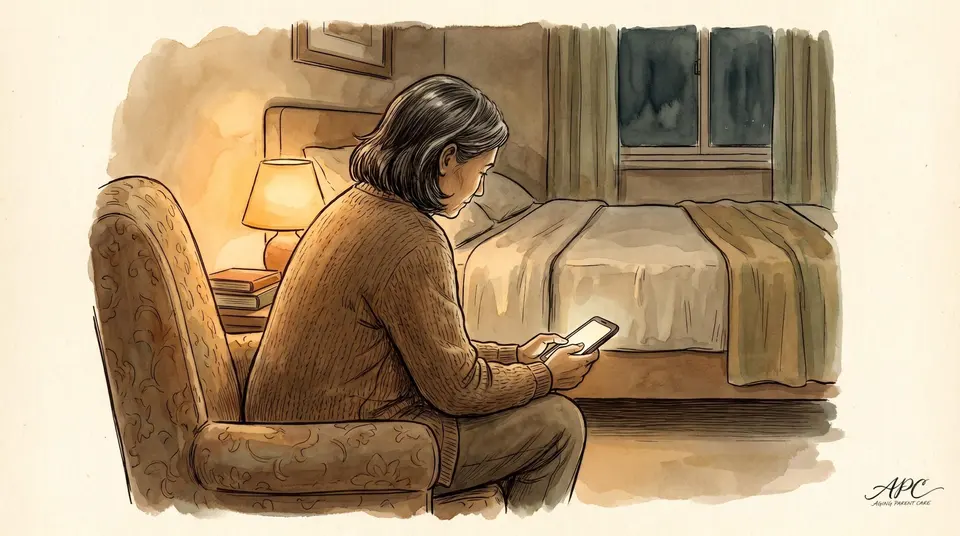
Your Parent Wants a Greener Goodbye. Here's How to Actually Arrange One.

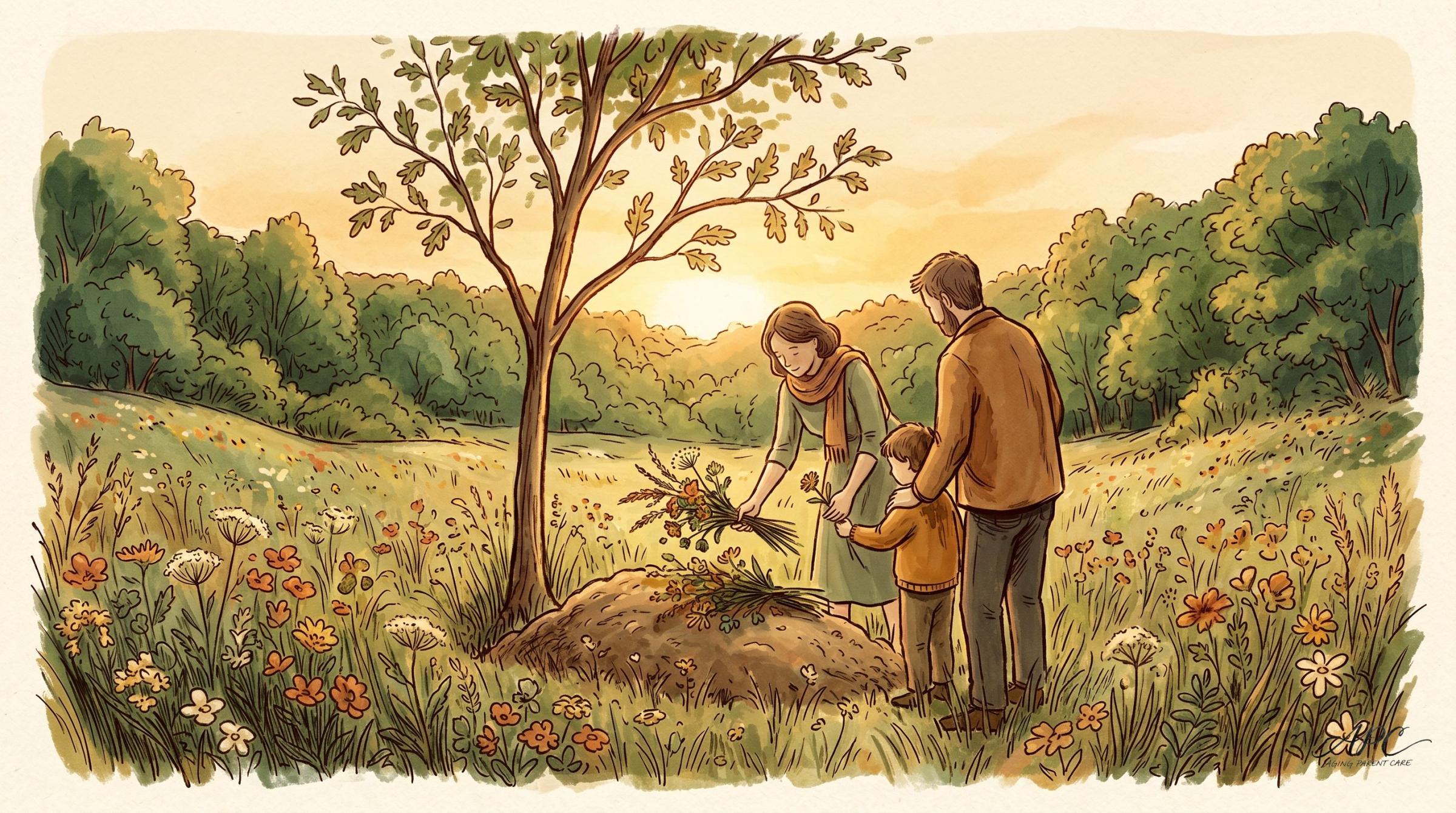
Nina's father Art was a gardener his whole life. At 84, over coffee, he told her that when his time came he did not want all that chemical and concrete. He wanted to go back into the ground he had spent his life digging. Nina nodded and quietly assumed it was a nice sentiment that funeral homes would never actually allow. She was wrong. What her father was describing has a name, a growing set of options, and is more available than most families realize.
What green burial actually is
A green, or natural, burial is a simpler, lower-impact return to the earth. Stripped to its core, it means three things: no toxic embalming, a biodegradable container, and no concrete vault. 1
- No toxic embalming. Conventional embalming pumps the body with chemicals. Green burial skips it, and contrary to what many families assume, embalming is rarely required by law. 1
- A biodegradable container. Instead of a sealed metal or hardwood casket, the body is placed in something that breaks down naturally: a simple wooden casket, a shroud, or a woven pouch made from plant materials. 1
- No burial vault. Conventional cemeteries often require a concrete vault around the casket. Green burial grounds bury without one, so the body can return to the soil. 1
The burial happens in grounds set up for it. These range from a green section within a conventional cemetery, to dedicated natural burial land, to conservation cemeteries where the burial helps permanently protect and restore the land itself. 1
The newer options families ask about
Beyond natural burial, two newer methods are spreading, though where they are legal varies a great deal by state, so the first step is always to check what is allowed where your parent lives:
- Aquamation (alkaline hydrolysis) uses water and a gentle alkaline process instead of flame to do what cremation does, with a smaller environmental footprint. The family receives ashes much as they would with cremation.
- Human composting (natural organic reduction) transforms the body into clean, usable soil over a number of weeks, which the family can then use or donate to restore land. It is the most direct version of the back-to-the-earth idea, and it is legal in a growing but still limited set of states.
How to arrange a green burial
- Know the core: no toxic embalming, a biodegradable container, no concrete vault.
- Find a provider, a green-certified or conservation burial ground, that actually offers it.
- Ask about newer options, aquamation and human composting, where they are legal in your state.
- Have the conversation now and put the wishes in writing, so they hold up in the rush after a death.
The free Aging Parent Care Starter Kit walks you through the first steps in plain language, at your own pace. Get it sent straight to your inbox.
Send me the free Starter KitWhat it costs, and a word on the money
Because green burial skips embalming, a sealed casket, and a vault, it is often simpler and can cost less than a conventional funeral, though prices vary widely by provider and region. The savings are not the point for most families who choose it, but they are real, and worth knowing if cost is a worry.
How to actually arrange it
- Have the conversation now, while you can. The single most useful thing is knowing what your parent wants before you are standing in a funeral home making decisions under pressure. Ask. Write it down.
- Find a provider who does this. Not every funeral home or cemetery offers green options. Look for a green-certified cemetery or a funeral home experienced in natural burial in your parent's area, and call to confirm exactly what they provide.
- Put the wishes in writing. Note the preference in your parent's advance planning documents and tell more than one family member, so the wish is not lost or overridden in the rush after a death.
- Ask plainly about each step. Embalming, container, vault, location. A good provider will walk you through honest options without pressure.
Nina spent an afternoon online and a phone call to learn that a conservation burial ground two counties over would take her father in a plain pine box, no embalming, no vault, under a young oak. She told him that weekend. He laughed and said that was the best news he had heard all year, then went back out to the garden. When the time came, the family knew exactly what to do.
It felt, Nina said later, like the one part of the whole thing that was unmistakably him.
Frequently Asked Questions
What makes a burial green?
Three things: no toxic embalming, a biodegradable container such as a simple wooden casket or shroud, and no concrete vault, so the body can return to the soil. The burial happens in a green section of a cemetery, dedicated natural land, or a conservation ground.
Are human composting and aquamation legal?
It varies a great deal by state, so the first step is to check what is allowed where your parent lives. Aquamation uses water instead of flame to do what cremation does, and human composting turns the body into usable soil over weeks. Both are spreading but are legal in a still-limited set of states.
Does green burial cost less?
Often, yes. Because it skips embalming, a sealed casket, and a vault, it tends to be simpler and can cost less than a conventional funeral, though prices vary widely by provider and region.
Have the conversation now and put it in writing, so the one part of the goodbye that is unmistakably them does not get lost in the rush. Start with the free Aging Parent Care Starter Kit, sent straight to your inbox.
Was this article useful?
Got feedback?
Let us know what was useful, unclear, or missing.
Related from Aging Parent Care
Sources
This content is for educational and informational purposes only. It is not a substitute for professional medical, legal, or financial advice. Always consult qualified professionals for guidance specific to your situation. Statistics and details cited were accurate at the time of publication and may have changed.
© 2026 Aging Parent Care. All rights reserved. No portion of this article may be reproduced, distributed, or used in any form without the explicit written permission of Aging Parent Care.
Related legal and paperwork guides
- A Parent Just Died. Here's Exactly What to Do in the First Hours.
- Can Medicaid Take Your Parent's House? How Estate Recovery Really Works.
- Your Parent's Doctor Won't Talk to You. Here's What HIPAA Actually Allows.
- How to Get Power of Attorney for an Elderly Parent, Step by Step
- What Does Caregiver Burnout Feel Like? 7 Symptoms Families Mistake for Stress
The Complete Aging Parent Caregiving Guide covers the full caregiving arc in 30 chapters, and the Guide and Workbook together add the fillable templates families use to put it into practice.
Make Your Business Online By The Best No—Code & No—Plugin Solution In The Market.
30 Day Money-Back Guarantee
Say goodbye to your low online sales rate!