


You're the Only One Caring for Your Parent? How to Build a Team Anyway

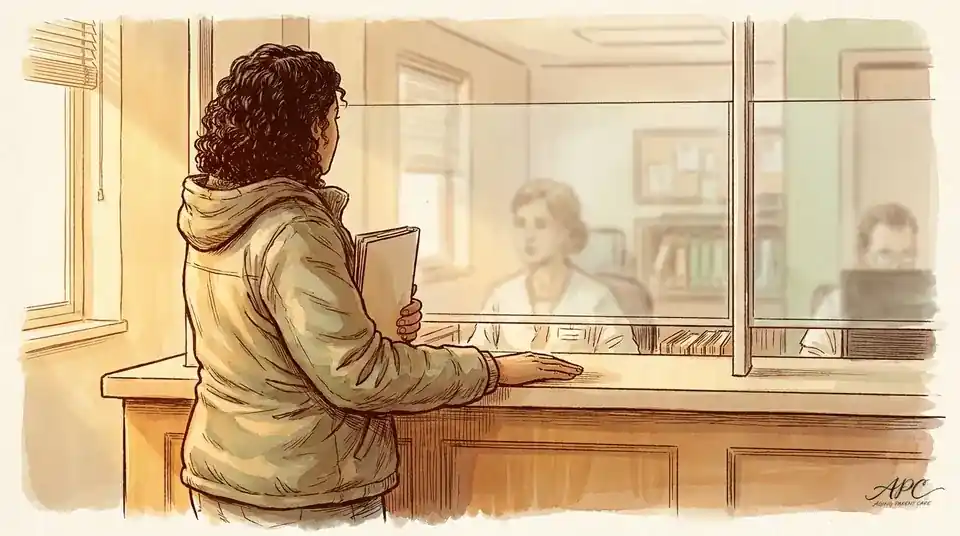
Marta has not slept past 6 a.m. in over a year. Her mother has Parkinson's, and the morning routine of getting her up, dressed, and to the bathroom lands entirely on Marta, three times a day, every day. She is an only child in everything but name: one brother, in Denver, who calls on Sundays and means well from a distance. There is no rotation, no aide, no plan B. If your family runs on one set of hands right now, here is the part too few people hear in time. You can build a real care team without the money most families do not have. It takes knowing where to look, and a handful of very specific asks.
For a long time Marta did not call what she had a care team, because she did not have one. She had herself, a phone full of pharmacy hold music, and a brother who said "let me know if you need anything" in a way that never turned into anything. If that sounds familiar, you are in a very large room. In one national survey of unpaid caregivers, more than four in ten said they were the only person providing care, around 43 percent of them carrying it solo.1 No sibling rotation, no hired help, no backup.
One person cannot cover a parent around the clock forever. That is not a character flaw. It is arithmetic. When the only caregiver gets the flu, the whole thing wobbles. So let me walk you through where the help actually is, starting with the free and low-cost programs most families have never heard of, then the specific way to ask the people in your life so they say yes.
Where to find backup, starting today
- Eldercare Locator. Call 1-800-677-1116 or go to eldercare.acl.gov to reach your local Area Agency on Aging.
- Respite care. The ARCH National Respite Network lists free and sliding-scale programs by state.
- VA support. If a parent served, the Caregiver Support Line is 1-855-260-3274.
- The specific ask. A defined request to a sibling or neighbor gets a yes far more often than a vague one.
Where does free and low-cost help start?
Start with your Area Agency on Aging. There is one in every part of the country, more than 600 of them, and most people have never heard of theirs.2 The Eldercare Locator connects families to the right one by zip code, by phone at 1-800-677-1116 or online at eldercare.acl.gov.2 This is the call Marta wishes she had made eight months sooner.
These agencies coordinate free and low-cost services through the National Family Caregiver Support Program: information and referrals, caregiver counseling and training, and respite care so the main caregiver can step away.3 The program runs under the Older Americans Act, so the core services do not hinge on whether a parent qualifies for Medicaid.3
What is respite care, and how do I get it?
Respite care is the lifeline a lot of solo caregivers do not know they can reach. The ARCH National Respite Network keeps a locator of respite programs by state, drawn from a database of close to 3,000 providers.4 Some are free, funded through state grants. Others run on a sliding-scale fee.
Respite can mean an adult day program where a parent spends four to six hours somewhere supervised and social. It can also mean a trained volunteer who comes to the home for a few hours on a Tuesday, so the caregiver can get to a doctor's appointment of their own. For Marta, respite started as one afternoon a week. It does not sound like much. It changed the shape of her week anyway.
What if a parent is a veteran, or on Medicaid?
If a parent served in the military, this part matters. The VA's Program of Comprehensive Assistance for Family Caregivers can provide a monthly stipend paid to the caregiver, health insurance through CHAMPVA, at least 30 days of respite care a year, and mental health counseling for caregivers of eligible veterans.5 The Caregiver Support Line is 1-855-260-3274. The application takes a while, so starting early helps.
For families on Medicaid, the picture is better than most people assume. Nearly every state lets Medicaid enrollees self-direct their home care, choosing and training the person who helps, and all responding states pay family caregivers under at least some circumstances.6 The rules and pay rates vary a lot, and the most common path runs through home and community-based waivers. An Area Agency on Aging can tell you what your state offers and how to apply.
The free Aging Parent Care Starter Kit gives you a place to keep the contacts, programs, and documents a care team runs on, in plain language and at your own pace. Get it sent straight to your inbox.
Send me the free Starter KitThe layer of help that costs nothing
Then there is the support that costs nothing at all. It is the layer families skip past, usually because asking for it feels harder than just doing the work alone.
- Faith communities. Many churches, mosques, temples, and synagogues run lay ministries or volunteer visitor programs, and membership often is not required. A call to the office nearest a parent's home can turn up a weekly visitor, a meal train, or both.
- Neighbors. A specific ask beats a general one every time. "Could you check on my mom Wednesday afternoons between 2 and 4?" gets a yes more often than "let me know if you can ever help." People want to help. They just need the help defined.
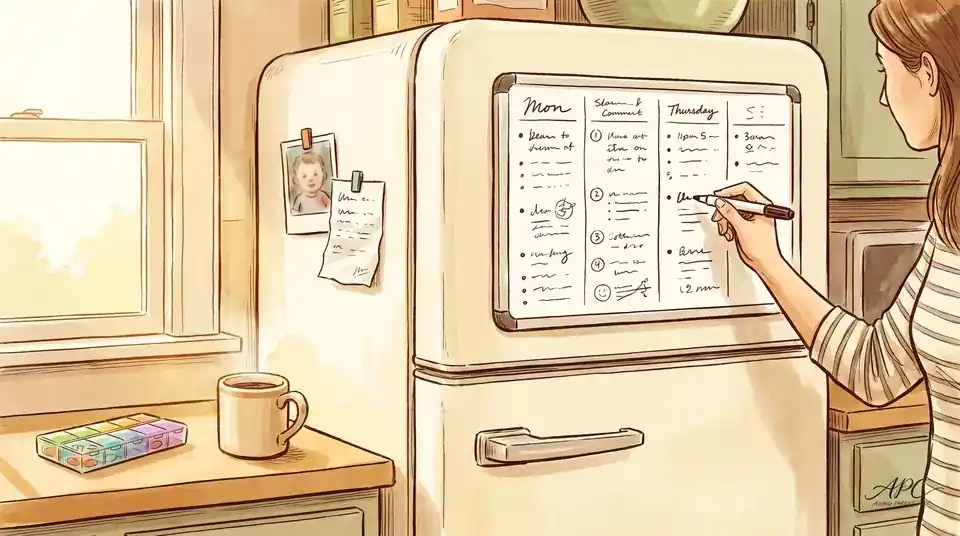
- Care-calendar tools. Free platforms like Lotsa Helping Hands and CaringBridge let friends and extended family claim specific tasks, so the tool does the coordinating instead of fifteen separate texts.
Asking is not admitting defeat. It is building infrastructure.
How do I get a sibling who only calls to actually help?
This is the piece many caregivers find hardest. A brother who calls on Sundays and does nothing else can still be asked for something concrete. Not a guilt trip. A specific request with a shape to it.
Try one of these almost word for word. "I need you to take over the medication refills remotely. It is about ten minutes a day on the pharmacy app." Or: "I need you to cover eight hours a week of aide time. At Mom's local rate that is roughly $200 a week." The number does two things: it makes the ask real, and it gives a faraway sibling a way to show up that does not require a plane ticket.
Siblings who will not show up in person can sometimes contribute money or paperwork instead. They rarely offer first. The ask has to come, and it has to be specific. If the conversation falls apart, let it fall apart, and build the plan around the resources that actually show up. That is what Marta finally did with Denver.
What does a realistic care team look like?
Put together, a workable team spreads the weight across several shoulders. Here is what one can look like, built entirely from the pieces above:
- Area Agency on Aging. Runs a care-needs assessment and connects you to local meal delivery and transportation.
- A respite program. Six to eight hours of weekly coverage.
- A neighbor. Checks in twice a week.
- A faith-community volunteer. Visits once a week.
- A free online care calendar. Keeps the schedule straight.
- A support group or help desk. The Caregiver Action Network runs a free caregiver help desk and peer support.7
That is a team. It is imperfect, and it has gaps. But it is the difference between one person carrying everything and one person standing at the center of a structure that shares the load.
Marta's team came together one piece at a time. The Area Agency on Aging set up meal delivery and an assessment. ARCH pointed her to an adult day program that takes her mother two mornings a week. A neighbor down the street, Rosa, started dropping in on Thursdays. Denver pays for six hours of aide time, finally. Marta still does the early mornings. But she is not the only one anymore, and that is the whole point.
Frequently Asked Questions
What is an Area Agency on Aging, and is it really free?
It is a local agency funded under the Older Americans Act that coordinates services for older adults and their caregivers: meals, transportation, home assessments, counseling, and respite. The core services are free or low-cost and do not require Medicaid eligibility.3 Find yours through the Eldercare Locator at eldercare.acl.gov or 1-800-677-1116.
Can a family member get paid to provide care?
In many cases, yes. Nearly every state lets Medicaid enrollees self-direct their home care and pay a family caregiver under at least some circumstances, and the VA pays stipends to family caregivers of eligible veterans.6 Rates and rules vary, so confirm with your Area Agency on Aging or, for veterans, the VA Caregiver Support Line at 1-855-260-3274.
My sibling will not help. What do I do?
Make one specific, time-bound ask instead of a general plea, and offer a remote or financial option if they cannot be there in person. If they still say no, stop spending energy on it and build the care plan around the programs, neighbors, and volunteers who will actually show up.
A care team does not buy freedom or rest, exactly. It buys room, built one funded program and one specific ask at a time. Start with one call to the Eldercare Locator, then use the free Aging Parent Care Starter Kit to organize the documents and contacts your team will need.
Was this article useful?
Got feedback?
Let us know what was useful, unclear, or missing.
Related from Aging Parent Care
- A Long-Distance Caregiving Playbook
- Adult Day Centers for Aging Parents
- Caregiving Financial Help for Lower-Income Families
Sources
- SeniorLiving.org. "Family Caregiver Report and Statistics" (October 2024 survey of 1,765 unpaid caregivers). seniorliving.org/research/family-caregiver-report-statistics
- Eldercare Locator, Administration for Community Living. "Find Local Services and Resources." eldercare.acl.gov/Public/Index.aspx
- Administration for Community Living. "National Family Caregiver Support Program." acl.gov/programs/support-caregivers/national-family-caregiver-support-program
- ARCH National Respite Network. "National Respite Locator." archrespite.org/caregiver-resources/respitelocator
- U.S. Department of Veterans Affairs. "Support and Benefits for Family Caregivers." caregiver.va.gov/support/support_benefits.asp
- KFF. "How Do Medicaid Home Care Programs Support Family Caregivers?" kff.org/medicaid/how-do-medicaid-home-care-programs-support-family-caregivers
- Caregiver Action Network. "National Caregiver Help Desk." caregiveraction.org/helpdesk
This content is for educational and informational purposes only. It is not a substitute for professional medical, legal, or financial advice. Always consult qualified healthcare providers, attorneys, or financial advisors for guidance specific to your situation. Statistics and policy details cited were accurate at the time of publication and may have changed.
© 2026 Aging Parent Care. All rights reserved. No portion of this article may be reproduced, distributed, or used in any form without the explicit written permission of Aging Parent Care.
Where to go next
- How to Talk to Your Parent About Incontinence Without Shame
- The Family Code Word That Stops AI Voice Scams Cold
- The Free Starter Kit Every New Caregiver Should Get First
- How to Get Power of Attorney for an Elderly Parent, Step by Step
- What Does Caregiver Burnout Feel Like? 7 Symptoms Families Mistake for Stress
The Complete Aging Parent Caregiving Guide covers the full caregiving arc in 30 chapters, and the Guide and Workbook together add the fillable templates families use to put it into practice.
Make Your Business Online By The Best No—Code & No—Plugin Solution In The Market.
30 Day Money-Back Guarantee
Say goodbye to your low online sales rate!