Who Gets the Dog? How to Plan for Your Parent's Pet Before a Crisis

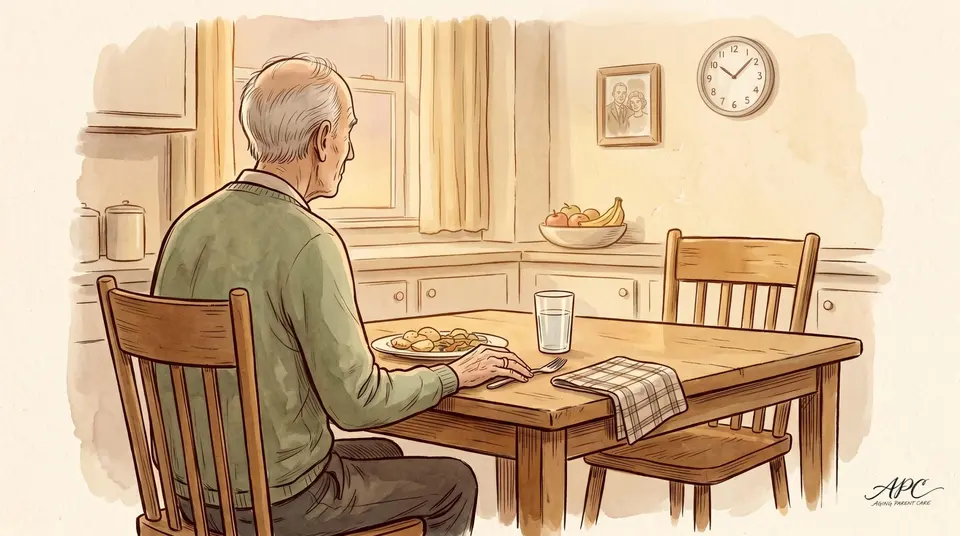
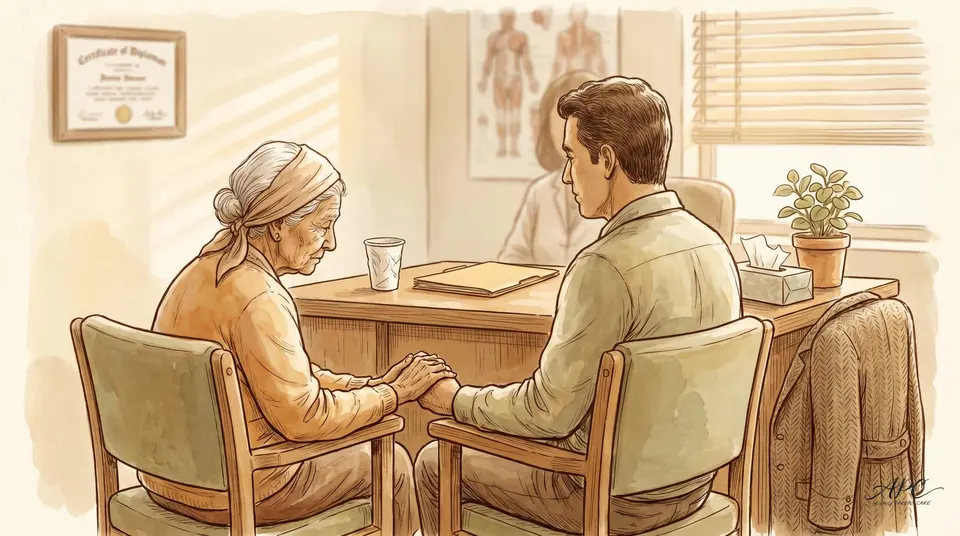
When Faye went into the hospital with chest pain, her daughter Priscilla raced to the emergency room expecting the first question to be about insurance or symptoms. Instead, her mother gripped her wrist from the gurney and asked the only thing on her mind: who was going to feed Biscuit. The little terrier had been alone in the house for six hours. Faye would not settle, would not focus on the doctors, until the dog was sorted. The whole admission stalled on a question no one had ever planned for.
Why the pet is not a small thing
It is tempting to treat a parent's pet as a sweet detail. It is closer to a load-bearing wall. The research keeps pointing the same direction: pet ownership is linked to healthier aging, longer life, and less loneliness in older adults, and a 2026 study is now mapping exactly how those benefits flow, through companionship, activity, and a daily reason to get up. For a parent living alone, the dog that needs a walk is often the thing getting them off the couch and out the door.
That is the upside. The same animal is also a caregiving responsibility hiding in plain sight: walks, feeding, vet visits, and bills that a parent who is declining may quietly stop being able to manage. And in a crisis, the pet becomes an emergency of its own, the reason a parent refuses to go to the hospital, or cannot relax once they are there.
What a parent's pet plan needs
- who can feed and let the pet out within an hour, with a key now.
- food, feeding times, medications, the vet's number, where supplies live.
- for vet care and boarding, decided in advance.
- if your parent can no longer keep the pet, asked and agreed now.
The free Aging Parent Care Starter Kit walks you through the first steps in plain language, at your own pace. Get it sent straight to your inbox.
Send me the free Starter KitBuild a pet plan before you need one
The fix is the same kind of planning you would do for medications or finances. Put it in writing, keep it with the emergency binder, and make sure more than one person knows it exists:
- Who can be at the house within an hour to feed and let the pet out if your parent is suddenly hospitalized? Get a key to them now.
- Food and how much, feeding times, medications, the vet's name and number, where the leash and supplies live. Obvious to your parent, a mystery to everyone else.
- Vet care and boarding cost real money. Decide in advance who covers it and how, so no one is improvising with their own card during a crisis.
- The hard one. If your parent can no longer keep the pet, who takes the animal? Naming that person now, and asking them, keeps a beloved pet out of a shelter at the worst possible moment.
- If a move to assisted living is ever on the table, pet policies vary widely. For many parents, a place that takes the dog is the difference between yes and no.
Keep the good part going
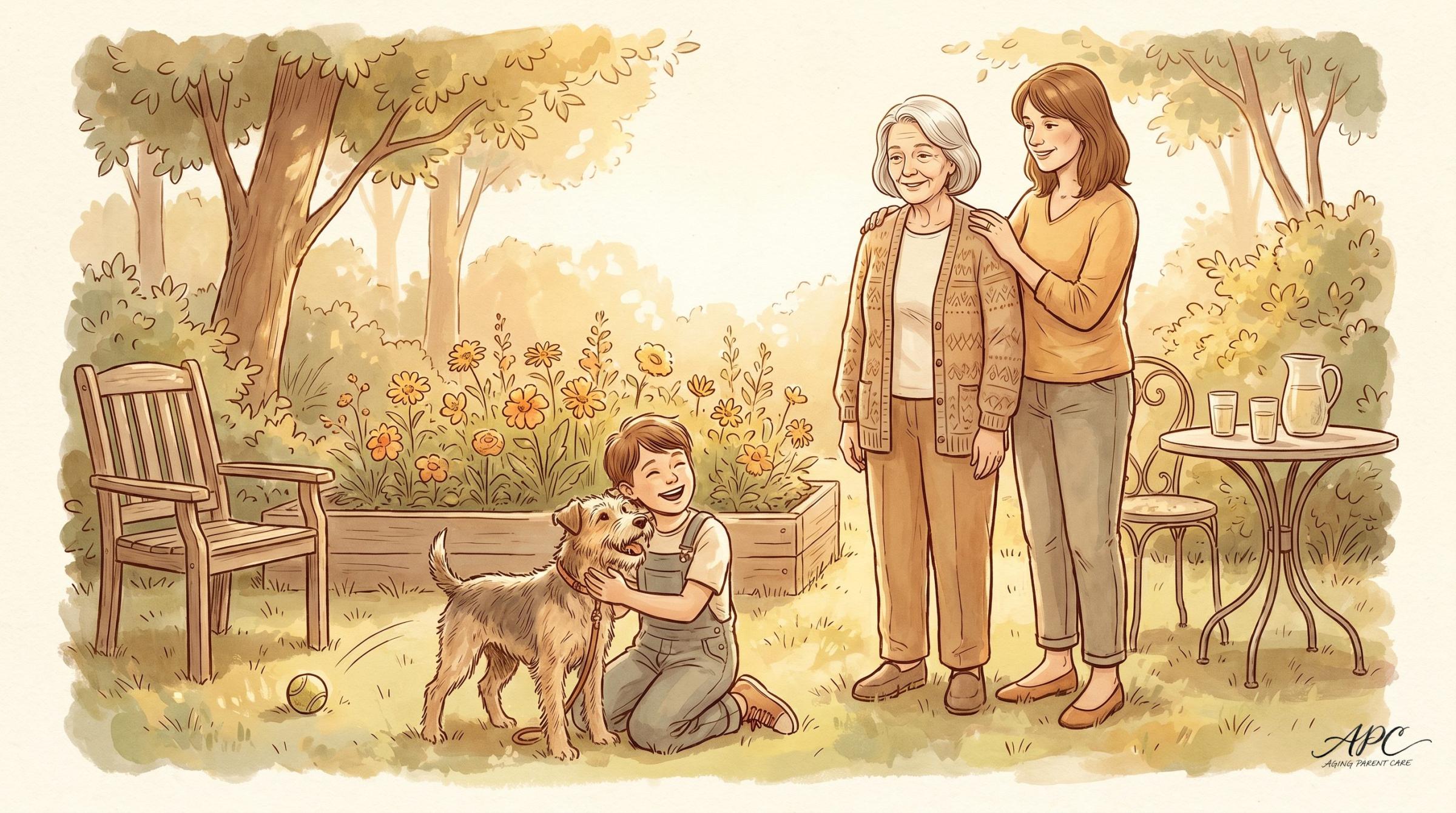
Planning for the pet is not about taking it away. For most aging parents the animal is doing real work, keeping them active, keeping them company, giving the day a shape. The point is to protect that, by making sure one bad night does not turn the best part of their life into a crisis nobody can solve.
Priscilla called a neighbor from the ER waiting room, and Biscuit got fed within the hour. Her mother finally exhaled and let the doctors do their jobs. The next week, the two of them taped a one-page card inside the kitchen cabinet: feeding times, the vet's number, and the name of the cousin who would take Biscuit if it ever came to that. It took twenty minutes.
From the ER gurney, her first question was not about herself. It was who would feed the dog.
Frequently Asked Questions
Why does my parent's pet matter to their care plan?
Because it is doing real work, keeping them active, company, and a reason to get up, and because it can become an emergency of its own. A pet alone at home is a common reason a parent refuses to go to the hospital, or cannot settle once they are there.
What goes in a pet care plan?
Who can step in within an hour, a written care sheet with feeding and vet details, how vet and boarding costs get covered, and a named long-term home if your parent can no longer keep the animal. Keep it with the emergency binder.
What happens to the pet if my parent is hospitalized?
Without a plan, it becomes a scramble at the worst moment. With one, a named first responder has a key and a care sheet and can be there within the hour, so your parent can focus on getting care.
A pet plan in the emergency binder means one bad night never turns the best part of your parent's life into a crisis no one can solve.
Was this article useful?
Got feedback?
Let us know what was useful, unclear, or missing.
Related from Aging Parent Care
Sources
© 2026 Aging Parent Care. All rights reserved. No portion of this article may be reproduced, distributed, or used in any form without the explicit written permission of Aging Parent Care.
More on the emotional side of caregiving
- How to Keep a Far-Away Parent From Slipping Into Loneliness
- Caregiver Rage Is Normal. Here's How to Handle It Without Guilt.
- Why You're Grieving a Parent Who's Still Alive (and How to Carry It)
- How to Get Power of Attorney for an Elderly Parent, Step by Step
- What Does Caregiver Burnout Feel Like? 7 Symptoms Families Mistake for Stress
The Complete Aging Parent Caregiving Guide covers the full caregiving arc in 30 chapters, and the Guide and Workbook together add the fillable templates families use to put it into practice.
Make Your Business Online By The Best No—Code & No—Plugin Solution In The Market.
30 Day Money-Back Guarantee
Say goodbye to your low online sales rate!