

Why Your Aging Parent Can't Sleep, and How to Help Them Rest Again

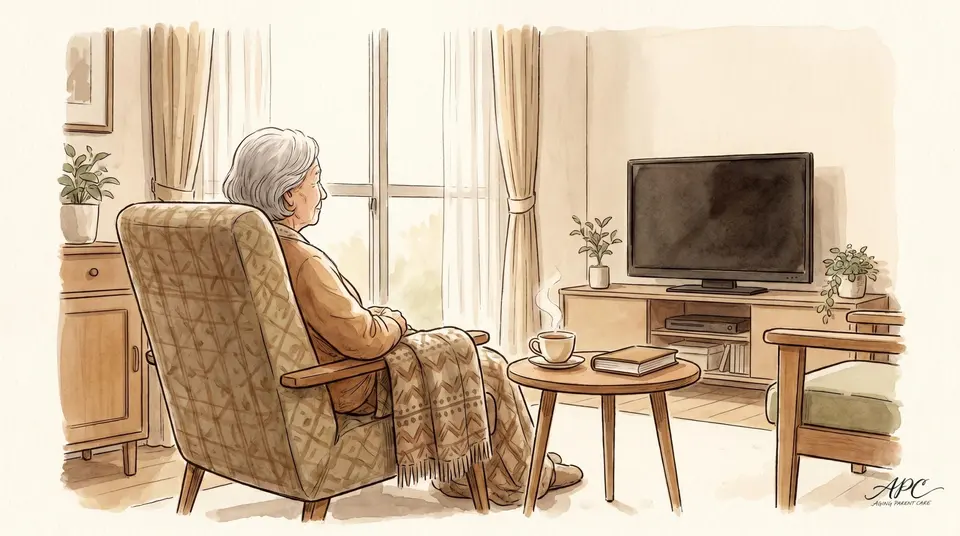
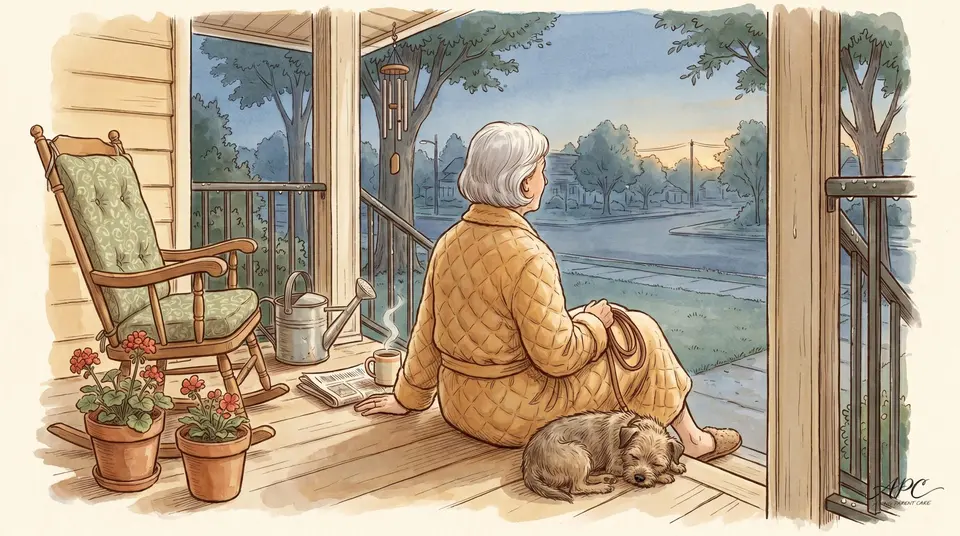
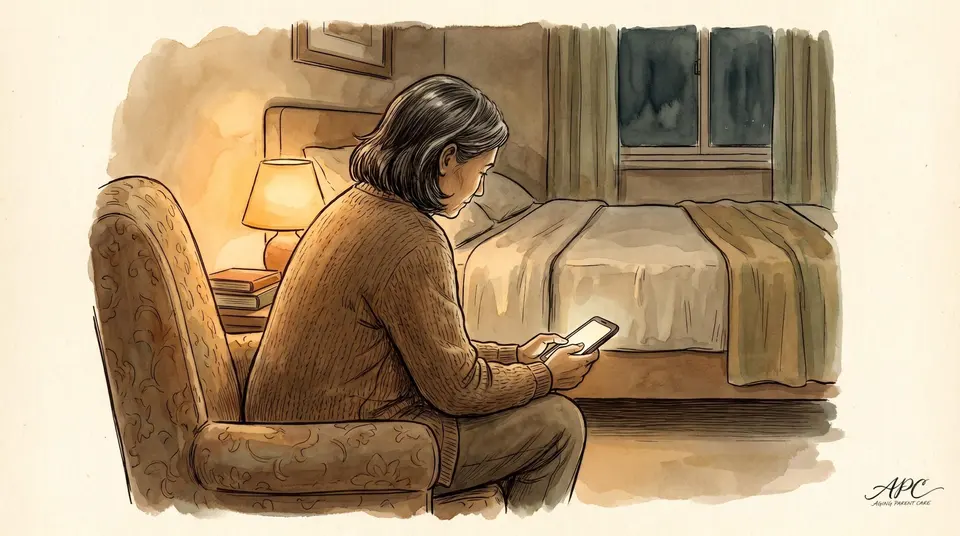
Paul had started to worry that his mother Bev was slipping. She was forgetful, foggy by mid-afternoon, short-tempered in a way she never used to be. He quietly braced for a dementia conversation. Then he stayed over one weekend and heard her up at 2 a.m., and again at 4, and saw her dozing in her chair by ten in the morning. Bev had not had a real night's sleep in months. The fog he feared was a brain running on fumes.
Sleep changes with age. Bad sleep is not required.
Some shifts are normal. As people age, their internal clock moves earlier, so they get sleepy in the early evening and wake before dawn. Sleep also gets lighter and more broken, with more time in shallow stages and more nighttime wakeups. And naps creep in: about 25 percent of older adults nap regularly, compared with 8 percent of younger ones, which then makes the night worse. 1
But here is the myth worth killing: older people do not need less sleep. The target is still at least seven hours a night, at any age. 1 A parent who is sleeping five broken hours is not just old. They are sleep-deprived, and it shows up exactly as the things families blame on aging: poor memory, confusion, low mood, irritability, and a higher fall risk.
How to help an aging parent sleep again
- Flood the morning with daylight to reset the body clock so they are sleepy at night, not noon.
- Protect a regular bed and wake time, every day, and keep late naps short.
- Take it to the doctor for a medication review, pain and bladder treatment, and a sleep apnea screen.
- Treat the cause, do not just wait it out; this is rarely just age.

The free Aging Parent Care Starter Kit walks you through the first steps in plain language, at your own pace. Get it sent straight to your inbox.
Send me the free Starter KitWhat is actually keeping them up
Most of the real culprits are treatable, which is the hopeful part:
- Pain and the bathroom. Aches and nighttime urination affect up to 80 percent of older adults, and they fracture the night into pieces. Less sleep then makes pain feel worse, so it loops. 1
- Medications. Nearly 40 percent of adults over 65 take five or more drugs, and a lot of common prescriptions and over-the-counter pills quietly wreck sleep. 1 The timing or the drug itself is often the problem.
- Mood and medical conditions. Depression and anxiety, heart disease, diabetes, and arthritis all interfere with sleep. 1 Depression in particular hides as insomnia and gets missed in older adults.
- Too little daylight. Older adults often get only about an hour of real daylight a day, and without that signal the body clock drifts. 1
How to help them sleep again
The fixes are mostly ordinary, and they work:
- Flood the morning with light. Getting your parent outside, or by a bright window, early in the day is one of the simplest ways to reset the clock so they are sleepy at night, not at noon. 1
- Protect a regular schedule. Same bedtime, same wake time, every day. A consistent rhythm steadies sleep more than almost anything else. 1
- Move the body. Regular daytime activity, even a walk, deepens nighttime sleep. 1
- Tame the naps. A short early-afternoon rest is fine; a long late-day nap steals from the night. Keep them brief and before mid-afternoon.
- Take it to the doctor. Ask for a medication review aimed at sleep, ask about treating pain or nighttime urination, and ask to screen for depression and for sleep apnea, which is common, serious, and very treatable. Push past the idea that it is just age.
Paul did not start with a memory clinic. He started with his mother's sleep. Her doctor adjusted an evening medication that turned out to be the wrong one for her, treated the nighttime urination that kept waking her, and nudged her into a morning walk for the daylight. Within a few weeks Bev was sleeping most of the night, and the fog he had taken for the start of dementia lifted.
She was not slipping. She was tired, in a way that had a name and a fix.
Frequently Asked Questions
Do older adults need less sleep?
No, that is a myth. The target is still at least seven hours a night at any age. A parent sleeping five broken hours is not just old, they are sleep-deprived, and it shows up as the poor memory, confusion, and low mood families often blame on aging.
Why can't my aging parent sleep?
Common, treatable culprits: pain and nighttime urination that fracture the night, medications that disrupt sleep, depression and conditions like heart disease or arthritis, and too little daytime light to keep the body clock set.
Could poor sleep look like dementia?
Yes. Chronic sleep loss causes daytime fog, forgetfulness, and irritability that families often mistake for early dementia. Sometimes the memory clinic is the wrong first stop, and fixing the sleep clears the fog.
Your parent may not be slipping, they may be tired in a way that has a name and a fix; start with the sleep before the memory clinic. Start with the free Aging Parent Care Starter Kit, sent straight to your inbox.
Was this article useful?
Got feedback?
Let us know what was useful, unclear, or missing.
Related from Aging Parent Care
Sources
This content is for educational and informational purposes only. It is not a substitute for professional medical, legal, or financial advice. Always consult qualified professionals for guidance specific to your situation. Statistics and details cited were accurate at the time of publication and may have changed.
© 2026 Aging Parent Care. All rights reserved. No portion of this article may be reproduced, distributed, or used in any form without the explicit written permission of Aging Parent Care.
Related medical guides
- Your Parent's World Is Shrinking. Before You Blame Age, Check Their Eyes.
- How to Catch Malnutrition Before It Lands Your Parent in the Hospital
- How to Get Your Parent Comfort Care Without Giving Up the Fight
- How to Get Power of Attorney for an Elderly Parent, Step by Step
- What Does Caregiver Burnout Feel Like? 7 Symptoms Families Mistake for Stress
The Complete Aging Parent Caregiving Guide covers the full caregiving arc in 30 chapters, and the Guide and Workbook together add the fillable templates families use to put it into practice.
Make Your Business Online By The Best No—Code & No—Plugin Solution In The Market.
30 Day Money-Back Guarantee
Say goodbye to your low online sales rate!