
How to Catch Malnutrition Before It Lands Your Parent in the Hospital

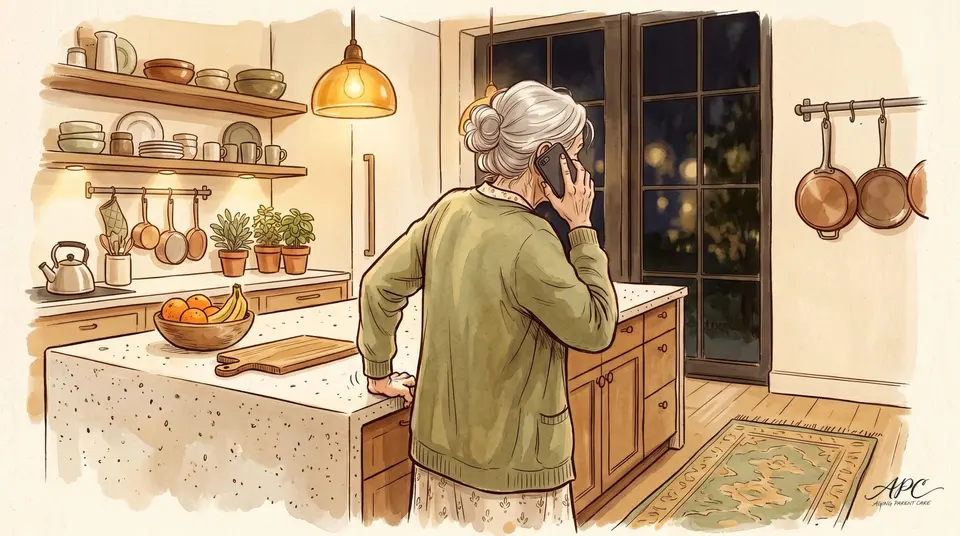
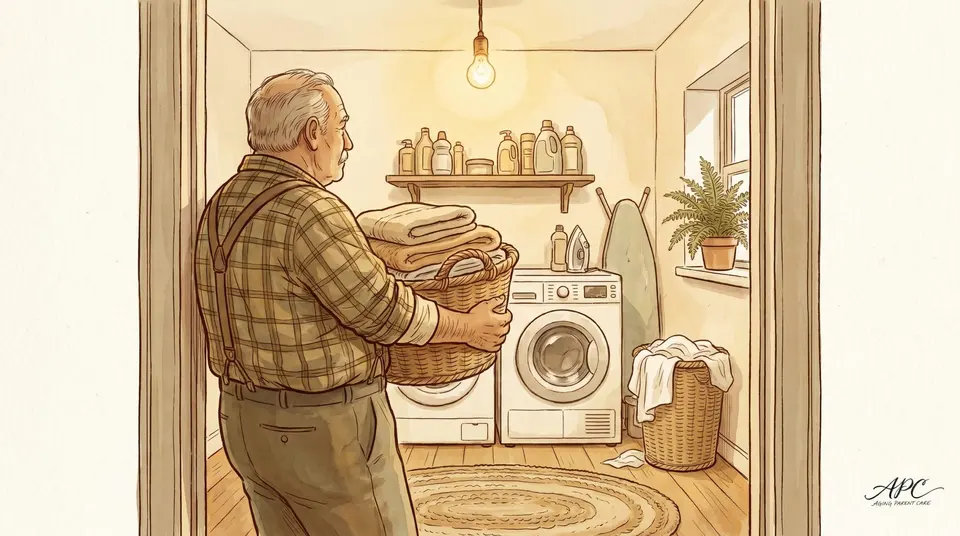
When Dean cleaned out his father's refrigerator that Sunday, it was full. Casseroles he had dropped off, untouched. Milk a week past the date. Fruit going soft in the drawer. His father Walter, 82 and living alone since the funeral, kept saying he ate plenty, he just was not that hungry anymore. But Walter's wedding ring spun loose on his finger now, and when Dean hugged him goodbye he could feel the shoulder blades through the sweater. The food was there. Walter was not eating it.
A quiet problem hiding in plain sight
Malnutrition in older adults is common and badly under-spotted. Roughly 1 in 4 older adults in the United States is malnourished or at risk of it. 1 It is not only a problem of poverty or empty cupboards. A parent with a stocked kitchen and the means to fill it can still slide into it, because the real causes are quieter: appetite that fades, a sense of taste that dulls, dentures that hurt, medications that turn food flavorless, grief that makes cooking for one feel pointless, and the simple exhaustion of making a meal nobody else will share.
The body stops sending the old signals too. As people age, the cues for hunger and thirst weaken, so a parent genuinely does not feel hungry, and does not feel thirsty until they are already low on fluids. 1 That is why dehydration so often rides along with poor eating, and why both can tip into a crisis fast.
How to catch malnutrition early
- Weigh weekly and write it down. Steady loss is the clearest signal there is.
- Watch for a cluster of signs, not just one: loose rings, fading appetite, slow-healing cuts, new fog.
- Bring it to the doctor to find the cause: medication, dental pain, depression, or swallowing trouble.
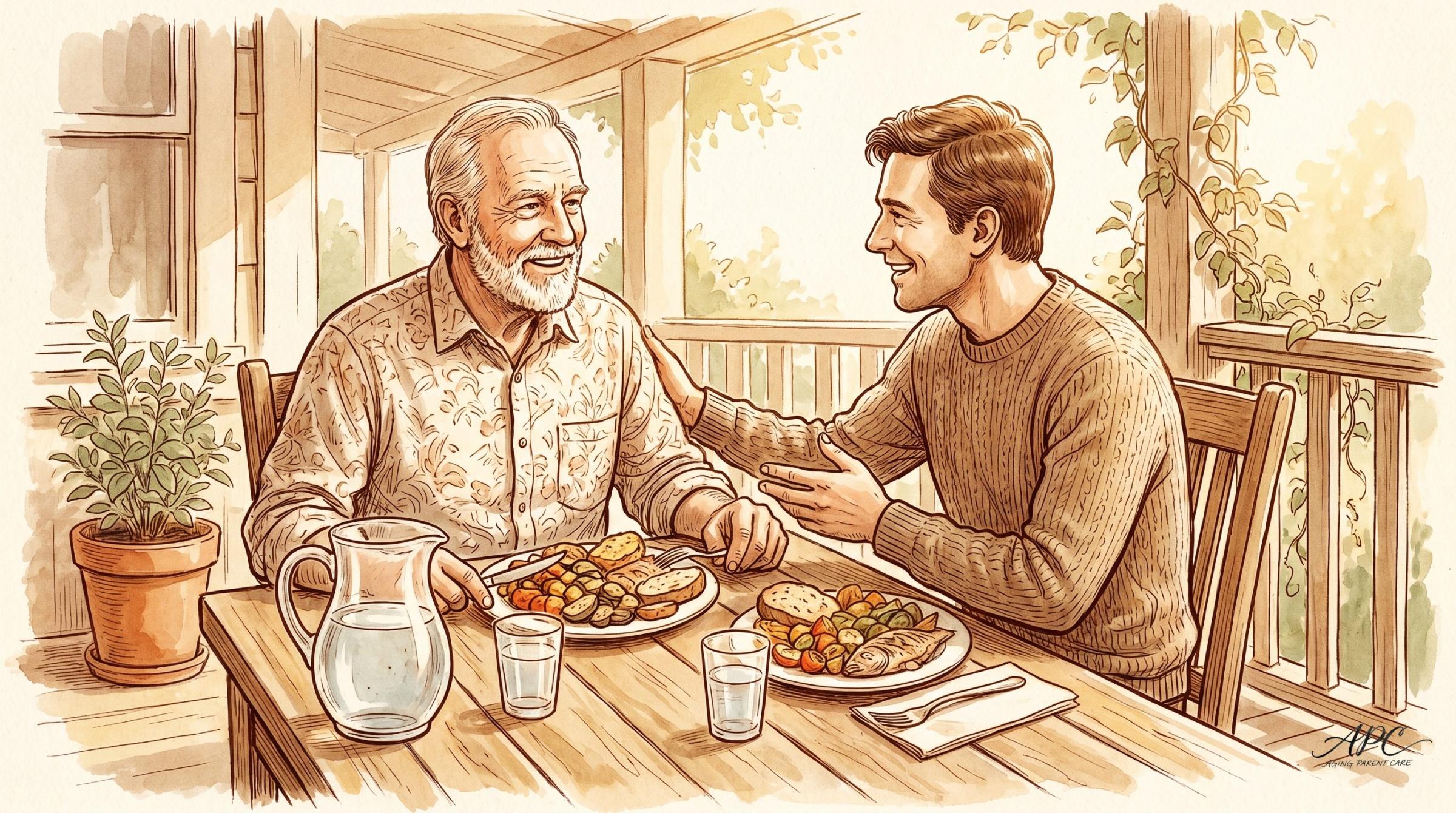
- Make eating easier and social. Small, frequent, calorie-dense meals, and company at the table.
The free Aging Parent Care Starter Kit walks you through the first steps in plain language, at your own pace. Get it sent straight to your inbox.
Send me the free Starter KitThe signs that look like normal aging
This is the hard part. Almost every warning sign reads, at a glance, like getting older. Watch for a cluster of these rather than any one alone: 1
- Unintentional weight loss, often 5 to 10 percent of body weight over a few months, or rings and clothes going loose
- A real drop in appetite, skipping meals, or losing interest in foods they used to love
- A pantry or fridge that is sparse, or full of food that never gets eaten
- Brittle nails, thinning hair, and dry, papery skin
- Catching every cold and infection that goes around
- Cuts and sores that heal slowly
- A weakening grip, trouble opening jars or holding a fork
- Fatigue, weakness, and a foggy, harder-to-reach version of their usual self
That last one matters more than families expect. Poor nutrition and low fluids can look exactly like a slide in memory or mood, which means malnutrition sometimes gets mistaken for the early dementia everyone is afraid of.
What to do before it becomes a hospital stay
The goal is to catch it while it is still a kitchen problem and not a hospital one. A few moves that work:
- Weigh, and write it down. A bathroom scale once a week, with the number noted, turns a vague worry into a fact a doctor can act on. Steady loss is the clearest signal there is.
- Bring it to the doctor. Ask them to screen for malnutrition and to hunt for the cause: medication side effects, dental pain, depression, swallowing trouble, or a condition affecting appetite. Many of these are fixable once named.
- Make eating easier, not grander. Small, frequent, calorie-dense meals beat three big ones a parent will not finish. Add protein and healthy fat to what they already like. Keep grab-and-eat food at eye level.
- Make it social. People eat more in company. A shared meal, a standing lunch date, or a senior-center dining program does more for appetite than any lecture about nutrition.
- Stay ahead of thirst. Since the thirst signal is unreliable, build hydration into the day on a schedule rather than waiting for your parent to feel it.
Dean did not nag his father about the casseroles. He started coming for dinner twice a week and cooking it together, got Walter's nausea-inducing medication adjusted, and put a scale in the bathroom. The weight stopped falling, then climbed a little. The fog Dean had quietly chalked up to age lifted with it.
The food was there. Walter was not eating it.
Frequently Asked Questions
How common is malnutrition in older adults?
Roughly 1 in 4 older adults in the United States is malnourished or at risk of it. It is not only a problem of poverty or empty cupboards, a parent with a stocked kitchen can still slide into it as appetite, taste, and the hunger signal fade.
What are the warning signs?
A cluster matters more than any one: unintentional weight loss or loose rings and clothes, a real drop in appetite, brittle nails and thinning hair, frequent infections, slow-healing cuts, a weakening grip, and fatigue or a new fog that can look like early dementia.
My parent has plenty of food but isn't eating. Why?
The causes are quiet: appetite and taste fade with age, dentures hurt, medications flatten flavor, grief makes cooking for one feel pointless, and the hunger and thirst signals weaken. A full fridge does not mean a fed parent.
Catch it while it is still a kitchen problem and not a hospital one, with a weekly weigh-in and a real look from the doctor. Start with the free Aging Parent Care Starter Kit, sent straight to your inbox.
Was this article useful?
Got feedback?
Let us know what was useful, unclear, or missing.
Related from Aging Parent Care
- Why Your Aging Parent Can't Sleep
- When Failing Eyesight Looks Like Decline
- Protecting Your Parent's Muscle on Ozempic
Sources
This content is for educational and informational purposes only. It is not a substitute for professional medical, legal, or financial advice. Always consult qualified professionals for guidance specific to your situation. Statistics and details cited were accurate at the time of publication and may have changed.
© 2026 Aging Parent Care. All rights reserved. No portion of this article may be reproduced, distributed, or used in any form without the explicit written permission of Aging Parent Care.
Related medical guides
- Your Parent's World Is Shrinking. Before You Blame Age, Check Their Eyes.
- Why Your Aging Parent Can't Sleep, and How to Help Them Rest Again
- How to Get Your Parent Comfort Care Without Giving Up the Fight
- How to Get Power of Attorney for an Elderly Parent, Step by Step
- What Does Caregiver Burnout Feel Like? 7 Symptoms Families Mistake for Stress
The Complete Aging Parent Caregiving Guide covers the full caregiving arc in 30 chapters, and the Guide and Workbook together add the fillable templates families use to put it into practice.
Make Your Business Online By The Best No—Code & No—Plugin Solution In The Market.
30 Day Money-Back Guarantee
Say goodbye to your low online sales rate!