How to Talk to a Parent About the Car Keys Without Starting a War

Brian had been dreading it for a year. His mother Carol, 79, had backed into the garage door twice and come home from the grocery store with a fresh dent she could not explain. He finally said it in her kitchen, fast and blunt: that he did not think she should be driving anymore. Carol went still, then cold. She said that was it, he wanted to put her in a home next. The conversation was over before it started, and she did not call him for a week.
He was right about the driving. He was wrong about how to get there.
Why this fight is so brutal
For most older adults, the car is not transportation. It is independence itself, the difference between living their own life and waiting for someone to come get them. Taking it feels like the first domino in losing everything else. That fear is not irrational, and the research backs it up: when older adults stop driving, their odds of becoming socially isolated roughly double, and giving up the keys is linked to a real rise in depression. 1 So a parent digging in is not being stubborn for no reason. They are protecting against a loss that genuinely lands.
That is also why the answer is never just to take the keys. If you remove the driving without replacing the freedom, you have traded a safety risk for an isolation one. The goal is to keep your parent moving through the world, just not behind the wheel.
How to handle the car keys conversation
- Start early, make it a series, not a one-time ambush in the kitchen.
- Lead with the goal, staying independent and safe, not the loss of the car.
- Bring in the doctor for an objective assessment that is not your opinion against theirs.
- Solve the rides first. A parent who can still get everywhere gives up the keys far more easily.
The free Aging Parent Care Starter Kit walks you through the first steps in plain language, at your own pace. Get it sent straight to your inbox.
Send me the free Starter KitRead the real warning signs
Age alone does not make someone unsafe, and plenty of people drive well into their 80s. There are now almost 52 million licensed drivers 65 and older, a 77 percent jump in under two decades. 2 What matters is function, not the number on the license. Watch for the things that actually predict trouble:
- New dents and scrapes on the car, the garage, or the mailbox
- Getting lost on familiar routes
- Slow or confused reactions at intersections, drifting between lanes, or missing signs and signals
- Other drivers honking often, or close calls your parent shrugs off
- Vision or memory changes, or medications that cause drowsiness
The stakes are highest at this age for a hard reason: drivers 70 and older are not necessarily crashing more often, but they are far more likely to be seriously hurt or killed when they do, because an older body is more fragile. Across all ages, 25 older adults are killed and more than 740 injured in crashes every day. 2
How to have the conversation
- Start early, and make it a series, not an ambush. Bring it up as an ongoing thing long before it is a crisis, so it is a plan you build together rather than a verdict you deliver.
- Lead with the goal, not the loss. Wanting to keep a parent independent and safe for as long as possible opens a door that a flat "you can't drive anymore" slams shut.
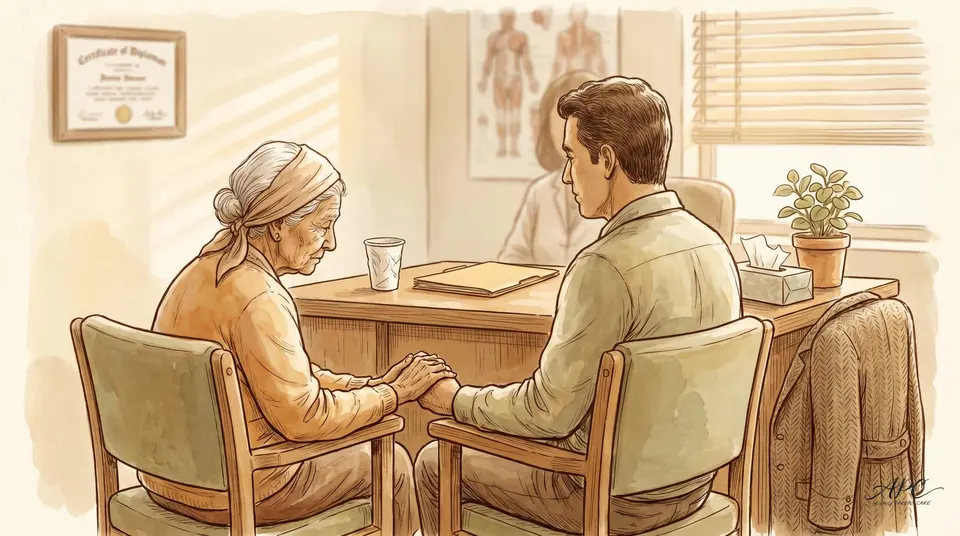
- Bring in the doctor. Most older adults are actually open to talking about driving with their physician, and a doctor's assessment carries weight that a worried child's does not. 1 Ask the doctor to raise it, or to order a formal driving evaluation through an occupational therapist.
- Solve the transportation before you remove the car. Line up the rides first: a rideshare account on their phone, a senior transport service, a standing arrangement with friends or neighbors. A parent who can still get to church, the store, and lunch with friends gives up the keys far more easily.
- Let them keep as much control as the situation allows. Sometimes the first step is limiting driving rather than ending it: daytime only, familiar routes only, no highways.
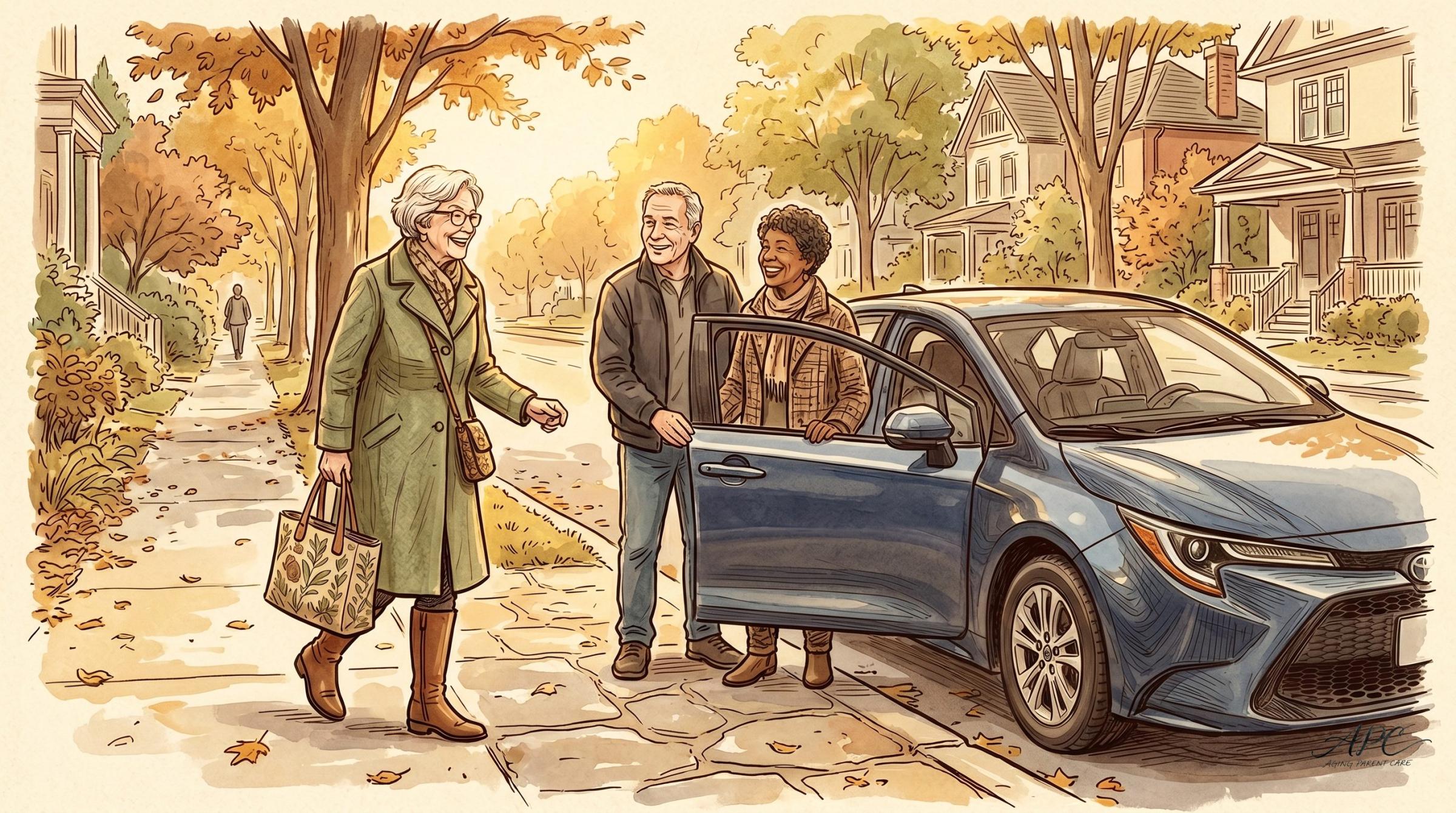
Brian waited a week, then tried again. This time he started with wanting her to be able to get everywhere she wanted to go. He set up a rideshare app on her phone, arranged for a neighbor to take her to her Thursday card game, and asked her doctor to do a driving assessment. Carol stopped driving two months later, on the doctor's rec, and kept going to everything that mattered to her. She still grumbles about it. She also still calls him.
If you remove the driving without replacing the freedom, you have traded a safety risk for an isolation one.
Frequently Asked Questions
When should an older adult stop driving?
Age alone does not decide it, function does. Watch for new dents, getting lost on familiar routes, slow or confused reactions, drifting between lanes, frequent honking from others, and vision or memory changes. A cluster of these is the signal, not a birthday.
How do I convince my parent to stop driving?
Lead with keeping them independent and safe, bring in their doctor for an objective assessment or a formal driving evaluation, and line up real transportation before removing the car. Most older adults are more open to this conversation with a physician than with a worried child.
Doesn't giving up driving isolate them?
It can, which is why the rides have to come first. When older adults stop driving, their odds of social isolation roughly double and depression can rise. The goal is to keep your parent moving through the world, just not behind the wheel.
Solve the transportation before you remove the car, and a parent gives up the keys far more easily than they give up their life. Start with the free Aging Parent Care Starter Kit, sent straight to your inbox.
Was this article useful?
Got feedback?
Let us know what was useful, unclear, or missing.
Related from Aging Parent Care
Sources
- Research on driving cessation in older adults and its link to social isolation and depression, and older adults' openness to physician involvement.
- Centers for Disease Control and Prevention, Older Adult Drivers: licensed-driver counts, daily crash deaths and injuries, and risk factors.
This content is for educational and informational purposes only. It is not a substitute for professional medical, legal, or financial advice. Always consult qualified professionals for guidance specific to your situation. Statistics and details cited were accurate at the time of publication and may have changed.
© 2026 Aging Parent Care. All rights reserved. No portion of this article may be reproduced, distributed, or used in any form without the explicit written permission of Aging Parent Care.
Related family guides
- Caregiving Quietly Wrecks Marriages. What the Couples Who Survive It Do Differently.
- Caring for a Parent From 500 Miles Away: A Long-Distance Playbook That Works.
- How to Get Power of Attorney for an Elderly Parent, Step by Step
- What Does Caregiver Burnout Feel Like? 7 Symptoms Families Mistake for Stress
- Hospital Discharge for Elderly Parents: The First 30 Days
The Complete Aging Parent Caregiving Guide covers the full caregiving arc in 30 chapters, and the Guide and Workbook together add the fillable templates families use to put it into practice.
Make Your Business Online By The Best No—Code & No—Plugin Solution In The Market.
30 Day Money-Back Guarantee
Say goodbye to your low online sales rate!
When should an elderly person stop driving?
Age alone is not the trigger; specific warning signs are. Getting lost on familiar routes, new dents and scrapes, slow reactions, missed signs or signals, and a doctor's or family's concern after riding along are the signals it is time to reassess.
How do you get an elderly parent to stop driving?
Lead with a specific concern rather than a blanket demand, offer a concrete alternative so independence is not simply removed, ask the doctor to weigh in as a neutral authority, and in some states request a driving evaluation through the DMV.
Can you report an unsafe elderly driver?
Yes. Most states let a family member or physician request a re-examination of an unsafe driver through the DMV, sometimes anonymously. The DMV can then require a vision, written, or road test.