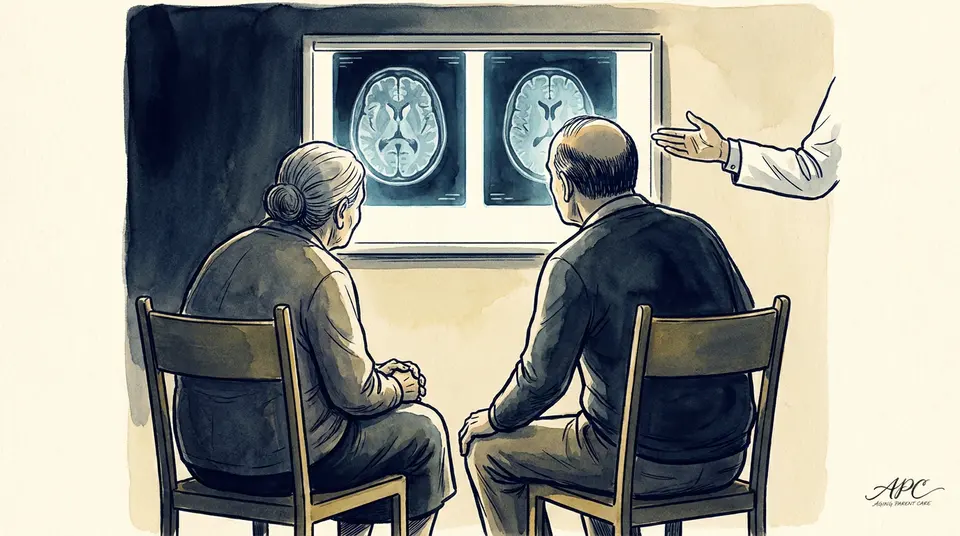

When Two Months of Burden Becomes Clinical Depression: What a 2026 Study Found

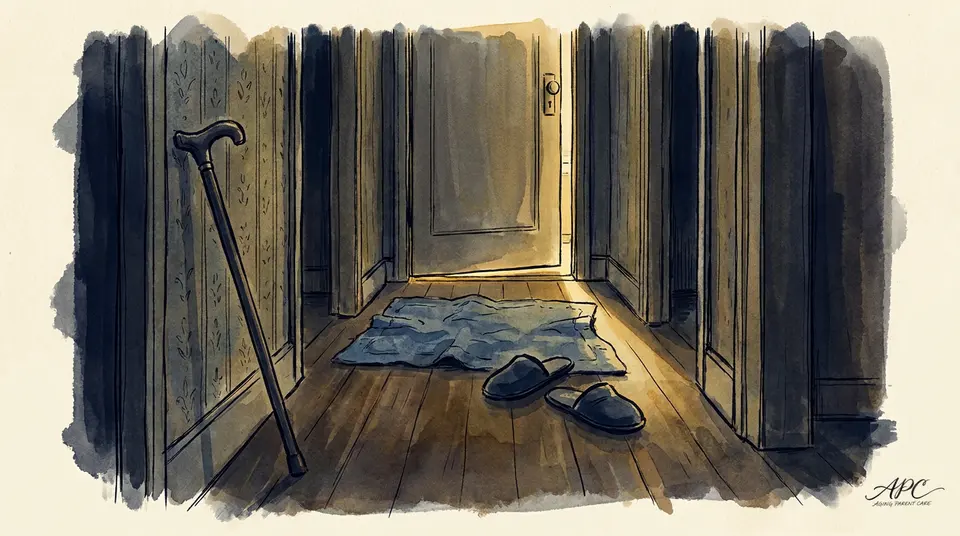
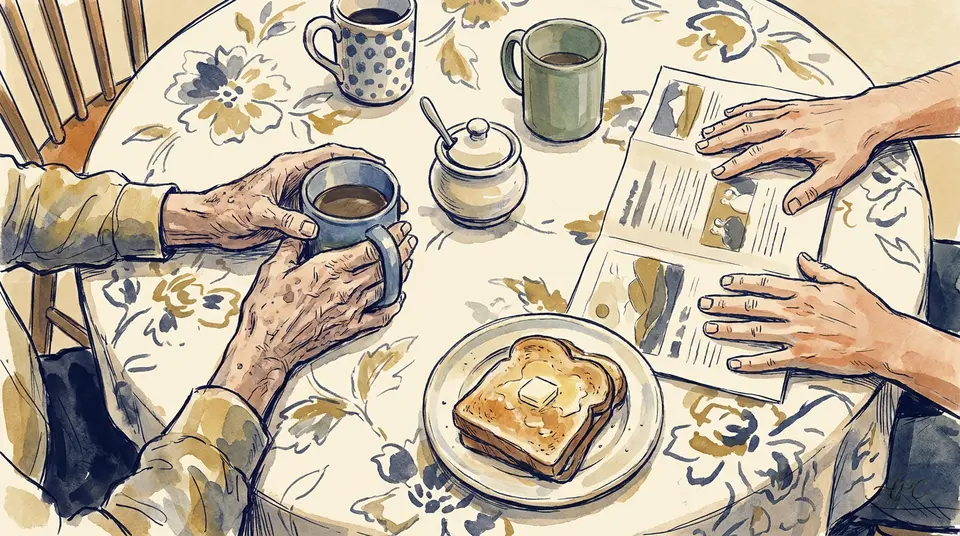
Robert stopped fishing first. Then he stopped calling his brother back. He told himself he was just tired, that the weekends had filled up with his dad's appointments and the word depression belonged to someone with a real reason. The thing he did not have a name for is the thing a 2026 study put a sharper edge on: there is a point where the ordinary weight of caring for a parent stops being a hard stretch and turns into a medical problem, and the data put that line at roughly two months of unrelieved strain.
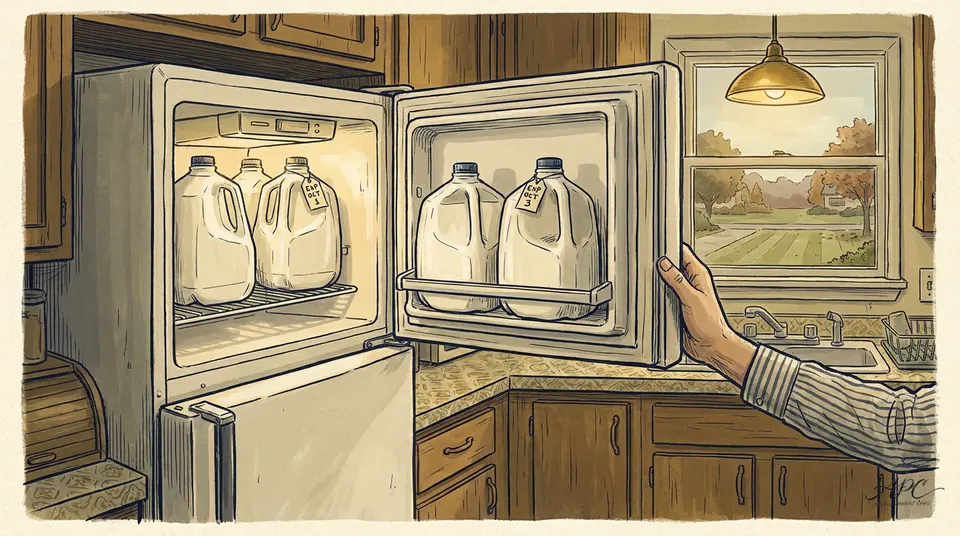
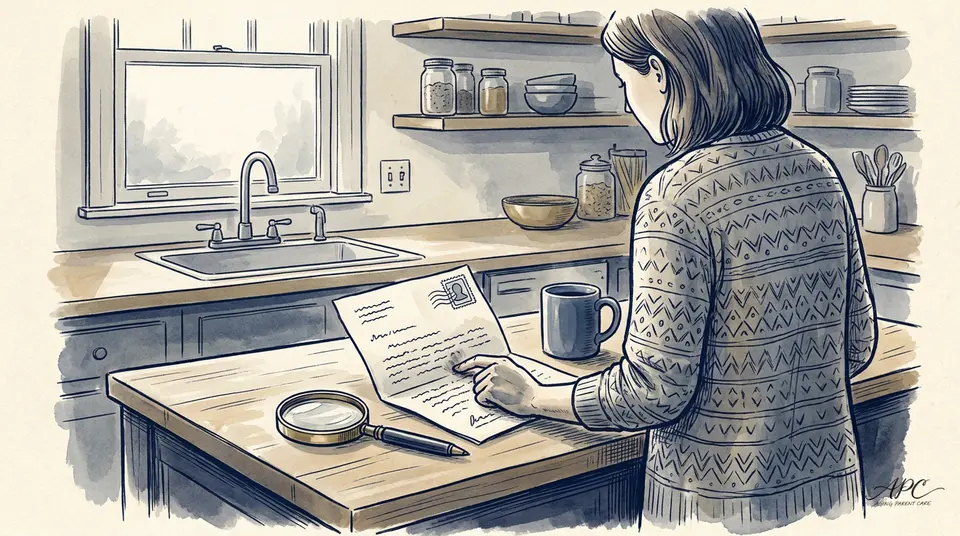
Robert was fifty-eight, a building inspector in Sacramento, and his father, eighty-three, had vascular dementia in a one-story house twelve minutes away that was getting less safe by the season. Robert ran the medications, the appointments, the bills, the calls that came at midnight when his dad forgot which house he was in. Fourteen months of it. His wife said he had changed. He said he was worn out. Both of those were true, and only one of them was the whole story.
In 2026, researchers writing in Aging & Mental Health followed 139 family caregivers of people with Alzheimer's and related dementias, checking in on their burden, depression, and anxiety up to six times across twenty weeks.1 The pattern they found is the one Robert was living inside. When burden rose in a given month, depression and anxiety rose with it, and stayed up the next month too. And carrying higher than usual burden for two months or more was tied to a real, clinically significant jump in the risk for both. Not a low mood. The threshold doctors actually treat. Here is what that difference looks like up close, how to spot it in someone you love, and what genuinely helps.
When sustained caregiver burden becomes a clinical risk
- Two months is roughly the line. Burden that stayed high for two months or more was tied to a clinically significant rise in depression and anxiety risk in the 2026 study.1
- Stress and clinical depression are different. One eases with a weekend off. The other settles in and does not lift.
- A screen is fast. A primary care depression screen takes under five minutes; the PHQ-9 is nine questions.3
- Small relief counts. A few hours of regular respite can break the streak before it compounds.
What is the difference between caregiver stress and clinical depression?
Most caregivers carry stress, and that is expected. It is hard work under hard conditions with too little help. Stress tends to show up as irritability, a shorter fuse, less patience with the small things that used to be manageable.
Clinical depression is a different animal. It involves lasting changes in mood, energy, concentration, appetite, and the ability to feel pleasure. It does not lift after a good night's sleep or a Saturday off. It settles in, and it changes how a person reads their own life. That is the part Robert could not see from the inside.
What the 2026 study clarified is that the slide from normal stress toward clinical risk tracks with duration. A short, sharp burden, a hospital scare, a bad fall, a brutal week, can spike stress without pushing someone over the edge. But when the burden never resolves, the effects build on each other, and around two months in is where the data show the risk turning serious.1 A large review of caregivers of older relatives lands in the same place: the heavier the felt burden, the higher the depression, and for many it is enough to tip into clinical depression.4
The researchers were careful to separate one bad day from a sustained pattern. A caregiver who scores high on one check-in and lower on the next is fluctuating. A caregiver who scores high two months running is on a different track entirely.
Why does two months matter so much?
Two months is not a magic number, but it is not arbitrary either. It lines up with how major depressive episodes tend to build. A diagnosis needs symptoms present most days for at least two weeks, yet the runway into a full episode often takes longer to lay down.2 Caregiving speeds it up because the stressor does not leave. There is no end date and no finish line in sight.
Caregiving burden is also not like job stress or money pressure or grief after a loss. Those are real, but they usually have some arc. They shift. Caring for a parent with dementia or another progressive illness tends to grow heavier over time, not lighter, and the body and mind seem to register that permanence somewhere around the two-month mark. Long-running caregiver strain takes a real toll on health, which is exactly why catching it early matters.5

The free Aging Parent Care Starter Kit walks you through the first steps in plain language, at your own pace, including how to set up the regular relief that breaks the streak. Get it sent straight to your inbox.
Send me the free Starter KitWhat do caregivers tend to miss in themselves?
Caregivers are notoriously poor at reading their own state. The role rewards self-denial. The instinct is to push through, to assume the parent has it worse, to measure the situation against someone else's and decide there is no right to struggle. That is exactly why it helps to know the concrete signs ahead of time.
Signs that a pattern has crossed past fatigue into something more, whether in a caregiver you love or in yourself:
- Lost interest. The things that used to help, the fishing trip, the phone call with a friend, quietly drop off and do not come back, beyond what a packed schedule alone would explain.
- Disrupted sleep. Waking at 3 a.m. with a racing mind, or a flat, heavy feeling that does not lift by morning even when the parent is not the cause.
- Withdrawal. Pulling away from people, leaving calls unreturned even when the calendar is wide open.
- Emotional shift. Crying more than before, or feeling nothing at all. Both count.
- Dark thoughts. Thoughts that the family would be better off, or that going on feels impossible. These need immediate attention. In the US, call or text 988 for the Suicide and Crisis Lifeline.
Caregiver depression is a predictable medical outcome of sustained strain. Not a weakness. Not a failure. A predictable outcome.
What should a family do when the pattern shows up?
The first step is honest acknowledgment, dropping the "I'm fine, just tired" script. A heavy feeling that has outlasted a rough patch may need real support. Here is a practical order to work through:
- Book a primary care visit and ask for a depression screen. It takes under five minutes. The PHQ-9, the most common tool, is nine questions, and doctors see caregiver depression all the time.3
- Ask about therapy and support that fits caregiving. Talk therapy helps, and so does a group where people get exactly what the caregiver is living. Family Caregiver Alliance keeps free resources and referrals on its site.6
- Treat medication as an option, not a sentence. The right medication can steady mood and ease anxiety while other supports get built. The sense that one should just be able to handle it without help is often itself a symptom.
- Arrange a few hours of regular relief. Adult day programs, an in-home aide, a sibling who takes one weekend a month. The point is to break the load before it compounds.7
Here is the part of the 2026 study worth sitting with: because the harm tracks with how long burden stays high, easing it even modestly may interrupt the slide. A paid aide for bathing and meals. An adult day program two mornings a week. The goal is not to overhaul a whole family's setup. The goal is to break the streak before it sets.1 The Family Caregiver Alliance puts it plainly: the right services lower caregiver depression and anxiety, and let people keep caring without breaking.6
Robert saw his doctor after his wife made the appointment for him and drove him there. His PHQ-9 came back at 17, moderately severe. He started a low-dose medication and began seeing a therapist every other week, and he hired an aide for three afternoons so he could sleep, eat a real meal, and sit in the backyard without his phone. A month in, he called his brother back. By summer he was on the river again, not every weekend, but enough. He told his wife he felt like he had been underwater for a year and had not known it.
Frequently Asked Questions
How is caregiver depression different from being burned out?
Burnout and stress tend to ease with rest and a real break. Clinical depression persists across mood, sleep, appetite, energy, and concentration, and it does not lift after a weekend off. The 2026 study found the risk turns serious the longer burden stays high, with around two months as the point where clinical risk rises sharply.1
What is the PHQ-9 and where can a caregiver take it?
The PHQ-9 is a nine-question depression screen used in most primary care offices. A doctor can give it in under five minutes during a regular visit, and the score helps guide whether therapy, medication, or both make sense.3
Can a few hours of respite really change the outcome?
Because the harm in the study tracked with how long burden stayed high, easing it even modestly may interrupt the path toward clinical depression. Regular relief, an adult day program, an in-home aide, or a sibling taking a weekend, breaks the streak of unrelieved load that the data tie to clinical risk.1
The 2026 research found that caregiver burden held high for two months or more was tied to a clinically significant rise in depression and anxiety, and that a five-minute screen, therapy, the right medication, and even a few hours of weekly respite are real ways to interrupt it. If this sounds like someone in your family, ask a primary care doctor for a depression screen, and use the free Aging Parent Care Starter Kit to set up the regular relief that breaks the streak.
Was this article useful?
Got feedback?
Let us know what was useful, unclear, or missing.
Related from Aging Parent Care
- Caregiver Burnout and the Other 22 Percent
- Caregiver Anger Is Normal
- Adult Day Centers for Aging Parents
Sources
- Aging & Mental Health. "Caregiver burden: changes over time and associations with anxiety and depression symptoms." 2026. tandfonline.com/doi/full/10.1080/13607863.2026.2662508
- American Psychiatric Association. Diagnostic and Statistical Manual of Mental Disorders, Fifth Edition (DSM-5), major depressive disorder criteria. psychiatry.org/psychiatrists/practice/dsm
- Kroenke K, Spitzer RL, Williams JB. "The PHQ-9: Validity of a Brief Depression Severity Measure." Journal of General Internal Medicine, 2001. pmc.ncbi.nlm.nih.gov/articles/PMC1495268
- del-Pino-Casado R, Rodriguez Cardosa M, Lopez-Martinez C, Orgeta V. "The association between subjective caregiver burden and depressive symptoms in carers of older relatives: A systematic review and meta-analysis." PLOS ONE, 2019. pmc.ncbi.nlm.nih.gov/articles/PMC6541277
- Schulz R, Beach SR. "Caregiving as a Risk Factor for Mortality: The Caregiver Health Effects Study." JAMA, 1999. jamanetwork.com/journals/jama/fullarticle/192209
- Family Caregiver Alliance. "Depression and Caregiving." National Center on Caregiving. caregiver.org/resource/depression-and-caregiving
- AARP. "Caregiver Burnout: Signs, Symptoms, and Prevention." aarp.org/caregiving/life-balance/caregiver-stress-burnout
This content is for educational and informational purposes only. It is not a substitute for professional medical advice, diagnosis, or treatment. If you or someone you care for may be experiencing depression, please consult a qualified healthcare provider. In a crisis in the US, call or text 988. Statistics and study details cited were accurate at the time of publication and may have changed.
© 2026 Aging Parent Care. All rights reserved. No portion of this article may be reproduced, distributed, or used in any form without the explicit written permission of Aging Parent Care.
More on the emotional side of caregiving
- How to Keep a Far-Away Parent From Slipping Into Loneliness
- Who Gets the Dog? How to Plan for Your Parent's Pet Before a Crisis
- Caregiver Rage Is Normal. Here's How to Handle It Without Guilt.
- How to Get Power of Attorney for an Elderly Parent, Step by Step
- What Does Caregiver Burnout Feel Like? 7 Symptoms Families Mistake for Stress
The Complete Aging Parent Caregiving Guide covers the full caregiving arc in 30 chapters, and the Guide and Workbook together add the fillable templates families use to put it into practice.
Make Your Business Online By The Best No—Code & No—Plugin Solution In The Market.
30 Day Money-Back Guarantee
Say goodbye to your low online sales rate!