

Why Won't Your Siblings Help With Your Aging Parent? (and How to Change It)

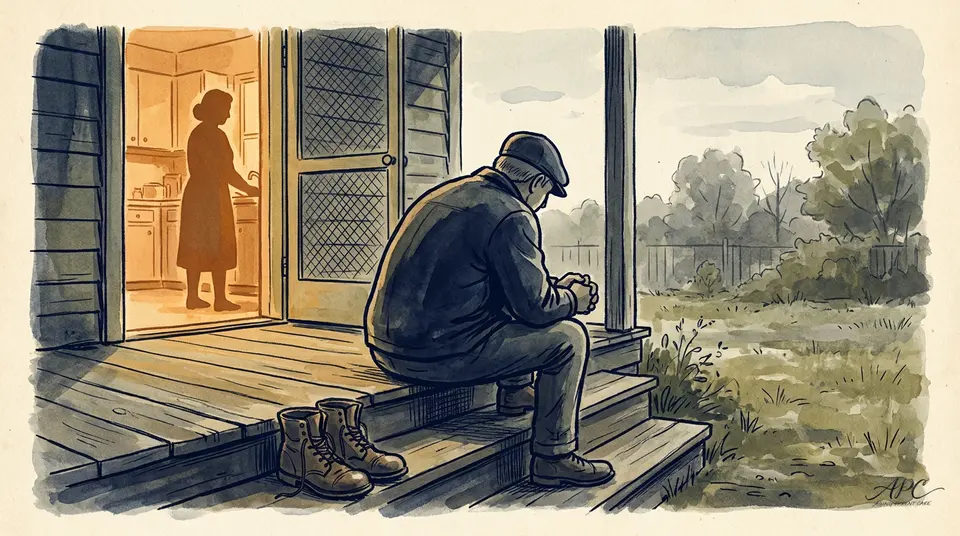
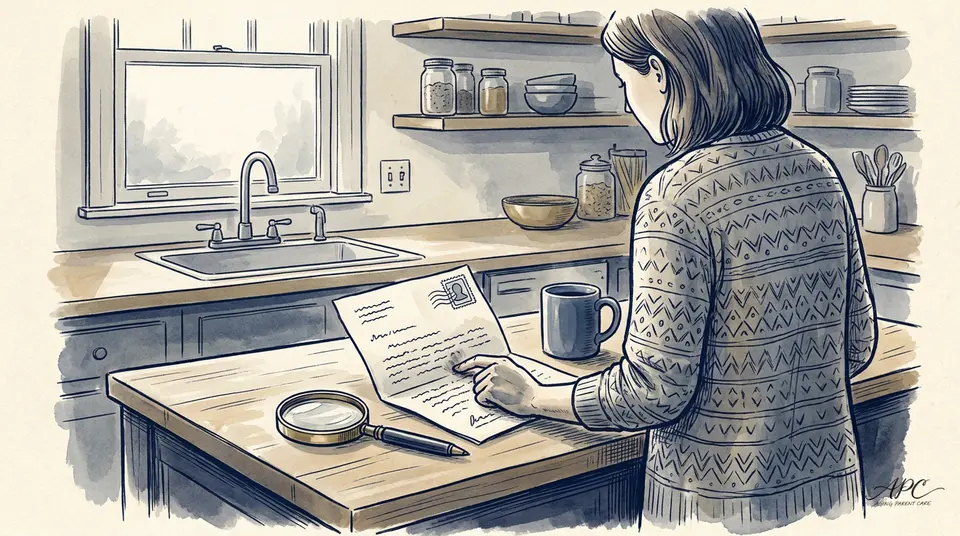
It is 9 on a Wednesday night, and the drive home from her mom's apartment is the only quiet Renee gets all day. Her phone lights up at the stoplight. It is her brother Mark, who lives three states away and shows up twice a year: "How's Mom doing?" Four words. No offer, no question about what their mother actually needs. Renee types "Fine," drops the phone face-down on the seat, and drives. She has been doing all of it for two years, and the version Mark sees on his Thanksgiving visit is the tidy one. Here is the part worth knowing: a sibling like Mark can often be moved, but not by a plea. It takes a list, a forecast, and the right kind of ask.
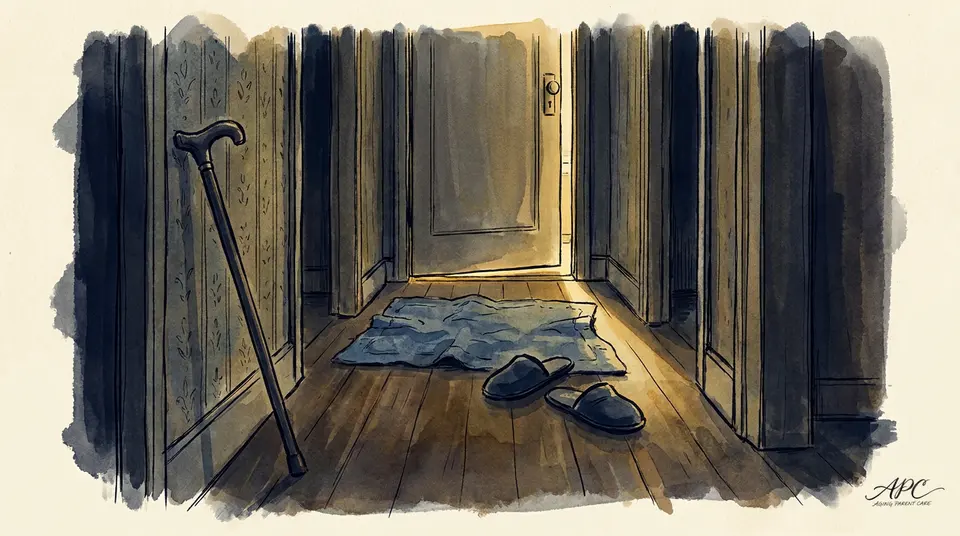
That one word, "Fine," carries everything Mark will never see. The pill organizers refilled every Sunday. The wet laundry. The smell of Ensure. The 3 a.m. calls when Mom can't find the bathroom. He pictures a clean apartment and a mother who sounds steady on the phone, because that is the only version anyone has ever shown him. It is not that he doesn't care. It is that he has no idea, and nobody has made him look.
This is the most common shape caregiving takes, and it is not a sign a family is broken. When researchers tracked how care gets split among grown kids, they found that in nearly three quarters of families, only one child was helping the parent at all.1 And the one who steps in is usually a daughter. Renee is, in other words, the rule, not the exception. The lopsidedness tends to harden, too: when a parent's memory starts to go, old sibling tensions sharpen, and the real trigger is rarely a childhood grudge. It is the plain, present inequality of who is doing the work right now.2
How to move a sibling who is not helping
- Name the pattern. Distant Observer, Denier, or Critic. Each one needs a different conversation.
- Send the list, not the plea. Write down every weekly task and ask which ones they will take.
- Offer remote work. Finances, insurance, research, and telehealth do not require being in the room.
- State the forecast plainly. Solo caregiving leads to burnout, and paid care runs $5,000 to $10,000 a month.
Why won't my sibling help with our parent?
Before any of this can change, it helps to name what you are actually dealing with. Most siblings who don't pitch in fall into one of three patterns, and the pattern tells you which conversation to have. Renee spent a year furious at Mark before she realized he was two of these at once.
- The Distant Observer. Lives far away, calls now and then, offers support from a safe distance. Says "You're doing such a great job" and "Let me know if there's anything I can do," but the offer never turns into anything. Because they don't see the daily grind, they don't understand it, and they may honestly believe things are fine, since no one has told them otherwise.
- The Denier. Minimizes the decline. "Mom seemed fine when I talked to her Sunday." "Dad's always been forgetful." "I don't think it's as bad as you're making it." Admitting a parent needs daily help means admitting the parent is fading, which means facing mortality, and people will do a lot to avoid that. The Denier is grieving early, and the grief comes out sideways as resistance.
- The Critic. Doesn't help, but has plenty of opinions about how the helping is done. Questions the medications, the living arrangements, the spending. Pushes for a different plan without offering to carry it out. The Critic is often managing guilt, and finding fault is how they justify staying out of it.
Naming the pattern doesn't fix it. But it points you toward the right conversation instead of the same circular fight. Mark, Renee figured out, was a Distant Observer who turned into a Critic the minute he visited. He couldn't see the work, so he second-guessed it.
How do I ask a sibling for help so they actually do it?
The single biggest mistake is assuming a sibling can see what needs doing. They can't. Even on a visit, they get the cleaned-up version: Mom on her best day, the apartment tidied, the medications already sorted. They never see the hour on hold with the insurance company. So the work has to be described, specifically and without apology.
It is much harder to say "I can't help" when you are staring at a list of 23 tasks and your sister is doing 21 of them.
So write it all down. Every caregiving task in a single week, and be exhaustive about it:
- Medication management, meal prep, and laundry.
- Transportation and appointment scheduling.
- Insurance calls and home maintenance.
- Emotional support and overnight supervision.
Then send the list as a plain statement of fact, not an accusation: "Here's what Mom needs every week. I'm doing all of it right now. I need each of us to take some of it. Which items can you take?" It works because it moves the whole thing off emotion and onto logistics, where there is nowhere to hide.
The free Aging Parent Care Starter Kit includes a weekly task tracker and a family-meeting template, the exact tools for building the list and dividing it up. Get it sent straight to your inbox.
Send me the free Starter KitWhat can a far-away sibling actually do?
Not every task needs someone in the room. A sibling three states away can still carry real weight, and the kind that eats real hours.3 When you send the list, attach the remote column too:
- Manage the finances and coordinate insurance.
- Research care options and compare facilities or agencies.
- Schedule and attend telehealth appointments by video.
- Order supplies online and handle the legal paperwork.
That is genuine work, and handing it off provides measurable relief. A sibling who keeps saying "I'm too far away to help" loses the excuse the moment the remote list lands in their inbox. Renee gave Mark the finances and the insurance fights. He grumbled. He also, eventually, did them.
Set a standing call, then state the forecast
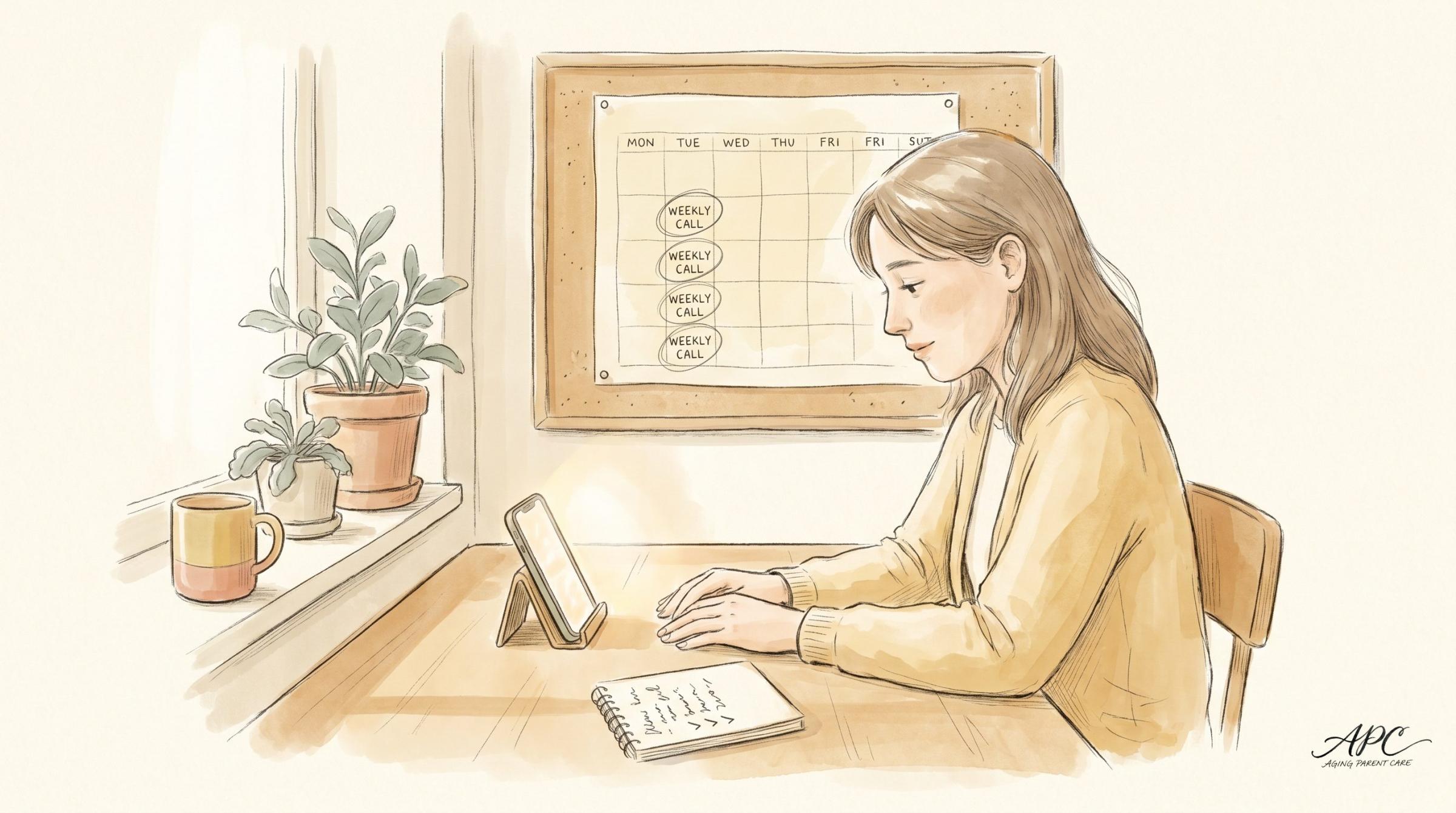
Set up a family call every two weeks. Same day, same time, thirty minutes. Review the care plan, talk through what changed, redistribute tasks as needed. It kills the "I didn't know" excuse and leaves a paper trail, even if that trail is just a shared Google Doc of who agreed to do what.
Then say the hard part out loud: "If I keep going at this pace without support, I will burn out. When I burn out, I can't provide the care. That means we hire someone or move Mom to a facility, and that runs roughly $5,000 to $10,000 a month for full-time help. I need to know whether you're prepared to share that cost." That is an honest forecast, not a threat. The price of professional care is often the thing that finally moves a reluctant sibling from watching to helping.
What if a sibling will never help?
Some siblings will never help. That is a real outcome a family may have to accept, and accepting it isn't failure, it's just clear-eyed. At that point the question changes from "How do I get them to help?" to "How do I get the help I need from somewhere else?"
Respite care programs, adult day centers, faith communities, and local caregiver support groups can fill part of the gap.4 They will never replace a sibling who shows up. But they beat silence from someone who shares a last name and none of the load.
Frequently Asked Questions
Why does one sibling end up doing all the caregiving?
In most families, only one adult child ends up helping the parent, and that child is usually a daughter.1 Proximity, gender, work flexibility, and old family roles all feed it. A parent's memory loss tends to sharpen existing sibling tension on top of that, so the imbalance often gets worse, not better, over time.2
How do I talk to a sibling who is in denial about our parent?
Skip the argument about how bad things are and hand them facts instead. Share the weekly task list and, where you can, specifics like a doctor's note or a missed-medication log. A Denier is often grieving in advance, so concrete documentation does more than persuasion, and a standing family call keeps everyone looking at the same reality.
What if my sibling only criticizes and never offers to help?
Tie every opinion to a task. When a Critic questions a decision, answer with the list: "I hear you. Here's what needs doing this week, which of these would you like to own?" Pairing criticism with a concrete ask either turns it into help or makes the absence plain to everyone on the call.5
Renee never got the apology, and Mark never became the brother who flies in for the hard weeks. What she got was the finances off her plate, a call every other Sunday, and a boundary she finally said out loud: she would do the daily care, and the overnight crises went to a paid aide they split the cost of. The Wednesday text still comes. These days she sometimes answers it with the list. A reluctant sibling rarely moves for a plea, but often moves for a written list, a remote task they can own, and an honest forecast of what solo caregiving costs. The free Aging Parent Care Starter Kit gives you the task tracker and family-meeting template to build it.
Was this article useful?
Got feedback?
Let us know what was useful, unclear, or missing.
Related from Aging Parent Care
Sources
- Lin IF, Wolf DA. "Division of Parent Care Among Adult Children." The Journals of Gerontology Series B, 2019. pmc.ncbi.nlm.nih.gov/articles/PMC7751154
- Gilligan M, Suitor JJ, Ogle D. "Changes in Adult Sibling Conflict and Older Parents' Cognitive Impairment: The Moderating Role of Care Provision." Innovation in Aging, 2023. pmc.ncbi.nlm.nih.gov/articles/PMC10735373
- AARP. "Navigating Long-Distance Caregiving for Aging Loved Ones." aarp.org/caregiving/basics/long-distance-care
- Family Caregiver Alliance. "Respite Tips: Taking a Break From Giving Care to Someone in Need." caregiver.org/resource/respite-tips-taking-break-giving-care-someone-need
- National Institute on Aging. "Getting Help With Alzheimer's Caregiving." nia.nih.gov/health/alzheimers-caregiving/getting-help-alzheimers-caregiving
This content is for educational and informational purposes only. It is not a substitute for professional medical, legal, or financial advice. Always consult qualified healthcare providers, attorneys, or financial advisors for guidance specific to your situation. Statistics and policy details cited were accurate at the time of publication and may have changed.
© 2026 Aging Parent Care. All rights reserved. No portion of this article may be reproduced, distributed, or used in any form without the explicit written permission of Aging Parent Care.
Keep reading
- You're the Only One Caring for Your Parent? How to Build a Team Anyway
- Caregiving Quietly Wrecks Marriages. What Surviving Couples Do Differently.
- The Guilt That Keeps You From Asking for Help
- What Does Caregiver Burnout Feel Like?
A named task beats a vague offer. The Complete Aging Parent Caregiving Guide covers the full arc in 30 chapters, and the Guide and Workbook together add the fillable templates families use to put it into practice.
Make Your Business Online By The Best No—Code & No—Plugin Solution In The Market.
30 Day Money-Back Guarantee
Say goodbye to your low online sales rate!
Why won't siblings help with elderly parents?
The most common reasons are distance, denial about the parent's decline, old family roles reasserting themselves, and the assumption that whoever started helping will keep doing it. Research on family caregiving consistently finds one adult child becomes the default caregiver while others contribute little unless specifically asked for specific tasks.
Can someone refuse to care for an elderly parent?
Legally, yes, in almost all circumstances. A handful of states have filial responsibility laws, but they are rarely enforced against unwilling adult children. The practical question most families face is not obligation but negotiation: who does what, and what gets hired out.
How do you divide elderly parent care between siblings?
What works in practice is a written list of every recurring task, matched to each sibling's real constraints: the local one handles appointments, the distant one takes bills and paperwork, the busy one funds respite care. Money counts as caregiving. A family meeting with an agenda beats years of resentment by text message.