

The Guilt That Keeps You From Asking for Help Is the Same Guilt That Will Break You

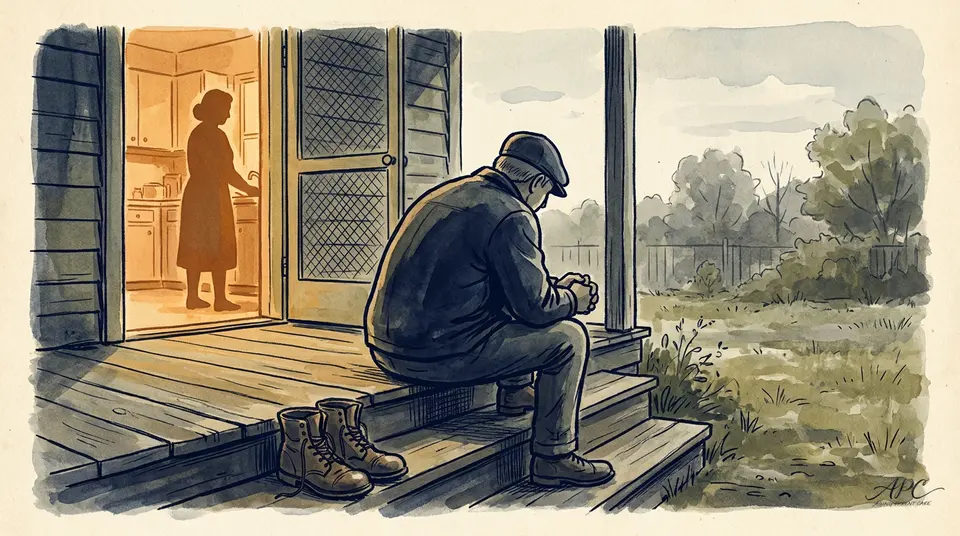
The text sat on Linda's phone for two days before she answered it. A friend from church had offered to sit with her mother on Thursday so Linda could get to her own doctor. A simple yes was all it needed. Instead Linda typed, deleted, and finally wrote back that she had it covered. She did not have it covered. She just could not say yes without feeling like she was handing off her own mother, like a daughter who could not manage the one thing a daughter is supposed to manage. If that knot sounds familiar, here is the part that gets lost in the rush: the help that feels hardest to accept is exactly the thing that lets a caregiver keep showing up.
Linda's days had a shape. Forty minutes from her apartment in Glendale to her mother's house in Pasadena, breakfast on the table, medications sorted, a hand to the bathroom, the wash started. By 2 p.m. she was back at her desk for a half-shift at the insurance brokerage where she had worked for eleven years. By evening she was on the phone again, checking whether her mother had eaten, whether the door was locked.
She did this for three years. She never called the Area Agency on Aging. She never looked into respite care. She had a brother twenty minutes away and never once asked him for a weekday shift. When a coworker said she was burning out, Linda's answer came fast: "She's my mother. I should be able to handle this."
That word, should, does a quiet kind of damage. Guilt is one of the most common emotions caregivers describe, and it tends to be the heavy kind, not the passing kind.1 It is the guilt that wrecks sleep, frays relationships, and turns into the single biggest reason a caregiver will not reach for the support that keeps them upright. And it is not one feeling. It wears at least four faces, and naming them is the first step to loosening their grip.
The four faces of caregiver guilt
- Task-based. "I'm not doing enough." The cure is arithmetic, not affirmation.
- Emotional. "I resent my own parent." Anger and love sit together in every close relationship.
- Time-based. "I'm failing everyone else." Structural, and solved by adding help.
- Decision. "I put them there." Usually made because the other options were already gone.
Task-based guilt: "I'm not doing enough"
This is the most common one. The caregiver is already doing more than one person can reasonably sustain, but the internal bar keeps moving. Three doctor's appointments handled in a week, but the compression socks forgotten. Six dinners cooked, but Tuesday's was reheated soup, and that is the one that lands in the chest.
Task-based guilt runs on comparison: against an imaginary perfect caregiver, or against a sibling who breezes in for a weekend and looks effortlessly capable. The comparison is never fair. It never counts the 340 days a year the primary caregiver showed up and others did not. A lot of it traces back to a belief Family Caregiver Alliance hears constantly, that "if I don't do it, no one will," which quietly turns every gap into a personal failing.2
The antidote is not affirmation. It is arithmetic. Write down what got done this week, and the gap between the work and what anyone could reasonably expect closes fast.
Emotional guilt: "I resent my own parent"
Love for a parent can sit right next to the urge, on certain Tuesdays, to scream at a fourth request in an hour to adjust the thermostat. Then the guilt arrives like a wave. How can anyone be angry at someone who is sick? What kind of person feels this way? A normal one.
Resentment riding alongside love is a sign of depleted reserves, not a character flaw. The caregiving counselors at Family Caregiver Alliance treat anger as an ordinary part of long-term care and note that resentment tends to flare when a caregiver feels unappreciated or left to carry it alone.1 One move helps more than most: externalize the anger. Say it out loud, or write it down. "I am angry at this situation," not "I am angry at my mother." Nobody chose the disease or the insurance bureaucracy. Aiming the frustration at the circumstances instead of the person clears a little room to keep going.
Time-based guilt: "I'm failing everyone else"
The hours spent caregiving are hours not spent with children, a spouse, friends, or oneself. A daughter's school play falls on the same afternoon as a father's cardiology appointment. The appointment wins. Then comes an evening of apologizing to a nine-year-old who says it is fine but whose face says otherwise.
Time-based guilt is structural. Trying harder will not fix it. The only thing that does is adding help to the system:
- A home health aide for eight hours a week.
- A neighbor who drives a parent to physical therapy on Thursdays.
- A sibling who takes the Saturday morning shift.
Every hour of help accepted is a load-bearing wall that keeps the house standing. This is where guilt turns most dangerous. It frames accepting help as failure, when refusing help is the thing that actually leads to collapse. As Family Caregiver Alliance puts it, the more help and support you accept, the easier it gets to set down the sense of carrying it all.1
The free Aging Parent Care Starter Kit walks you through the first steps in plain language, at your own pace, including how to ask one specific person for one specific thing. Get it sent straight to your inbox.
Send me the free Starter KitDecision guilt: "I put them there"
For a lot of families, the hardest moment is the decision to move a parent into assisted living or a nursing facility. The guilt that follows can be crushing. A promise was made that a father would never go to a home. He is in one now, and the promise keeps echoing.
Decision guilt is retrospective. It replays a choice already made, hunting for the version with one more option in it. But that decision was usually made because the alternatives were already exhausted. The parent needed more than one person could provide. The house was no longer safe. The medical needs went past what anyone could manage at 3 a.m. with a YouTube video and a blood pressure cuff. Family caregiving counselors describe the way through as giving yourself permission to forgive, trading guilt for honest regret about limits no person could have outrun.1 That forgiveness is not a single event; it happens again and again, sometimes daily, until the rawness fades.
Why the guilt is worth fighting, not just feeling
There is a practical reason to take this seriously rather than wait it out. Researchers who study dementia caregivers have traced a clear line from guilt and conflicted feelings to depression: the more a caregiver is pulled between love and resentment, the more guilt builds, and the more that guilt feeds depressive symptoms.3 Guilt left to run is not harmless background noise. It is a load on the caregiver's own health, which is the one resource the whole arrangement depends on.
What the way through actually looks like
Linda eventually called her brother. Not because the guilt vanished, but because her doctor told her that her blood pressure had reached a level that needed medication, and she realized she was on her way to becoming a patient herself. Her brother took Tuesdays and Thursdays. A home health aide covered Monday mornings. Her mother did not suffer from the change. She barely noticed.
If you want a place to start, the steps are small and concrete:
- Write down everything you did this week. Read it back. That list is the answer to "I'm not doing enough."
- Name one task someone else could own, and ask one specific person for that one thing. Not "help," but "Thursdays at 4." Asking for help when you need it is a sign of strength, not a confession of failure.2
- Call the Area Agency on Aging or the National Family Caregiver Support Program to find respite hours in your area.4
- When the anger comes, aim it at the situation out loud, not at the person you love.
Guilt insists that one person must do all of this, that asking for help is a betrayal, that any resentment disqualifies the caregiver. Guilt is not telling the truth.
As for that text from her friend at church, Linda did finally say yes, months later, the second time it was offered. She spent that Thursday at her own doctor and then, with an unspoken hour left over, sat in her car in the parking lot and drank a coffee while it was still hot. When she got back, her mother was fine. The roof had not fallen in. Nobody had been failed. That is the whole secret the guilt works so hard to hide: showing up imperfectly, with a rotating cast of helpers and a few missed compression socks, is enough. It is more than enough.
Frequently Asked Questions
Is it normal to feel guilty as a caregiver?
Yes. Guilt is one of the most common emotions family caregivers report, and it usually shows up in four forms: task-based, emotional, time-based, and decision guilt.1 Feeling it does not mean you are doing a bad job. It usually means you are doing a hard one.
How do I stop feeling guilty about asking for help?
Reframe what the ask is. Refusing help is what wears a caregiver down to the point of breaking, so each hour of backup accepted is what keeps the whole arrangement standing. Reaching out is treated as a sign of strength, not weakness, by the people who counsel caregivers for a living.2 Start with one specific request to one person rather than a vague call for support.
Is it wrong to feel angry or resentful toward a parent I'm caring for?
No. Anger is an ordinary part of long-term care, and resentment often flares when a caregiver feels unappreciated or alone in it.1 Aiming the frustration at the situation, the disease, the bureaucracy, rather than at the person, is a healthier way to carry it.
How do I cope with guilt after moving a parent into a care facility?
Decision guilt replays a choice already made. Remember that the move usually happened because the safer or simpler options were already gone. Giving yourself permission to forgive, and trading guilt for honest regret about real limits, is the work here, and it tends to come in repeated small doses rather than all at once.1
Caregiver guilt wears four faces, and each one has a practical answer rather than an emotional one. Count the real hours, aim the anger at the situation, build help into the schedule, and start by getting what one good support conversation needs with the free Aging Parent Care Starter Kit, sent straight to your inbox.
Was this article useful?
Got feedback?
Let us know what was useful, unclear, or missing.
Related from Aging Parent Care
Sources
- Schempp, D., LCSW. "The Emotional Side of Caregiving." Family Caregiver Alliance. caregiver.org/resource/emotional-side-caregiving
- Family Caregiver Alliance. "Taking Care of YOU: Self-Care for Family Caregivers." caregiver.org/resource/taking-care-you-self-care-family-caregivers
- Losada, A., Marquez-Gonzalez, M., Vara-Garcia, C., Gallego-Alberto, L., Romero-Moreno, R., Pillemer, K. "Ambivalence and guilt feelings: Two relevant variables for understanding caregivers' depressive symptomatology." Clinical Psychology and Psychotherapy, 2018. pubmed.ncbi.nlm.nih.gov/28809070
- U.S. Administration for Community Living. "National Family Caregiver Support Program." acl.gov/programs/support-caregivers/national-family-caregiver-support-program
This content is for educational and informational purposes only. It is not a substitute for professional medical, legal, or financial advice. Always consult qualified healthcare providers, attorneys, or financial advisors for guidance specific to your situation. Statistics and policy details cited were accurate at the time of publication and may have changed.
© 2026 Aging Parent Care. All rights reserved. No portion of this article may be reproduced, distributed, or used in any form without the explicit written permission of Aging Parent Care.
More on the emotional side of caregiving
- How to Keep a Far-Away Parent From Slipping Into Loneliness
- Who Gets the Dog? How to Plan for Your Parent's Pet Before a Crisis
- Caregiver Rage Is Normal. Here's How to Handle It Without Guilt.
- How to Get Power of Attorney for an Elderly Parent, Step by Step
- What Does Caregiver Burnout Feel Like? 7 Symptoms Families Mistake for Stress
The Complete Aging Parent Caregiving Guide covers the full caregiving arc in 30 chapters, and the Guide and Workbook together add the fillable templates families use to put it into practice.
Make Your Business Online By The Best No—Code & No—Plugin Solution In The Market.
30 Day Money-Back Guarantee
Say goodbye to your low online sales rate!