
Falls Prevention for Aging Parents: The CDC STEADI Program

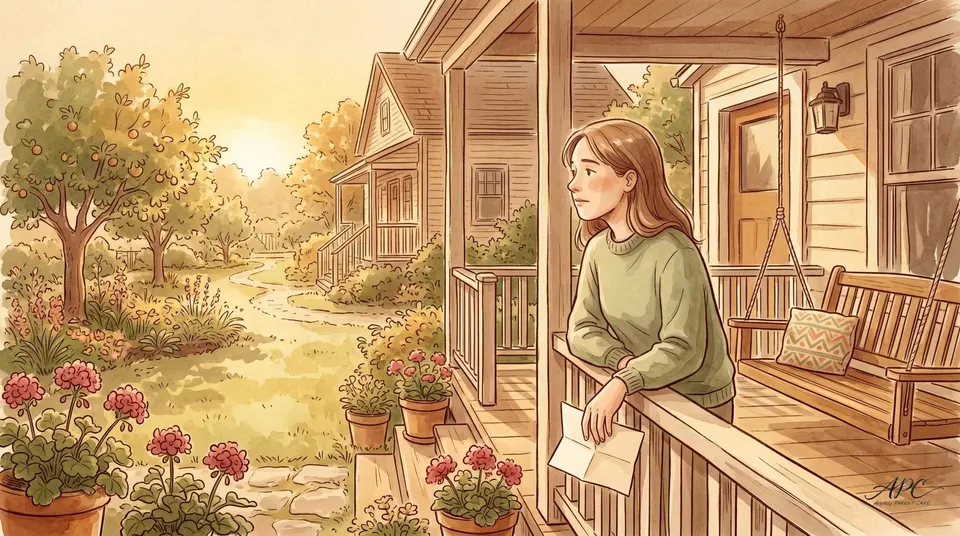
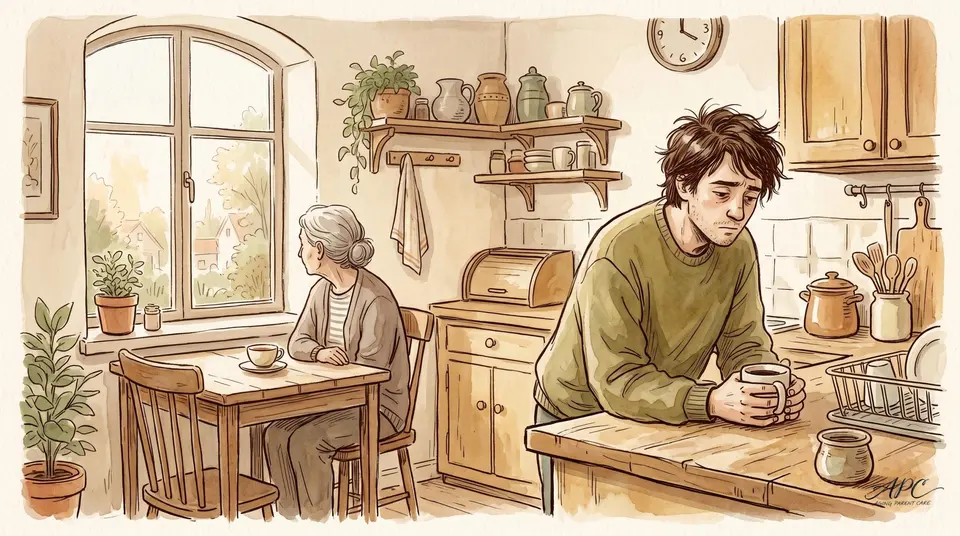
Marcus found the bruise by accident. His mother Gloria reached up to hand him a mug from the high shelf, her sleeve slid back, and there it was, a long yellow-green mark down her forearm that she had not mentioned on a single phone call. She waved it off. She had caught the edge of the counter, that was all, weeks ago, it was nothing. What she did not say was that she had caught the counter because she had gone down in the kitchen, and that she had not told him because the second she said the word "fell" out loud, she was sure the next conversation would be about leaving her house. So she kept it to herself. A lot of parents do.
Here is the thing Marcus learned that week, the thing too few families hear in time. Most falls are not bad luck. They trace back to a short list of risk factors you can spot and lower before the fall, and the CDC built a free program that hands you the tools to do exactly that. Gloria did not need to surrender her house. She needed a screen, a medication review, and a few things changed around that kitchen.
The numbers are why this matters so much. About 1 in 4 adults over 65 fall every year, and falls are the leading cause of both fatal and nonfatal injuries in that age group. Emergency departments log around 3 million visits for older-adult falls in a single year. The reason that number stays so high is simple and fixable: most of the risk goes unaddressed until after someone is on the floor. The work that lowers the odds happens in ordinary doctor visits and around the house, and a parent does not have to wait for a crisis like Gloria's to start.
What actually lowers a parent's fall risk
- The STEADI three-question screen flags risk in minutes, and a yes to any one puts a parent in the group that needs follow-up.
- Sleep aids, sedatives, and some blood pressure drugs raise fall risk and often go unquestioned.
- Exercise programs, tai chi among them, have the strongest evidence of any single intervention.
- Throw rugs, dim lighting, and missing grab bars cause a large share of falls and are cheap to address.
- Small, overlooked factors with a real effect on balance.
What the STEADI screen actually asks
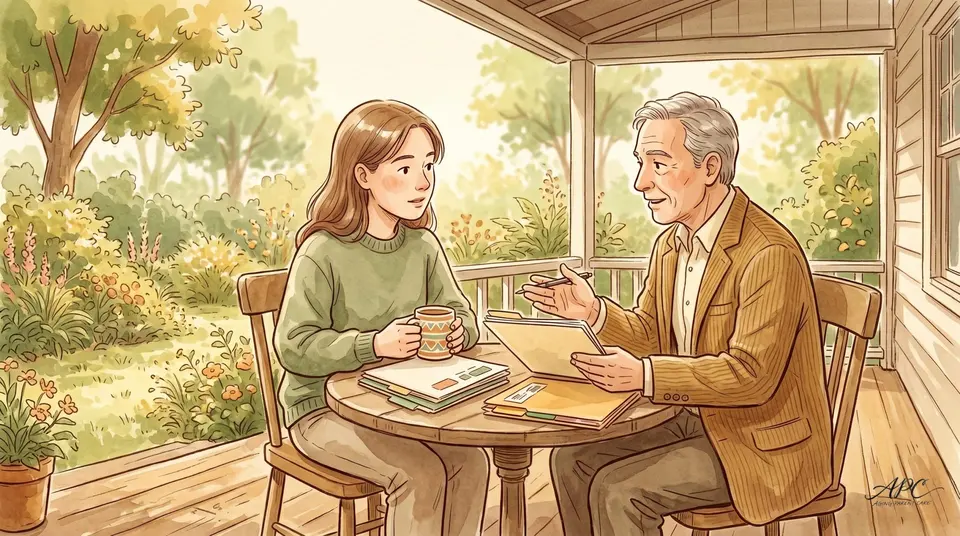
STEADI stands for Stopping Elderly Accidents, Deaths and Injuries. The CDC built it to give doctors a clear, repeatable way to screen for fall risk and act on it: screen, assess what can be changed, then step in. What most families do not know is that the screen and the patient materials are public, so you can run the first part yourself at the kitchen table. It starts with three plain questions:
- Have you fallen in the past year?
- Do you feel unsteady when standing or walking?
- Are you worried about falling?
A yes to any one of these puts an older adult in the group where further assessment is warranted. That group is larger than most families expect, and a parent does not have to have fallen yet to belong to it. Worry alone counts. When Marcus finally asked his mother those three questions straight, the answer to the first was yes, the answer to the third had been yes for a year, and she had never said a word about either.
Which medications quietly raise the risk?
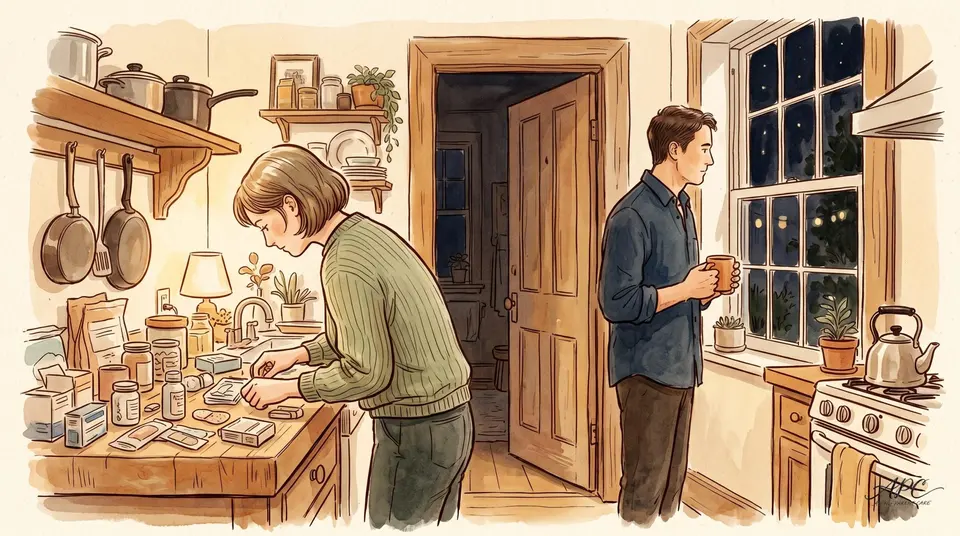
A medication review is one of the most useful and most skipped moves in fall prevention. Some drug classes raise the risk a lot, and they are easy to miss because each one was prescribed for a good reason:
- Sleep aids and sedatives.
- Benzodiazepines.
- Some blood pressure medications.
- Drugs with anticholinergic effects, which can blur thinking and balance.
A pharmacist or the prescribing doctor can run a review to flag anything that may be causing dizziness, balance trouble, or grogginess. STEADI even gives clinicians a framework for exactly this kind of review. Asking for it at the next regular appointment is a low-barrier place to begin. Gloria's nightly sleep aid, it turned out, was the first thing her doctor wanted to change.
Falls are not inevitable. They trace back to a short list of risk factors that screening catches and a few plain changes reduce.
The free Aging Parent Care Starter Kit walks you through the first steps in plain language, at your own pace, including a room-by-room safety check. Get it sent straight to your inbox.
Send me the free Starter KitWhat exercise has the strongest evidence?
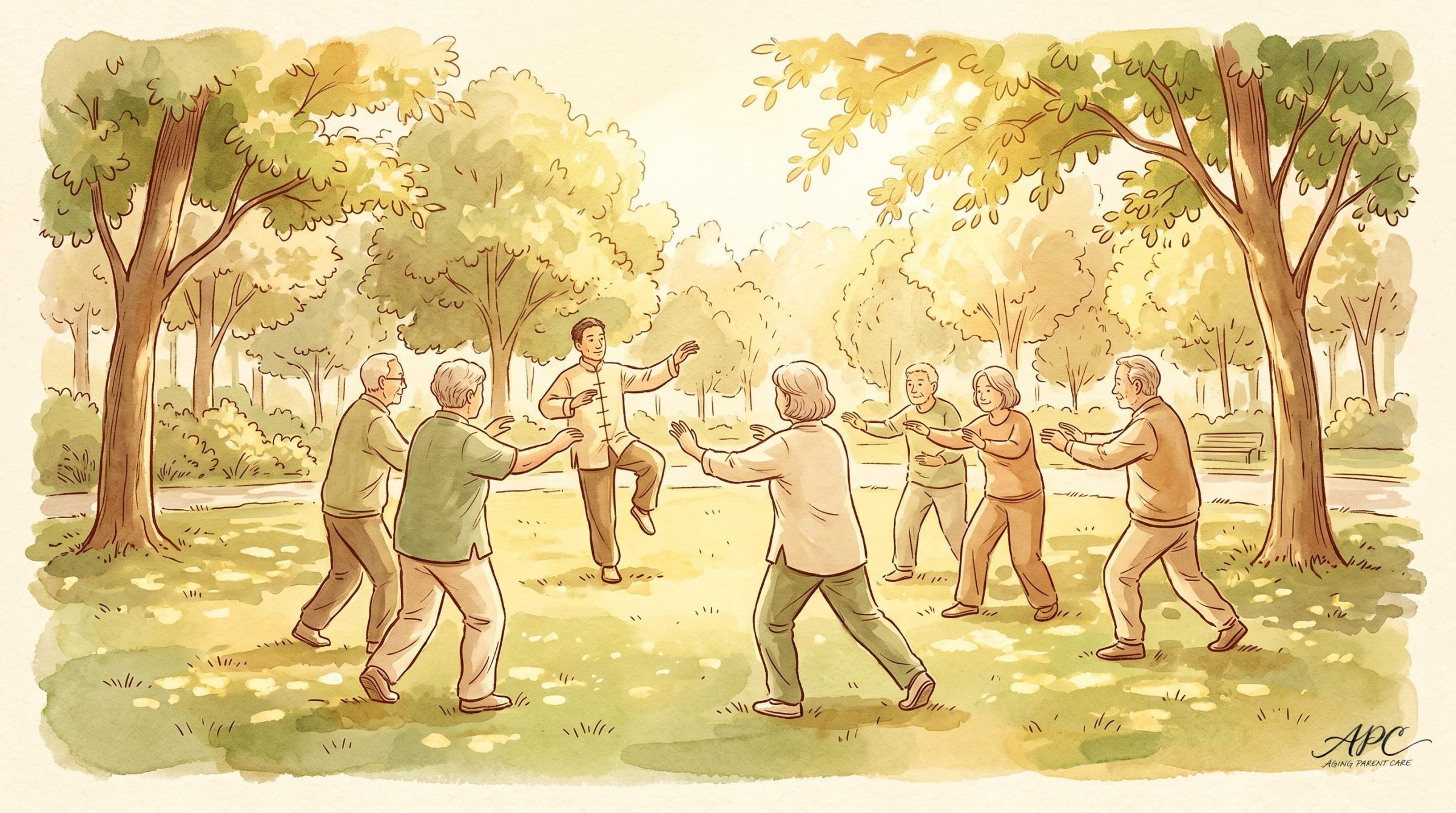
Strength and balance exercise is the intervention with the most solid backing. A large Cochrane review of community-living older adults found that group and home-based exercise programs reduced both the rate of falls and the chance of falling, and that tai chi specifically lowered the risk of falling. Tai chi gets singled out a lot because it trains the slow, controlled weight shifts that keep a body upright, and plenty of older adults will actually keep doing it.
Physical therapy aimed at gait and balance can be covered by Medicare when fall risk is documented, and a doctor's referral is usually the only step required. That detail matters: a documented risk is what unlocks the coverage, which is one more reason the STEADI screen earns its place at a regular visit. Gloria grumbled about the idea of a class, then found one at her senior center and kept going because a neighbor went too.
How much of the risk is the house itself?
The home accounts for a big share of falls, and home safety changes are part of what the Cochrane review found actually works. The STEADI patient brochure walks through the usual suspects: throw rugs, poor lighting, no grab bars in the bathroom, and anything stored high enough to require a reach and a wobble. Your local Area Agency on Aging can often point you to programs that help cover basic safety modifications for income-eligible older adults.
The fixes are cheap, but someone has to actually make them. That means assigning the job and following through, not talking about it once and letting it sit. The throw rug in Gloria's kitchen, the one she had stood on for thirty years and refused to part with, was the exact spot she went down. It took Marcus two more visits and a lot of patience before she let him swap it for a non-slip mat. A rug taped down or replaced this weekend is worth more than a perfect plan that never happens.
The small factors that get overlooked
Low vitamin D is tied to weaker muscles and worse balance, and a standard blood panel can catch it. Supplementing is cheap, so it is worth raising at the next visit if it has not been checked lately. Vision and footwear get skipped because they seem too simple to matter. Bifocals and progressive lenses can throw off depth perception, especially on stairs, so it is worth asking the eye doctor about that specific problem and not just the prescription. Shoes with firm soles and a back beat slip-ons or socks on a smooth floor, every time.
What you can do this week
None of this needs a specialist or a big budget. It needs a few specific moves, made in order:
- Run the three STEADI questions with your parent, and write down the answers.
- Bring the STEADI patient brochure from cdc.gov/steadi to the next primary care visit and ask whether a formal fall risk assessment has been done.
- Ask the pharmacist or doctor to review any sleep aids, sedatives, or blood pressure drugs.
- Walk the house once with the safety checklist and fix the throw rugs, lighting, and grab bars first.
- Ask about a vitamin D check and a physical therapy referral for gait and balance.
Frequently Asked Questions
Can families use the STEADI tools themselves, or are they only for doctors?
Both. STEADI was built for clinicians, but the three-question screen and the patient brochure are public, and families can use them directly. The brochure at cdc.gov/steadi is meant to bring to an appointment.
Does Medicare cover physical therapy for fall prevention?
It can. Physical therapy that targets gait and balance can be covered by Medicare when fall risk is documented, and a doctor's referral is typically the only step required. The documented risk is what unlocks the benefit, so a formal assessment helps.
My parent has not fallen yet. Is screening still worth it?
Yes. A yes to any one of the three STEADI questions, including simply feeling unsteady or being worried about falling, puts a parent in the group that benefits from further assessment. Screening before a fall is the whole point of the program.
A year on, Gloria is still in her own kitchen. The sleep aid is gone, a bar by the tub and a non-slip mat are in, and she goes to the balance class on Tuesdays mostly for the company. She has not fallen again. She still tells the story her way, that she caught the edge of the counter, and Marcus has stopped correcting her. She kept her house. That was the whole point.
Falls are not inevitable; they trace back to a short list of risk factors that screening catches and a few plain changes reduce.
Was this article useful?
Got feedback?
Let us know what was useful, unclear, or missing.
Related from Aging Parent Care
- The Dementia Signs That Don't Look Like Dementia
- 11 Signs It's Time to Move Your Parent
- The $5,419 Question: Home vs Facility
Sources
- Centers for Disease Control and Prevention. "Older Adult Falls Data." cdc.gov/falls/data-research/index.html
- National Council on Aging. "Get the Facts on Falls Prevention." ncoa.org/article/get-the-facts-on-falls-prevention
- Centers for Disease Control and Prevention. "About STEADI (Stopping Elderly Accidents, Deaths and Injuries)." cdc.gov/steadi/about/index.html
- Centers for Disease Control and Prevention. "Preventing Falls in Older Patients: Provider Pocket Guide" (STEADI three key questions and patient brochure). cdc.gov/steadi/media/pdfs/steadi-pocketguide-508.pdf
- Sherrington C, et al. "Interventions for preventing falls in older people living in the community." Cochrane Database of Systematic Reviews. cochrane.org/evidence/CD007146
© 2026 Aging Parent Care. All rights reserved. No portion of this article may be reproduced, distributed, or used in any form without the explicit written permission of Aging Parent Care.
Related medical guides
- Your Parent's World Is Shrinking. Before You Blame Age, Check Their Eyes.
- Why Your Aging Parent Can't Sleep, and How to Help Them Rest Again
- How to Catch Malnutrition Before It Lands Your Parent in the Hospital
- How to Get Power of Attorney for an Elderly Parent, Step by Step
- What Does Caregiver Burnout Feel Like? 7 Symptoms Families Mistake for Stress
The Complete Aging Parent Caregiving Guide covers the full caregiving arc in 30 chapters, and the Guide and Workbook together add the fillable templates families use to put it into practice.
Make Your Business Online By The Best No—Code & No—Plugin Solution In The Market.
30 Day Money-Back Guarantee
Say goodbye to your low online sales rate!